
Sprains and Strains in Yoga: What Yoga Teachers Needs to Know
If you're reading this, it's probably safe to say you care about the wellbeing of your students. Sprains and strains are among the most common injuries that occur in day-to-day life, and yes, they can occur during a yoga practice too. That said, yoga can also be useful for preventing and healing from sprains and strains. Before we get into all of that, it's worth understanding what each of these injuries actually is.
Knowing the difference between a sprain and a strain is some of the most practical anatomy a yoga teacher can have.

In This Article:
The difference between a sprain and a strain
How each is graded clinically and why it matters for teaching
Is it safe to practice yoga with a sprain or strain?
How to support students with these injuries in class
When to refer out
What Is a Sprain?
A sprain is an injury to a ligament, the connective tissue that connects bone to bone across a joint.
Ligaments have one primary job: to limit how much a joint moves. When a force is too great and the joint moves beyond its normal range, the ligament gets pulled past its capacity. That overstretching causes a tear, and that tear is what we call a sprain.
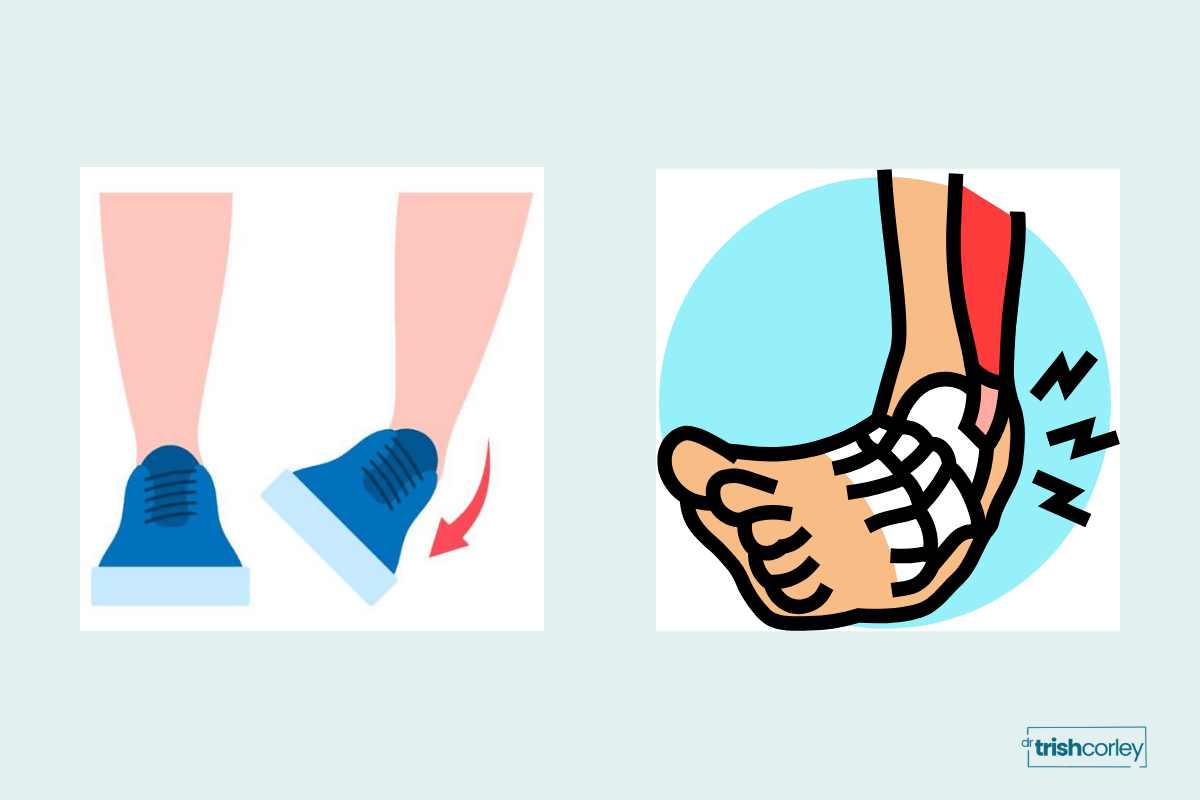
The ankle is one of the most common sites for sprains, in part because the ankle allows for movement in multiple directions and depends heavily on its ligaments to control range. Picture someone stepping off a curb and the foot rolling inward. The ligaments on the outer side of the ankle are suddenly asked to control a movement they weren't ready for. When the force exceeds what the ligament can handle, it tears.
Sprains typically present with swelling, pain around the joint, and limited mobility.
Grading for Ligament Sprains
Clinically, sprains are graded by severity:
Normal: No tear. The ligament is healthy.
Grade I: Stretching of the ligament with microscopic fiber tearing. The ligament is intact overall, but it's injured and will be tender.
Grade II: Tearing of several fibers. The ligament still holds together, but there's a true partial tear.
Grade III: Full tear. The two ends of the ligament are no longer in contact with each other.
The higher the grade, the more severe the injury and the longer the recovery.
What Is a Strain?
A strain is an injury to a muscle or tendon. Tendons are the connective tissue that attach muscle to bone — they transmit the force your muscles generate so your bones actually move.
When someone experiences a strain, they'll typically report pain, muscle spasm, or a sensation of tightness in the affected area. Strains happen when a muscle or tendon is pushed beyond what it's currently capable of, whether through overexertion, a sudden forceful movement, or repetitive loading over time.
In yoga, strains are likely to occur when a practitioner pushes into an intense stretch before the tissue is ready, or when someone forces their way into a posture rather than building into it progressively. Hamstrings, hip flexors, and the lower back are common sites.
Grading for Muscle and Tendon Strains
Strains follow the same grading framework as sprains:
Normal: No tear.
Grade I: Tearing of only a few fibers. The tissue is intact but injured.
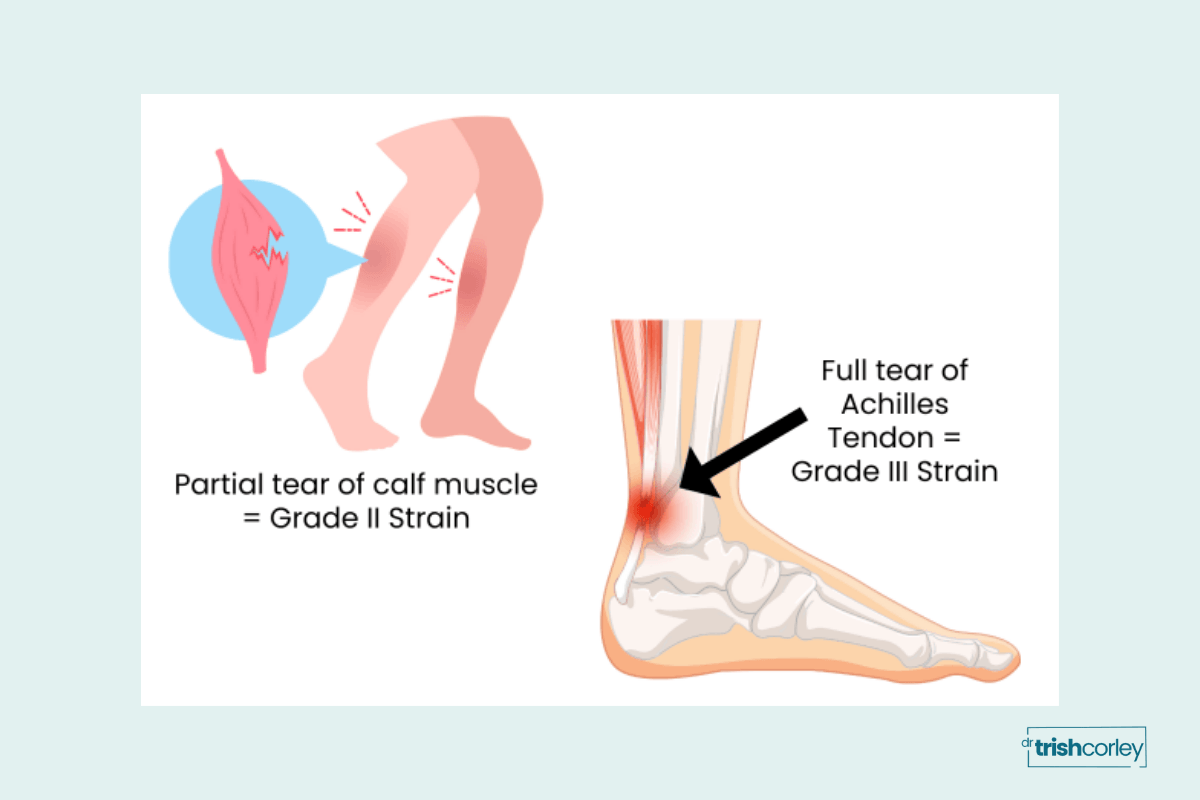
Grade II: Tearing of several fibers. A partial tear, with the tissue still held together.
Grade III: Full tear. The two ends of the tendon or muscle are no longer in contact with each other. This is less common and most frequently seen in the Achilles tendon.
Sprain vs Strain in Yoga: Is It Safe to Practice?
The short answer is yes. And it may be necessary to adapt some things.
If you know when the injury occurred, you can consider what stage of healing the student is likely in, which helps guide how much load the injured area should take. It's also important to find out if they've been given any restrictions by a healthcare provider.
For Grade I sprains and strains, you can encourage students to take it easy and load the injured area to tolerance without a significant increase in pain. Most will be able to participate with some thoughtful modifications.
Grade II sprains and strains require more caution and communication. The amount of force applied to the injured area needs careful consideration, and these students will likely need significant modifications throughout class.
When someone sustains a Grade III sprain or strain, they will likely need to truly rest the injured area. Depending on the location and severity, some Grade III injuries are managed conservatively with immobilization and rehabilitation, while others may require surgical repair. Either way, these students can often continue practicing to keep the rest of their body moving and to benefit from the calming aspects of yoga for overall healing. They'll need a lot of help adapting postures to avoid any stress on the injured structure.
How to Support Students with Sprains or Strains in Your Classes
When a student tells you about an injury, the most important thing you can do first is listen. Acknowledge what they're dealing with and approach the conversation with empathy. From there, a few things help.
Find out what happened and when. Knowing the timeline gives you useful information about where they are in the healing process. Find out if they've seen anyone about it and whether they've been given specific restrictions. It's quite common for people to experience Grade I injuries and not seek medical advice. In those cases, guide them to work within a pain-free range and check in as class progresses.
Think about which movements stress the injured area and which don't. You don't need to redesign the whole class — you need to know what to watch for and what to modify. Gentle, slow, controlled movement can genuinely support the healing process. Yoga's emphasis on body awareness makes it a valuable tool for recovery when approached with care.
And know when to refer. If something sounds serious, or if you're uncertain about what's safe, encourage your student to see a physiotherapist or physician. That referral isn't a limitation of your knowledge. It's good practice.
The Bottom Line
Sprains affect ligaments; strains affect muscles or tendons. Both are graded I through III based on severity, and understanding that grading gives you practical information about how to support a student safely in your class.
You don't need to be a clinician. You need enough anatomy to ask better questions, make smarter modifications, and know when to send someone to the right professional.
Get Curious! Q&A
What is the difference between a sprain and a strain in yoga?
A sprain is an injury to a ligament, the tissue connecting bone to bone across a joint. A strain is an injury to a muscle or tendon, the tissue that generates and transmits movement. Both can occur in yoga, and both are graded I through III by severity.
Can you practice yoga with a sprained ankle?
In many cases, yes. A Grade I ankle sprain is often manageable with modifications that reduce load on the injured ligaments. Grade II and III sprains require more significant adaptation and ideally guidance from a physiotherapist before returning to a full practice.
How do I know if a student's injury is serious?
The grading system is a useful guide. Grade I injuries involve minor stretching and microscopic tearing and are often manageable with modifications. Grade II injuries are partial tears and require more caution. Grade III injuries are full tears and typically require medical attention. When in doubt, encourage your student to seek professional assessment.
Can yoga help a sprain or strain heal?
Gentle movement within a pain-free range can support the healing process. The key is loading the injured area to tolerance without causing a significant increase in pain. Complete rest is rarely necessary or helpful for mild injuries.
When should I refer a student out rather than modify their practice?
Any Grade III sprain or strain warrants a referral, as does any situation where you're uncertain about what's happening or what's safe. If a student has been given specific restrictions by a healthcare provider, those take precedence. Referring out is not a failure of your teaching.
Go Deeper with your understanding of yoga anatomy and injuries.
If you want to feel confident when a student walks in with an injury, the Teach Yoga to Students with Injuries Course is the place to start. You'll learn how to have informed conversations about pain and injury, how to adapt postures intelligently, and when to refer out.
If you want to build the anatomy foundation underneath all of it, the Enlightened Anatomy Courseis where that work begins.
References
StatPearls. Acute Ankle Sprain. National Library of Medicine. https://www.ncbi.nlm.nih.gov/books/NBK459212/
About the Author
Dr. Trish Corley is a Doctor of Physical Therapy (Physiotherapy) and yoga teacher trainer with over two decades of clinical experience. She helps yoga teachers learn anatomy, give clear cues, and create classes their students love. Based in Lisbon, Portugal, she leads the Enlightened Anatomy Course, the Elevate Your Impact Mentorship, and the Power to Lead 200-Hour YTT.