
Should Yoga Teachers Ask Students About Injuries?
I've sat in yoga classes where the teacher opens with a simple question. "Does anyone have any injuries I should know about before we start?" Hands go up. Students share details, sometimes brief, sometimes the full history of a shoulder surgery or a knee that's bothered them for years. The teacher nods, offers reassurance, and class begins.
I've also sat in classes where nothing is asked at all. The teacher trusts each student to know their own body and to modify as needed.
For years, as both a doctor of physical therapy and a yoga teacher, I went back and forth on which approach was right. Then I realized the question itself was the problem.
This isn't about whether asking is right or wrong.
Asking students about injuries at the start of class isn't a requirement for safe teaching. It's one choice among several, and the right one depends on how you plan to use the information.

In This Article:
The real benefits of asking students about injuries before class
The hidden downsides most teachers don't consider
What I choose to do instead, and why
The Case for Asking About Injuries Before Yoga Class
There are real reasons this approach works for many teachers.
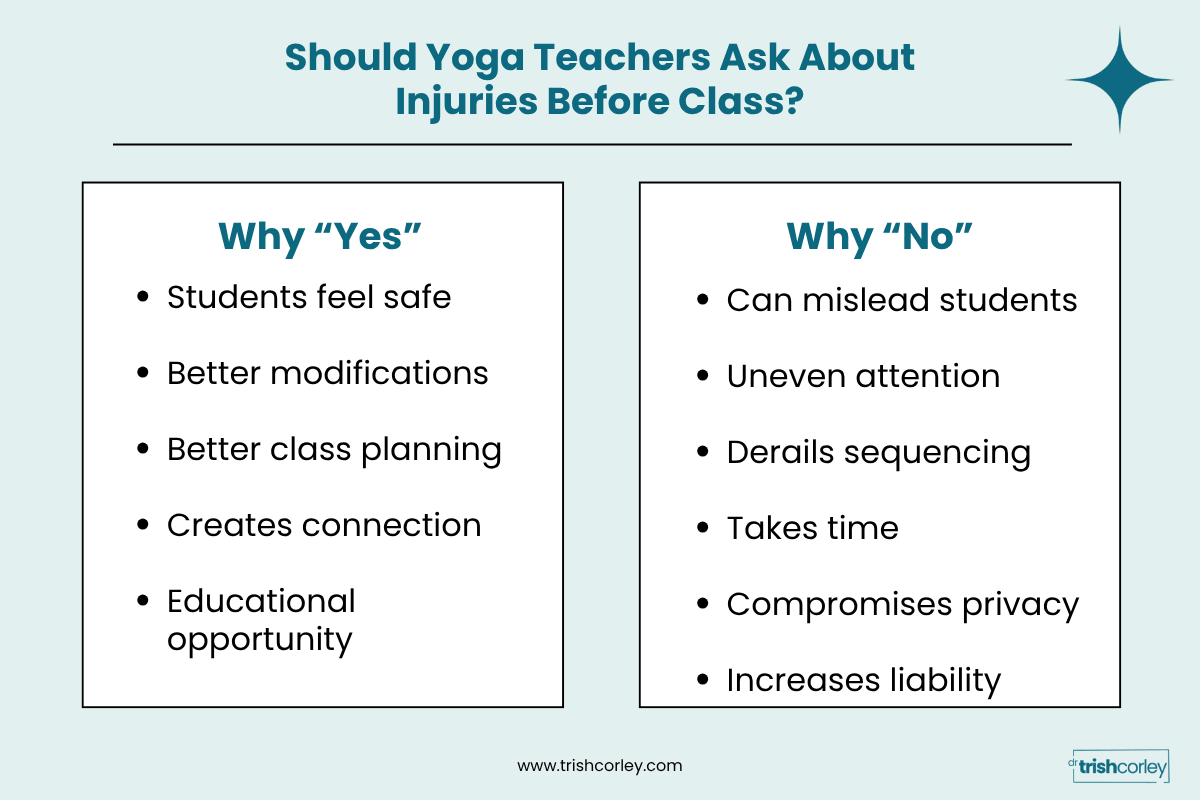
Students feel heard and safe.
In conversations with yoga teachers and teachers in training, I hear this again and again. People feel supported when a teacher asks about injuries at the start of class, and feeling safe can shape a student's entire experience, sometimes even their healing process.
You can offer better modifications.
Identifying existing injuries allows the teacher to guide students away from postures that might exacerbate their conditions and to offer modifications and alternative postures. Knowing whether you're working with, say, a sprain versus a strain changes what kind of modification actually helps.
You can plan the class more effectively.
Insight into what your students are carrying helps you build a sequence that minimizes what's problematic and maximizes what's healing.
You create connection.
My favorite teachers have a gift for connecting with students before the practice even starts. Addressing injuries at the beginning of class can give students a sense of individualized care.
You open the door to education.
Talking about injuries openly raises awareness, for the whole class, about self-care, mindfulness, and the risk of pushing too far.
The Case Against Asking About Injuries Before Yoga Class
The downsides are just as real, and they're the reason I don't ask.
It can mislead students.
Even with the best intentions, most yoga teachers don't have the medical training to diagnose an injury. When you ask, students may assume you can offer expert guidance based on what they share. This can create false expectations and potential misunderstandings. It's important for yoga teachers to emphasize the importance of consulting with healthcare professionals for personalized advice regarding their injuries, and to remind students that yoga teachers can offer general guidance and modifications, but they may not be medical experts. This is part of a bigger conversation about where a yoga teacher's role begins and ends.
When a student does bring pain to you directly, in class or privately, here's the step-by-step process I use to support them without stepping outside that boundary.
Attention becomes uneven.
In a larger class, the volume of injury disclosures can be more than one teacher can properly address. Giving more individualized attention to a few students isn't fair to everyone else in the room.
It can derail your sequence.
You've put real time into building a class that serves the group. Learning about several injuries right before you teach can pull you into accommodating on the fly, and teaching from a place of concern instead of confidence.
It takes time you may not have.
I've sat in classes where several students raised their hands and shared a lot of detail about themselves and their injury. What if more than one student takes a few minutes to explain their injuries? A 60-minute class doesn't leave much room for that.
It can compromise privacy.
Sharing personal medical information in front of a group isn't comfortable for everyone. Some students will hold back rather than speak up, which can leave you assuming they're injury-free when they're not.
It may increase liability.
I'm not a lawyer, but I've heard from one that once you know a student has an injury, your responsibility for looking out for that injury increases. This matters more in some places than others, but it's worth knowing.
The Bottom Line
If you're a yoga teacher, you get to choose whether you ask students about injuries at the start of class. Both approaches have real merit and real tradeoffs. There's no universal right answer here, only the one that fits how you teach.
A More Empowering Approach
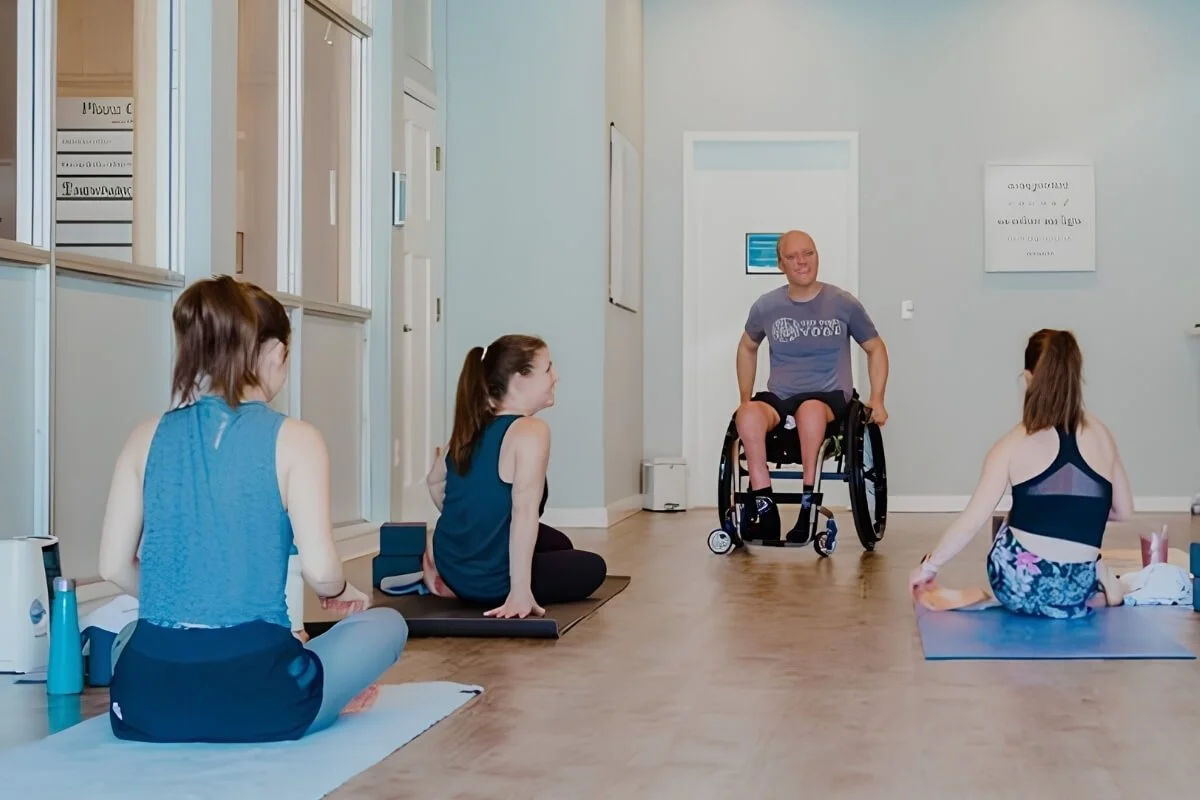
Based on these pros and cons, I choose not to ask at the start of class. Instead, I look at who is in front of me. I often know my students, but often don’t. I make an effort to talk to the new people before class starts and can check in privately. And I am also aware that though I am a physical therapist, when I am teaching a yoga class, I am serving as a yoga teacher and maintain that boundary. For me the biggest thing is to ensure that I am creating a space of safety. This comes from my being present, seeing students, and empowering them to take care of themselves.
One thing to know: a blanket statement only works if it's specific enough to be useful. This is the principle behind why "listen to your body" isn't enough on its own as a cue. There is not one right or wrong approach. Don’t copy someone else’s. You have to speak from your heart and believe in yourself if you want others to feel safe around you.
If you do choose to ask about injuries before class, one thing matters most: be ready to use what you hear. I've seen teachers ask, students answer, and then nothing changes about how the class is taught. Don't let that be you.
Get Curious! Q&A
Should new yoga teachers ask about injuries before class?
There's no requirement either way. New teachers often feel safer asking, since it can feel like the more cautious choice. What matters more than the question itself is having a plan for what you'll do with the answer.
What can I say instead of asking about injuries in a group class?
A short statement at the start of class works well. Let students know you care about their safety and invite them to speak with you privately, before or after class, about anything you should know.
Does asking about injuries increase a yoga teacher's liability?
This is a question for a lawyer in your specific location, not a yoga teacher. Generally speaking, once you have direct knowledge of an injury, you take on more responsibility for looking out for it. That's worth factoring into your decision.
Is it unsafe not to ask students about injuries?
Not asking doesn't mean not caring. A private, opt-in approach can create just as much safety, sometimes more, without putting students on the spot in front of the group.
Go Deeper with Your Confidence in the Choices You Make as a Yoga Teacher
Decisions like this one, what to ask, what to say, how to hold space for a room full of different bodies, get easier with the right framework behind them. Elevate is built for teachers who want to stop second-guessing calls like this and start teaching from a place of clarity.
About the Author
Dr. Trish Corley is a Doctor of Physical Therapy (Physiotherapy) and yoga teacher trainer with over two decades of clinical experience. She helps yoga teachers learn anatomy, give clear cues, and create classes their students love. Based in Lisbon, Portugal, she leads the Enlightened Anatomy Course, the Elevate Your Impact Mentorship, and the Power to Lead 200-Hour YTT.