
How to Support Yoga Students With Pain: A Teacher's Guide
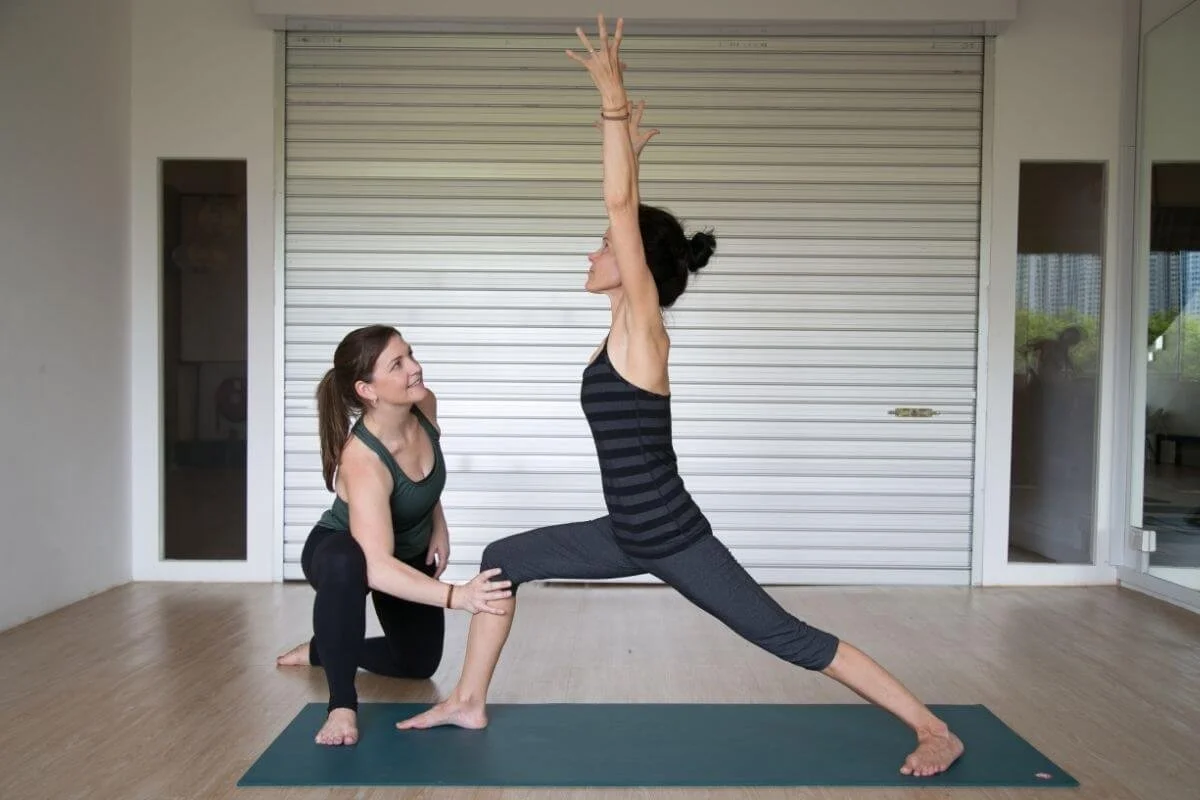
Picture this. A student walks up to you after class and tells you they have pain in their knee.
Where do you begin?
If your mind goes blank in that moment, you are not alone. Most yoga teachers were never taught what to do when a student shares pain with them. You want to help. You are just not sure where to start.
Supporting a yoga student with pain does not require a medical degree. It requires a simple, repeatable process you can trust.
In This Article:
The one question that starts every pain conversation
Why observation matters more than guessing
How to choose a cue that actually helps
What to do when the first cue does not work
When to bring in outside support
Start With the Right Question About Pain
When a student tells you about pain, start by listening. Truly listening. I cannot say this enough. Before you offer a single cue, let them finish telling you what they are experiencing.
Then ask one key question:
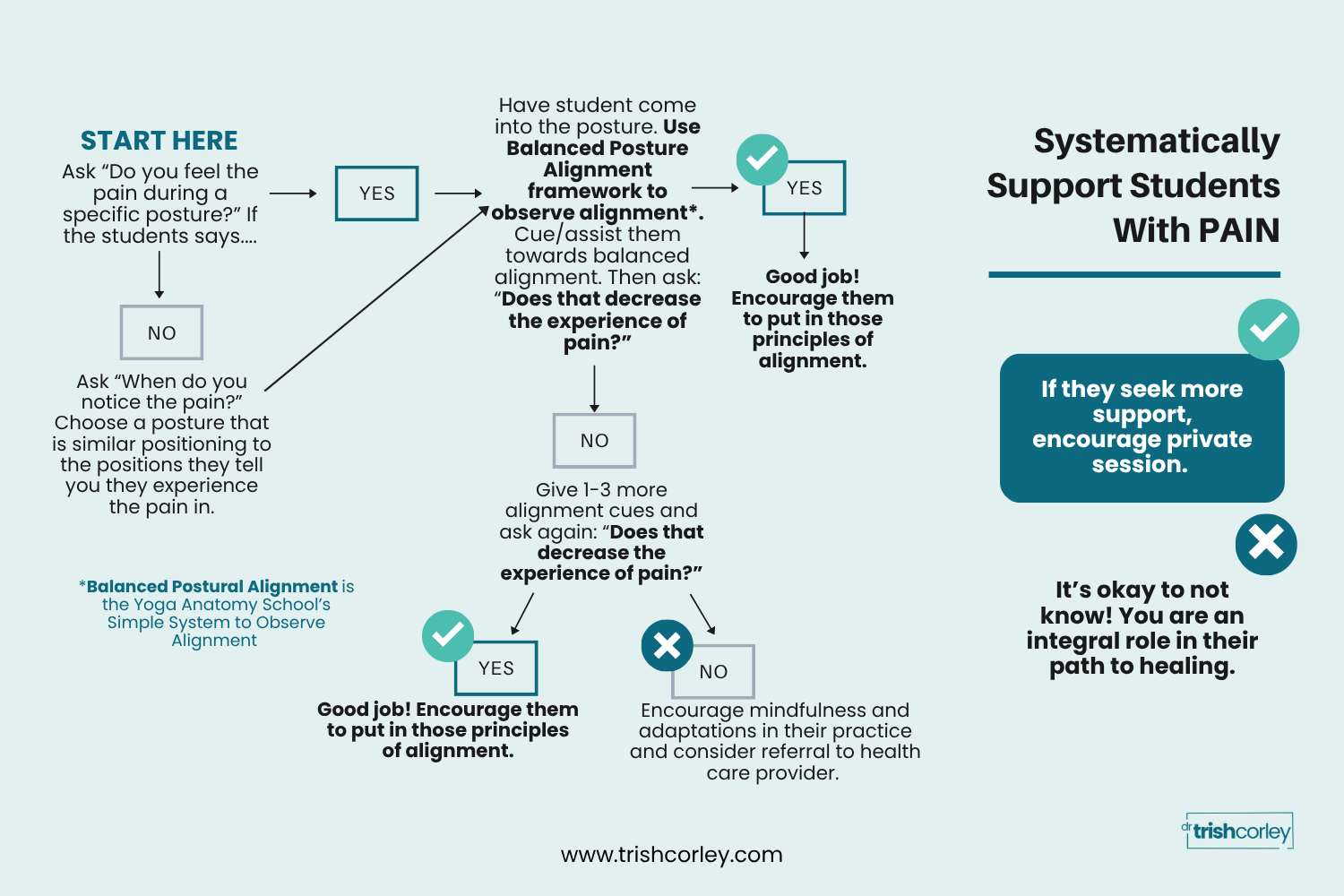
"Do you feel the pain during a specific yoga posture?"
If they have not already told you, this is where you find out. If they name a posture, you have your starting point. If they are not sure, ask "When do you notice the pain?" and choose a posture that puts their body in a similar position.
Once you have identified a posture, move to the next step.
(If you're wondering whether to ask about injuries proactively rather than waiting for students to bring it up, I cover that here.)
Observe The Studen't’s Alignment
Ask your student to come into the posture you identified, and observe.
Do not skip this par!
Observation is where a lot of teachers feel stuck. It does not have to stay that way. What changes everything is having a systematic approach to looking at alignment, rather than trying to notice everything at once.
This is what Balanced Posture Alignment gives you: a simple framework for observing your student's body so you know exactly what you are looking for.
When you have a system for observing alignment, the overwhelm tends to lift. In its place, you get calm and confidence.
Choose One Alignment Cue
This is why your observation matters so much. Look at your student's alignment and notice what is missing. This is not about critiquing their posture or deciding it is wrong. It is about offering them something useful.
You are looking for what would create more balance, and with it, more ease. Ease and pain rarely live in the same place.
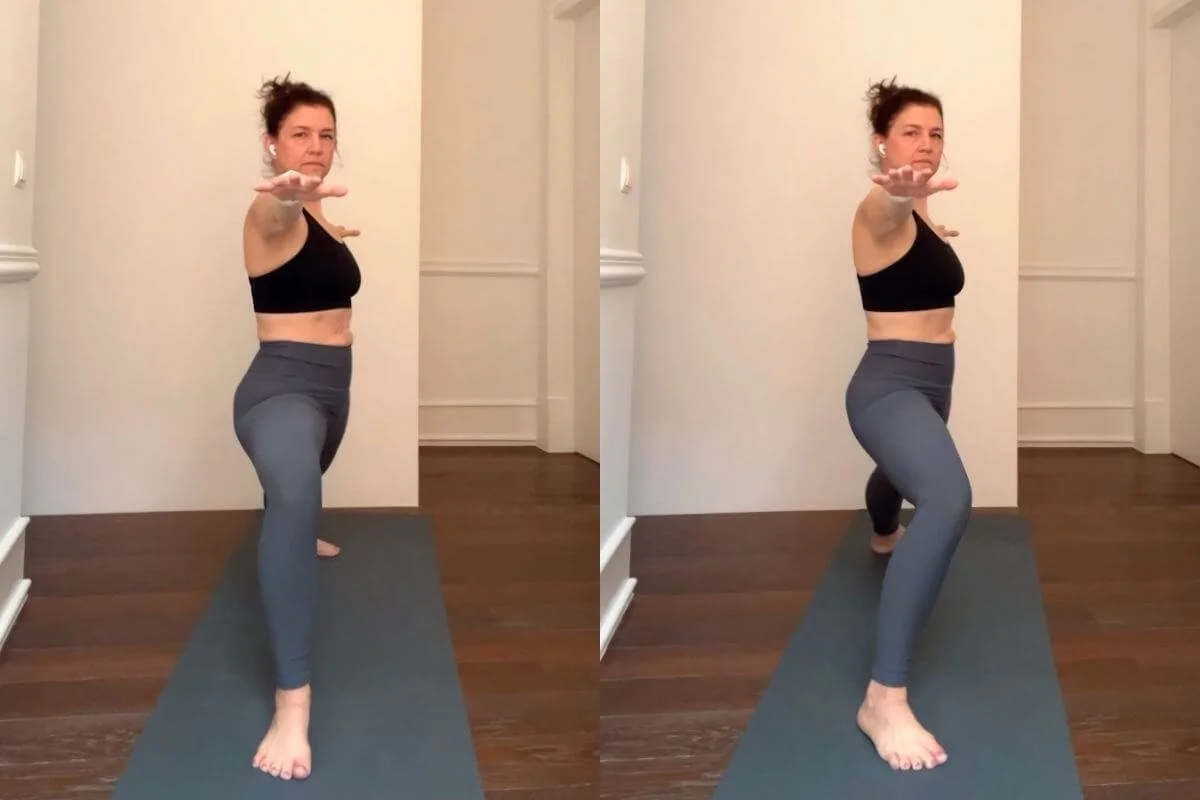
Say a student tells you they feel right knee pain, most noticeably in Warrior 2 with the right leg forward. When you watch them come into the posture, you notice their right foot is turned inward.
A cue like "bring your right foot to face forward" gives them one clear adjustment to try.
Check In With Transformed Alignment
Watch to see if your student makes the adjustment. Help them find it if they need support. Once you see the shift, ask the next question:
"Does that shift change the experience of pain?"
If yes, celebrate it with them, and encourage them to carry that alignment principle into their ongoing practice.
More often than you might expect, it is the alignment of the posture, not the posture itself or an underlying injury, contributing to the pain your student feels. That is genuinely exciting news for a yoga teacher. It means you have real power to support a student's ease through cueing alone.
If the pain does not shift right away, that is not a dead end. It just means the next step.
When the First Alignment Cue Is Not Enough to Ease the Pain
Offer another cue, and reassess. Is there something else happening in their feet? Their legs? Their pelvis?
Two or three cues is a reasonable range before trying something else. If the pain continues after that, it may be time to shift your approach. Encourage mindfulness and adaptation in their practice, and consider recommending they check in with a healthcare provider for a closer look.
It is okay to not have every answer. The most confident yoga teachers I know are the ones who are honest about what they do and do not know. Students trust that far more than false certainty.
(Knowing the difference between a sprain and a strain can help you describe what you're noticing when you make that recommendation.)
The Bottom Line
You do not need a medical degree to support a student with pain. You need one clear question, a systematic way to observe, and the willingness to offer one cue at a time. That is a process you can trust in the moment, every time.
Get Curious! Q&A
What if I don't know what's causing my student's pain?
You are not expected (and in fact should not) to diagnose. Your role is to observe alignment, offer a cue, and check whether it changes the student's experience. If pain continues after a few adjustments, a referral to a healthcare provider is a supportive next step, not a failure.
Is it appropriate for a yoga teacher to talk to students about pain?
Yes, within scope. Listening, observing alignment, and offering cues is all with in the scope of teaching yoga. Diagnosing or treating an injury is outside a yoga teacher's role and belongs with a healthcare provider.
How many alignment cues should I try before moving on?
Two or three cues, reassessing after each one, is a reasonable range. If pain persists past that, shift toward mindfulness, adaptation, and a possible referral. There could be a true injury or issue of concern beyond the scope of a yoga teacher.
What is Balanced Posture Alignment?
This is my proven framework for observing a student's alignment systematically, so you know what to look for instead of guessing.
When should I refer a student to a healthcare provider?
When pain continues after a few thoughtful alignment cues, or when something about the pain feels outside what alignment alone would explain. When in doubt, remind your student what your role is as a yoga teacher and remind them that a physical therapist/physio or another healthcare provider may be able to support them best.
Go Deeper With Your Ability to Confidently Cue Students With Pain
The step-by-step process above gives you a starting point. Enlightened Anatomy Course goes deeper, giving you the full Balanced Posture Alignment framework and the anatomy behind it, so you can observe, cue, and adapt with confidence across every posture your students bring to you.
Explore the Enlightened Anatomy Course →
About the Author
Dr. Trish Corley is a Doctor of Physical Therapy (Physiotherapy) and yoga teacher trainer with over two decades of clinical experience. She helps yoga teachers learn anatomy, give clear cues, and create classes their students love. Based in Lisbon, Portugal, she leads the Enlightened Anatomy Course, the Elevate Your Impact Mentorship, and the Power to Lead 200-Hour YTT.