
Why Do Joints Crack in Yoga?
Your knee pops in Malasana. Your shoulder cracks halfway through a vinyasa. A student asks if that sound means something is wrong, and you're not totally sure how to answer.
“Why do my joints pop?” I hear this question constantly from both yoga students and teachers. It's one of the most common "is this normal?" moments in a yoga practice, and most of the time, the answer is refreshingly simple.
The cracking sound in your joints often comes from gas bubbles releasing in the synovial fluid that lubricates them, and in most cases, it's completely harmless.

In This Article:
What's actually happening when a joint "pops"
Why cracking your knuckles feels satisfying
Whether joint cracking is something to worry about
How to tell a “joint crack” from a “tendon snap”
When it's worth checking in with a professional
The Mystery Behind the Popping Sound
The cracking sound you hear when a joint pops, whether it's your knuckles or your knee in a deep squat, is often the result of a sudden release of gas, specifically nitrogen, from the synovial fluid inside your joints. This fluid acts as a lubricant, reducing friction between the bones so they can move smoothly.
When you pull or twist a joint, you create a change in pressure within it. That pressure shift can cause the gas dissolved in the synovial fluid to form bubbles. When those bubbles burst or collapse, you hear the pop. You can't recreate that same sound right away because there's a refractory period. It takes time for new gas to build back up before it can be released again.
Why It Feels So Good to Crack Your Joints
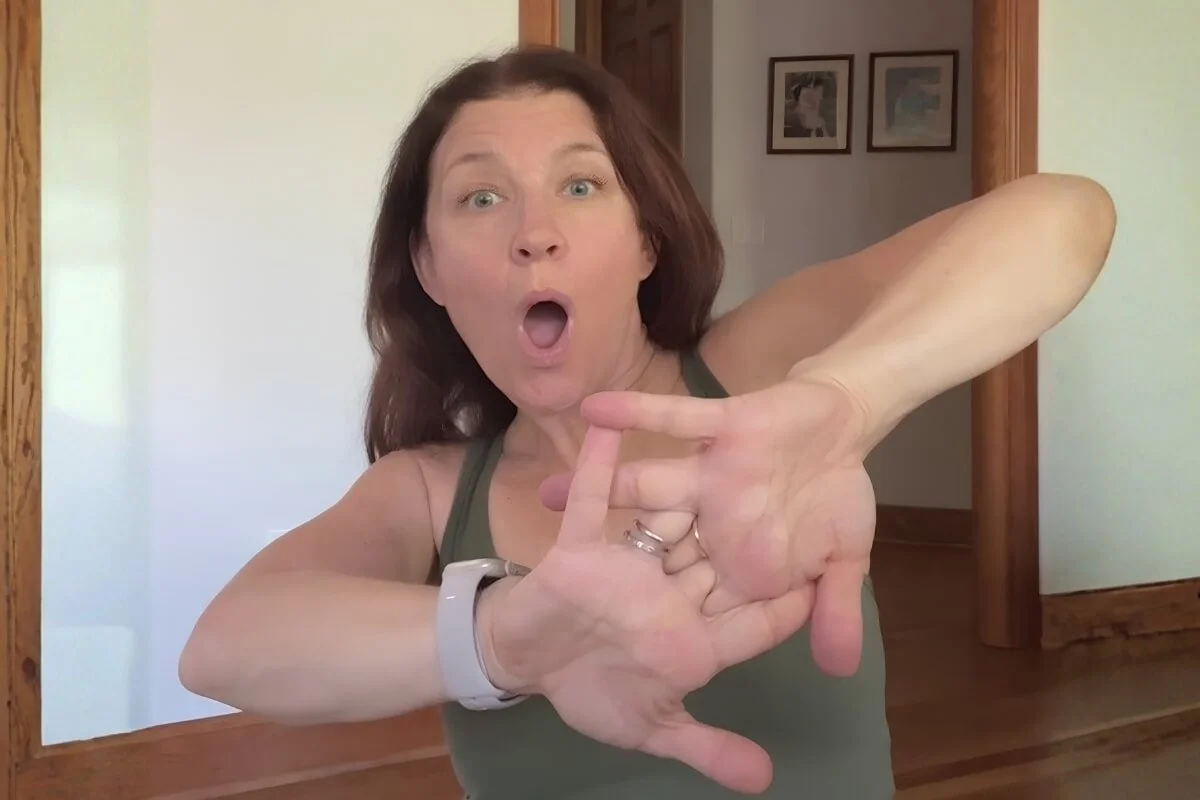
The release of gas may also stimulate the surrounding nerves, which signal the nearby muscles to relax. That satisfying feeling after a crack is likely a combination of the gas release and that muscular relaxation.
Is Cracking Your Joints Harmful?
According to current scientific understanding, it is probably not harmful to crack your joints. A 2011 study in the Journal of the American Board of Family Medicine found no significant association between knuckle cracking and hand osteoarthritis. A separate study using blinded physical exams and sonography found no meaningful differences in hand function, joint laxity, or range of motion between habitual knuckle crackers and people who don't crack their knuckles.
Research doesn't support the old idea that knuckle cracking leads to arthritis. The evidence on other joints is more limited. It's generally considered safe. If a joint naturally pops during movement and there's no pain or discomfort that comes with it, it's likely not a cause for concern. Persistent pain, swelling, or reduced mobility is a different story, and worth a conversation with a physical therapist or your preferred healthcare provider.
Joint Cracking Versus Tendon Snapping
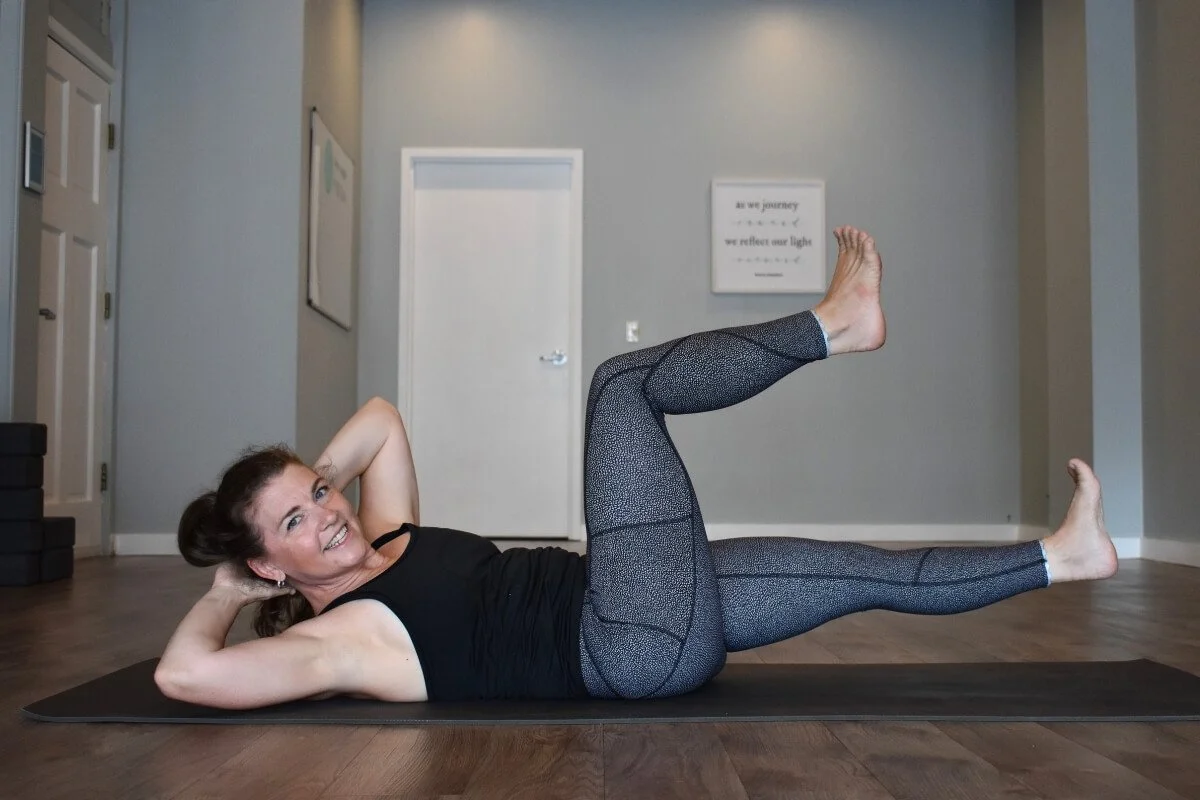
Not every pop comes from gas in the joint. Sometimes what you're hearing is a tendon snapping, and this shows up often during floor-based abdominal work like leg lifts or twisting movements.
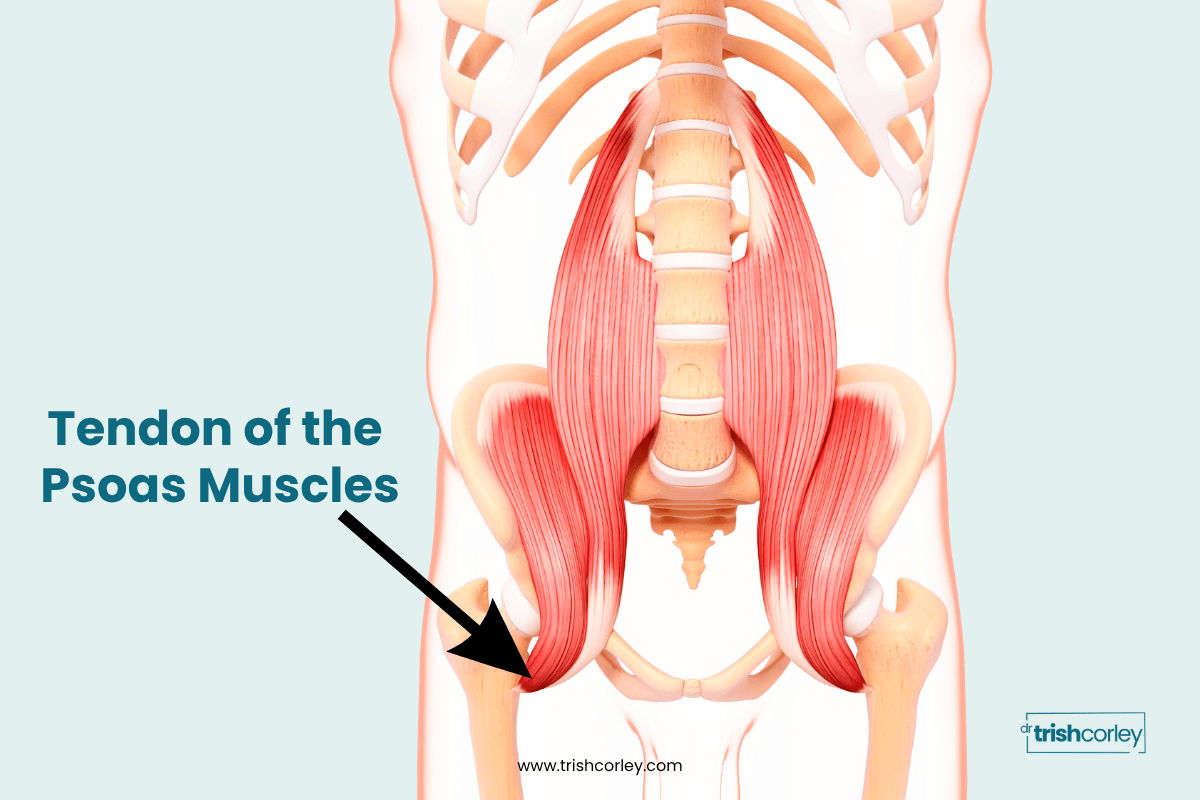
Tendons are the rope-like structures that connect muscle to bone, and they cross over joints. As a joint moves through its range, force builds on the tendon. Where a tendon crosses a bony prominence or other structure in the joint, that pull can create a rubbing or snapping sensation. In the hips, this is often felt around the psoas tendon.
How to Tell the Difference Between a “Joint Crack” and a “Tendon Snap”
This kind of snapping usually isn't a concern, especially without pain. The easiest way to tell a gas bubble pop from a tendon snap is repeatability. A joint that pops from gas release has a refractory period, so you can't reproduce the sound right away. A tendon snap is different. If you feel or hear it with every single repetition of a movement, it's likely your tendon.
After an injury, scar tissue tends to build up in a joint, and tendons commonly snap over that scar tissue. This is why someone with an old injury will often say a joint "always cracks" now. As long as the movement stays pain free, there's no real reason for concern. If pain, discomfort, or the snapping itself becomes more pronounced, that's worth bringing to a physical therapist/physiotherapist or healthcare professional, who can help adjust alignment or suggest alternative movements to keep your practice comfortable. Cleveland Clinic has more on when joint noises warrant a closer look.
A skilled yoga teacher will also be able to help access adaptations or alternative movements to avoid pain.
The Bottom Line
Joint cracking, including knuckle cracking, is a natural occurrence caused by gas bubbles releasing in the synovial fluid, and it's generally harmless. Tendon snapping around the hips during floor work is usually benign too. Pain free popping and cracking, whichever kind it is, typically isn't something to worry about. If joint mechanics like this fascinate you, it's exactly the kind of thing we go deeper on inside the Enlightened Anatomy Course, and you can explore the fuller picture in the Yoga Anatomy Foundations guide.
Get Curious! Q&A
Why does cracking my knuckles feel so good?
The release of gas from the joint may stimulate nearby nerves, signaling the surrounding muscles to relax. That relief you feel is likely a mix of the gas release and that muscle relaxation.
Does cracking my knuckles cause arthritis?
Current research doesn't support that. A 2011 study in the Journal of the American Board of Family Medicine found no significant association between knuckle cracking and hand osteoarthritis, and a follow-up study using blinded exams found no meaningful differences in hand function between knuckle crackers and non-crackers.
How do I know if it's a joint popping or a tendon snapping?
Reproducibility is the clue. A joint pop from gas release has a refractory period, so you can't do it again right away. A tendon snap can repeat with every rep of the same movement.
Should I be worried if my joint always cracks now?
Not usually, especially if it's painless. This is common in joints with a history of injury, where tendons snap over scar tissue that's built up. Pain, swelling, or increasingly pronounced snapping is the signal to check in with a professional.
Can yoga make joint cracking worse?
Yoga itself isn't the cause. Cracking happens with normal movement whether you're on your mat or not. What matters is whether it's accompanied by pain, not the practice itself.
Go Deeper with your understanding of anatomy and cueing
Joint sounds are one small piece of understanding how the body moves in yoga. The Balanced Posture Alignment framework is the bigger system behind cues like these, and the Cue with Confidence guide walks you through three anatomy-informed cues you can use right away, along with the reasoning behind them.
References
deWeber, K., Olszewski, M., & Ortolano, R. (2011). Knuckle cracking and hand osteoarthritis. The Journal of the American Board of Family Medicine, 24(2), 169–174. https://doi.org/10.3122/jabfm.2011.02.100156
Boutin, R. D., Netto, A. P., Nakamura, D., et al. (2017). "Knuckle Cracking": Can blinded observers detect changes with physical examination and sonography? Clinical Orthopaedics and Related Research, 475(4), 1265–1271. https://doi.org/10.1007/s11999-016-5215-3
About the Author
Dr. Trish Corley is a Doctor of Physical Therapy (Physiotherapy) and yoga teacher trainer with over two decades of clinical experience. She helps yoga teachers learn anatomy, give clear cues, and create classes their students love. Based in Lisbon, Portugal, she leads the Enlightened Anatomy Course, the Elevate Your Impact Mentorship, and the Power to Lead 200-Hour YTT.