
What is Balanced Posture Alignment? A Look Inside the Framework
When I started physical therapy school, I thought I was going to learn step-by-step instructions.
You know, like: If patient has rotator cuff tendinitis, do these five exercises. I genuinely expected a manual that told me exactly what to do for each diagnosis.
That's not what happened. Instead, I spent years learning how to understand the body, evaluate what I was seeing, and think critically in real-time situations.
It's like learning to cook. I never really learned, so when I need to make something, I follow a recipe. But my husband grew up watching his grandmother in the kitchen. He learned the principles, not just the steps. Give him whatever's in the fridge and he'll make something delicious. No recipe needed.
That's the difference between memorizing what to do and understanding how things work.
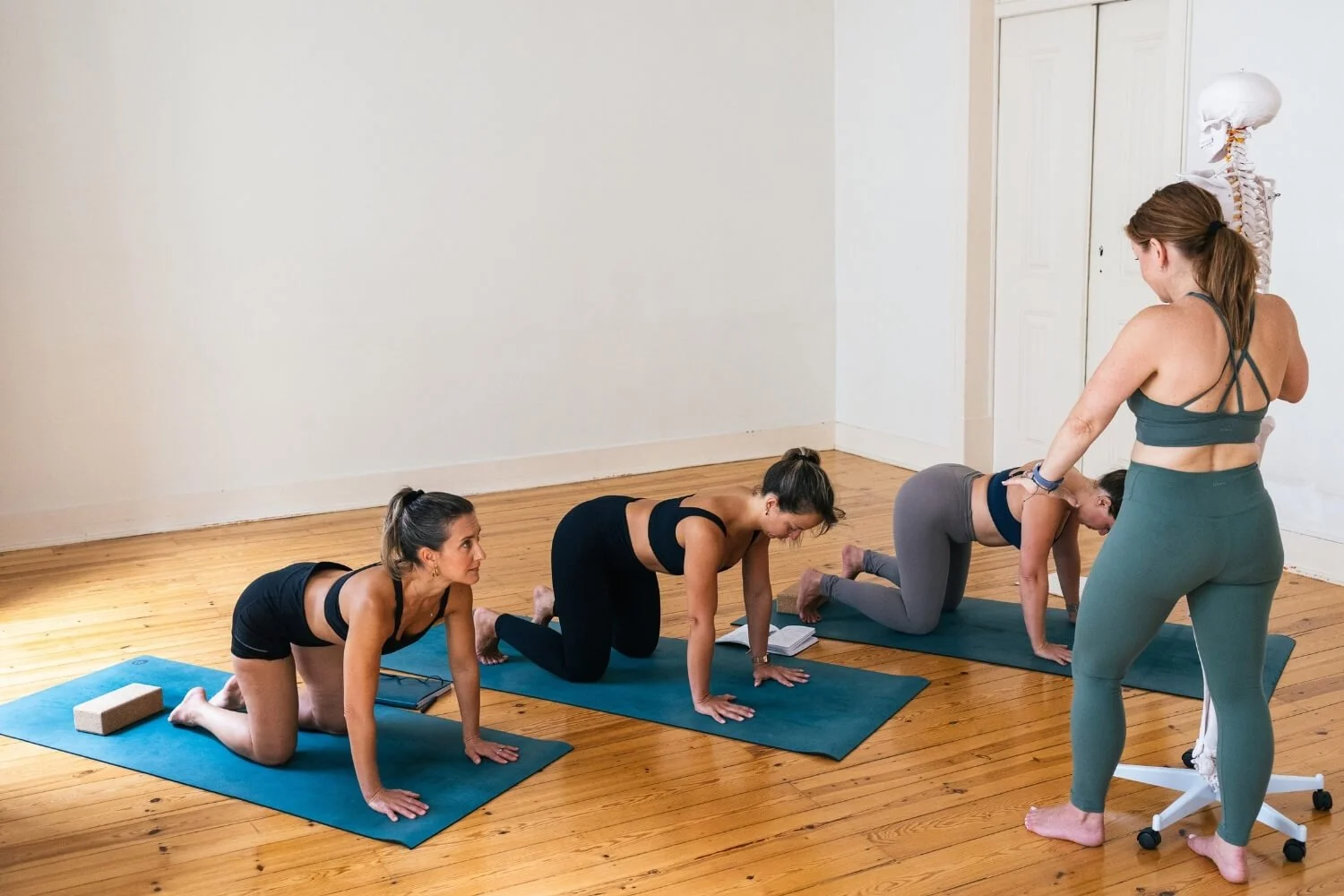
Years later, when I started teaching anatomy in yoga teacher trainings, teachers kept asking: What do I do for this type of pain? What muscle is working here?
They wanted the recipe. And I got it. But that's not how bodies work.
What DOES work is a framework that helps you understand what you're seeing, so you can respond to any body in any posture with confidence.
That framework is Balanced Posture Alignment.
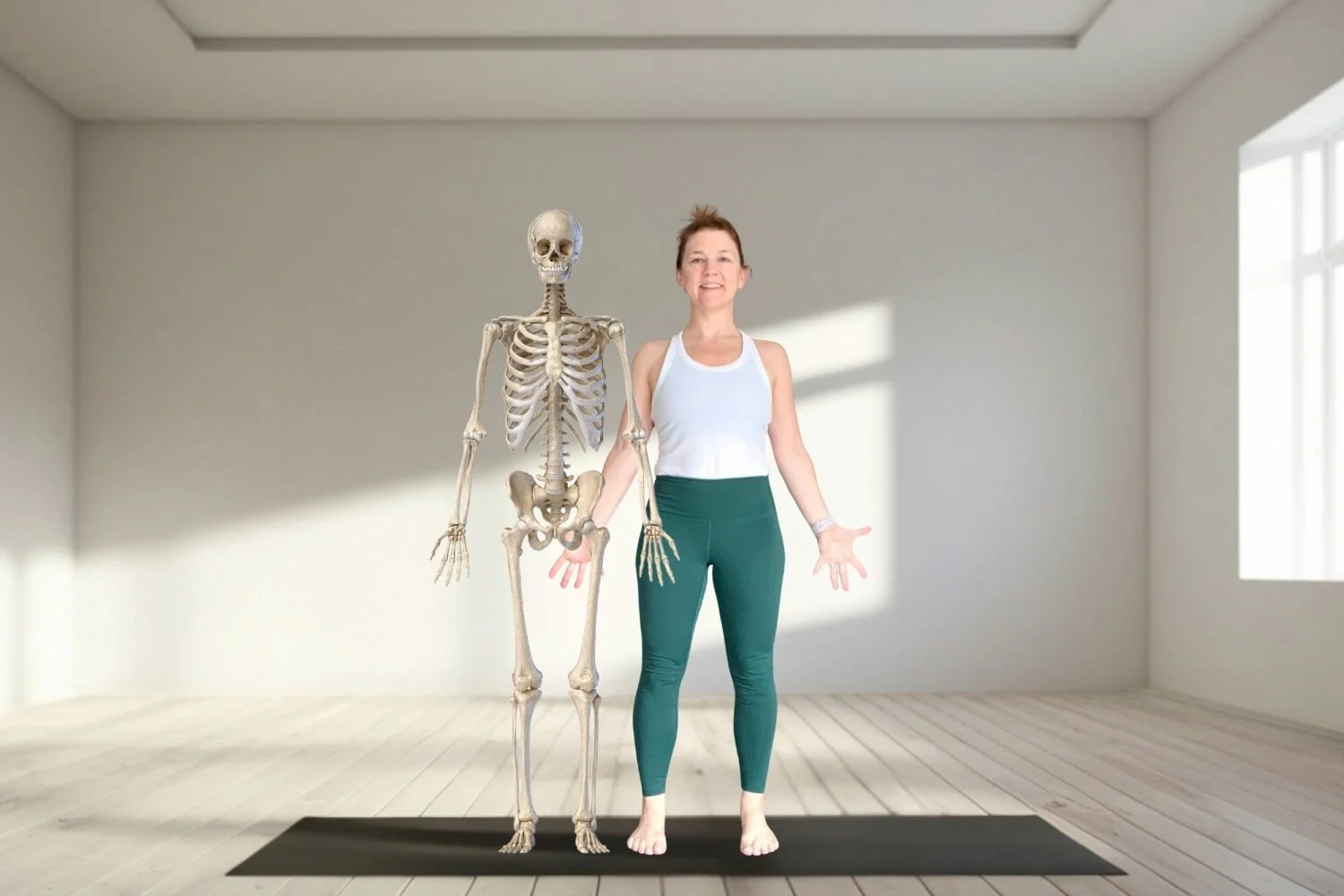
Balanced Posture Alignment (BPA) is a framework of 16 anatomy-informed cues that work in every yoga posture. Instead of memorizing different alignment instructions for hundreds of poses, you learn how the body works in Tadasana, then apply those same cues everywhere.
I developed BPA over 25+ years as a Doctor of Physical Therapy, 5 years teaching functional anatomy, and 15 years training yoga teachers. It's designed to make anatomy accessible and immediately usable.
In This Article:
What Balanced Posture Alignment is
The principles behind BPA
What BPA is NOT
How to start using this framework
What is Balanced Posture Alignment?
Balanced Posture Alignment (BPA) is a framework of 16 anatomy-informed cues that work in every yoga posture. Instead of memorizing different alignment instructions for hundreds of poses, you learn how the body works in Tadasana, then apply those same cues everywhere.
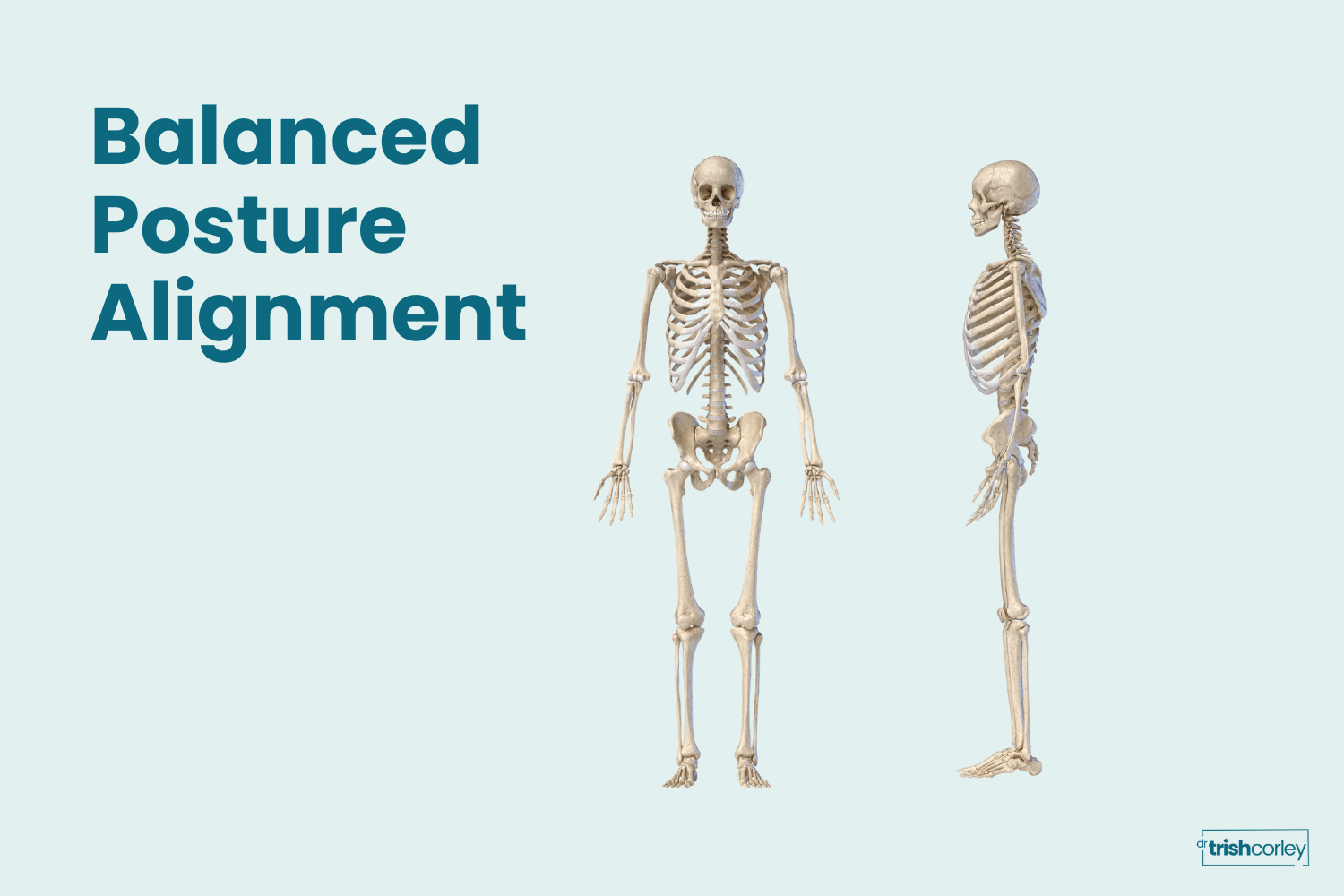
Here's the insight that makes it simple: Tadasana is essentially anatomical position. It's the same starting point physical therapists and movement experts use to understand the human body. If you learn the alignment of Tadasana, you have the foundation to understand any posture.
I developed BPA because I kept seeing the same gap. Teachers learned cues in their training but didn't understand the anatomy behind them. They could repeat the words, but when a student asked "why?" or showed up with a body that didn't match the textbook, they froze. They wanted to feel confident, but they were missing the framework to actually understand what they were seeing.
BPA is rooted in my Baptiste yoga training, informed by my understanding of human movement, and designed to make anatomy accessible and immediately usable.
The Principles Behind BPA
BPA isn't just a list of cues to memorize. It's built on key principles that help you understand WHY alignment works the way it does:
Focus on the bones.
Understand the alignment of Tadasana and apply it to any posture.
Start with the foundation of each posture to determine which cues will make biggest impact.
Stack joints for efficiency.
Address the whole body.
Integrate actions of the body together.
Create a balance of effort and ease.
When you understand these principles, you can observe any body, in any posture, and know how to respond.
What Balanced Posture Alignment is NOT
I want to be clear about something. Balanced Posture Alignment is not:
Rigid rules. Bodies are different. BPA gives you a framework, not a set of laws.
Designed for memorization. The goal is understanding, not reciting.
A way to get postures "right." There is no single "right." There's balanced, efficient, functional.
The only way. It's a starting point. A foundation. What you build from there is yours.
BPA is a tool. It creates stability and efficiency so the body can move with ease. That's it.
The Bottom Line
Balanced Posture Alignment is a framework that gives you the ability to understand what you're seeing, so you can respond to any body in any posture with confidence. It's 16 anatomy-informed cues, rooted in Tadasana, built on principles that make sense of how the body actually works.
You don't need to memorize hundreds of alignment instructions for hundreds of poses. You need a system. BPA is that system.
Get Curious! Q&A
What is Balanced Posture Alignment?
Balanced Posture Alignment (BPA) is a framework of 16 anatomy-informed cues that work in every yoga posture. It's rooted in Tadasana and built on principles of human movement.
Where did BPA come from?
I developed BPA from my background as a Doctor of Physical Therapy and my training in Baptiste yoga. The alignment cues were already embedded in Baptiste methodology, but many teachers didn't understand the anatomy behind them. BPA bridges that gap.
Do I need to memorize all 16 cues?
No. BPA isn't designed for memorization. The goal is to understand the principles and the anatomy behind the cues so you can apply them in real time. And here's the good news: you don't need years of study to get there. I've seen teachers learn this framework in a single weekend and walk away able to confidently cue any posture. My Enlightened Anatomy Course is designed to make this accessible and immediate.
Can BPA work for any yoga style?
Yes. Because BPA is based on how the human body works, not on a specific yoga tradition, the principles apply whether you teach vinyasa, hatha, power yoga, or anything else.
How is BPA different from other alignment systems?
BPA focuses on understanding, not rules. It gives you a framework to think critically about what you're seeing rather than a script to follow.
Start with the Foundation
Want to experience Balanced Posture Alignment for yourself? My free guide, Cue with Confidence, gives you 3 anatomy-informed cues for the feet, along with the anatomy that explains why they work.
The feet are where BPA begins. They're your foundation, your starting point, your first connection to the ground. Once you understand these 3 cues and the anatomy behind them, you'll see how simple it can be to teach with clarity and confidence.
Ready to go deeper? My Enlightened Anatomy Course teaches the complete BPA framework, all 16 cues, body part by body part, with the anatomy that makes it all make sense. In just 8 hours of content, you'll have the tools to teach any student, any posture, with genuine confidence.
Learn More About Enlightened →
About the Author
Dr. Trish Corley is a Doctor of Physical Therapy (Physiotherapy) and yoga teacher trainer with over two decades of clinical experience. She helps yoga teachers learn anatomy, give clear cues, and create classes their students love. Based in Lisbon, Portugal, she leads the Enlightened Anatomy Course, the Elevate Your Impact Mentorship, and the Power to Lead 200-Hour YTT.