

Yoga Anatomy for Teachers
A Complete Guide to Science-Backed Yoga
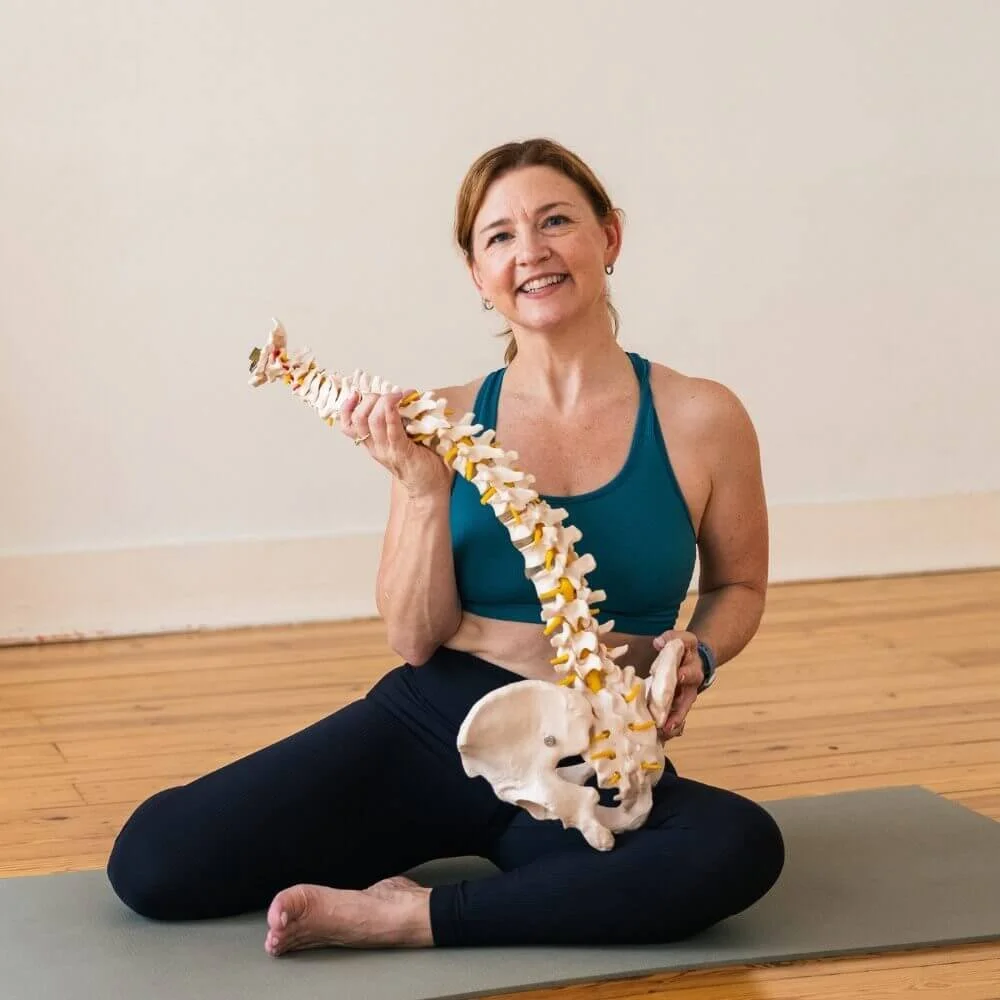
Yoga anatomy for teachers needs to be different from standard anatomy studies. It's not about memorizing muscles or passing a medical exam. It's about understanding how bodies move in yoga postures, seeing those bodies clearly, and communicating with cues that actually work.
I'm Dr. Trish Corley. I've been a Doctor of Physical Therapy since 2003, with over two decades of clinical experience. I'm also a former functional anatomy professor and a yoga teacher trainer (E-RYT 500), and I've been teaching anatomy to yoga teachers since 2011. Over those years, I've watched hundreds of teachers discover that anatomy gets much easier once it's taught through the postures they already love.
This guide is your starting point. Whether you're a newer teacher building your foundation or an experienced teacher ready to go deeper, you'll find the core concepts here, plus a path into everything I've written on each one.
Yoga anatomy for teachers includes the study of how your bones, joints, muscles, and nervous system work together in yoga postures, and how to turn that understanding into clear, confident cues.
In This Guide:
What yoga anatomy is, and how it differs from medical anatomy
What yoga anatomy covers
What yoga teachers need to know (and what you can let go of)
Yoga anatomy in action
A framework built for yoga teachers
Where to start learning
Get Curious! Q&A
What Is Yoga Anatomy?
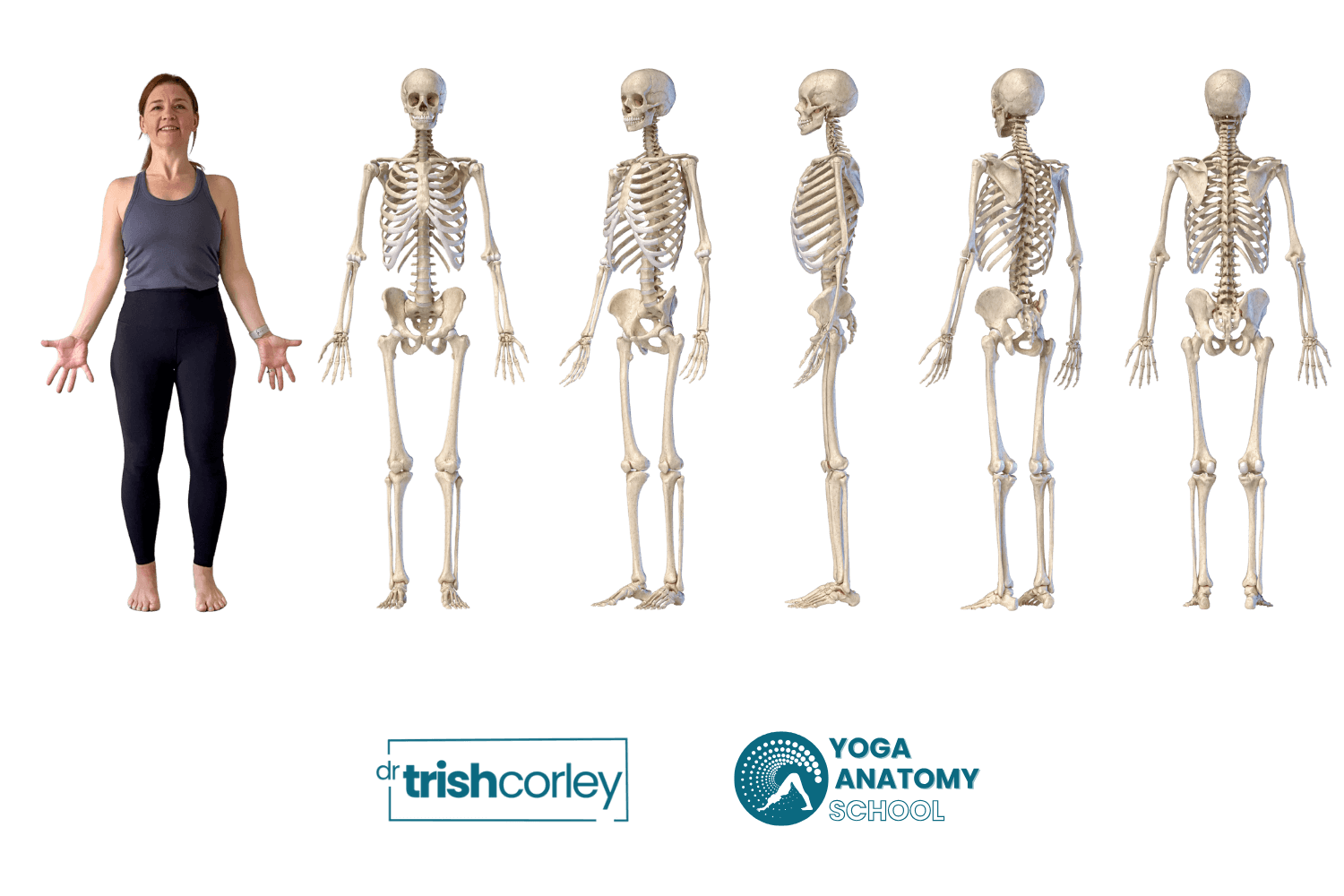
Yoga anatomy is the study of the body applied to yoga practice. It uses the same science as any anatomy course. The difference is the question it asks. Medical anatomy asks, "What is this structure called, and what goes wrong with it?" Yoga anatomy asks, "What is this body doing in this posture, and what will help?"
That shift changes everything. Many anatomy courses were designed for medical students, physical therapists, and athletic trainers, people who need to diagnose and treat. As a yoga teacher, your job is different. You need to see how bodies move in postures and guide them with your words.
If anatomy has ever felt like too much, you're in good company. Many teacher trainings present it as a list of muscle names with little connection to the mat. (Unless you trained with me. Then you know there's a better way.) The good news is that when anatomy is taught through postures you already practice, it starts to click.
Anatomy is also only half the picture. Anatomy names the parts. Biomechanics explains how those parts move and share load, and that's often where the teaching insight lives. I break down the difference in Biomechanics vs. Anatomy: What Makes You a Better Yoga Teacher.
What Yoga Anatomy Covers
You don't need to learn all of this at once. Here are the main areas of yoga anatomy, with a place to go deeper on each.
Bones and Joints
Your bones give your body its structure. Joints are where two or more bones come together and allow for movement to happen. We often want to understand how much range of motion each joint has as that tells us a lot about how different yoga postures can be approached and adapted. Range of motion can be limited by a variety of factors including muscle length, ligaments, and bone shape. When you understand what is causing the limitation of movement, you don’t need to worry about forcing students into shapes. You can actually work with them to practice in ways that work for their anatomy.
I think too many yoga teachers learn cues and don’t look at the bones and joints of the students they are actually teaching. This is probably why many cues have been passed down that need a second look. For example, “locking your knees” raises some confusion and that is because the anatomy is nuanced. I explain it in Should You Lock Your Knees in Yoga? A Physical Therapist's Perspective. The same goes for the rule about placing your foot on your knee in Tree Pose, covered in Can You Put Your Foot on Your Knee in Tree Pose?
Muscles
Your muscles contract and pull on bones to create movement at the joints. There are different types of muscle contractions. This is important for yoga teachers to understand. If we think about a muscle having just one action, it actually makes it confusing to figure out what muscles are doing in asana. In reality, a muscle can often pull on more than one joint and can always work in three different ways. Muscles can shorten, lengthen under tension, or hold steady without changing length. You can learn more about all three in Muscle Contractions in Yoga: The 3 Types You Need to Know.
Knowing how muscles work also shows why vague muscle cues can fall flat. Many students can't feel the muscle you're naming. Stop Saying "Engage Your Core" in Yoga offers a clearer way to cue stability.
The Spine
Your spine moves in six directions: forward bending, backbending, side bending to each side, and twisting to each side. Understanding those six movements gives you a map for every posture that involves your spine, which is nearly all of them. Start with How the Spine Moves in Yoga: A Physical Therapist's Guide.
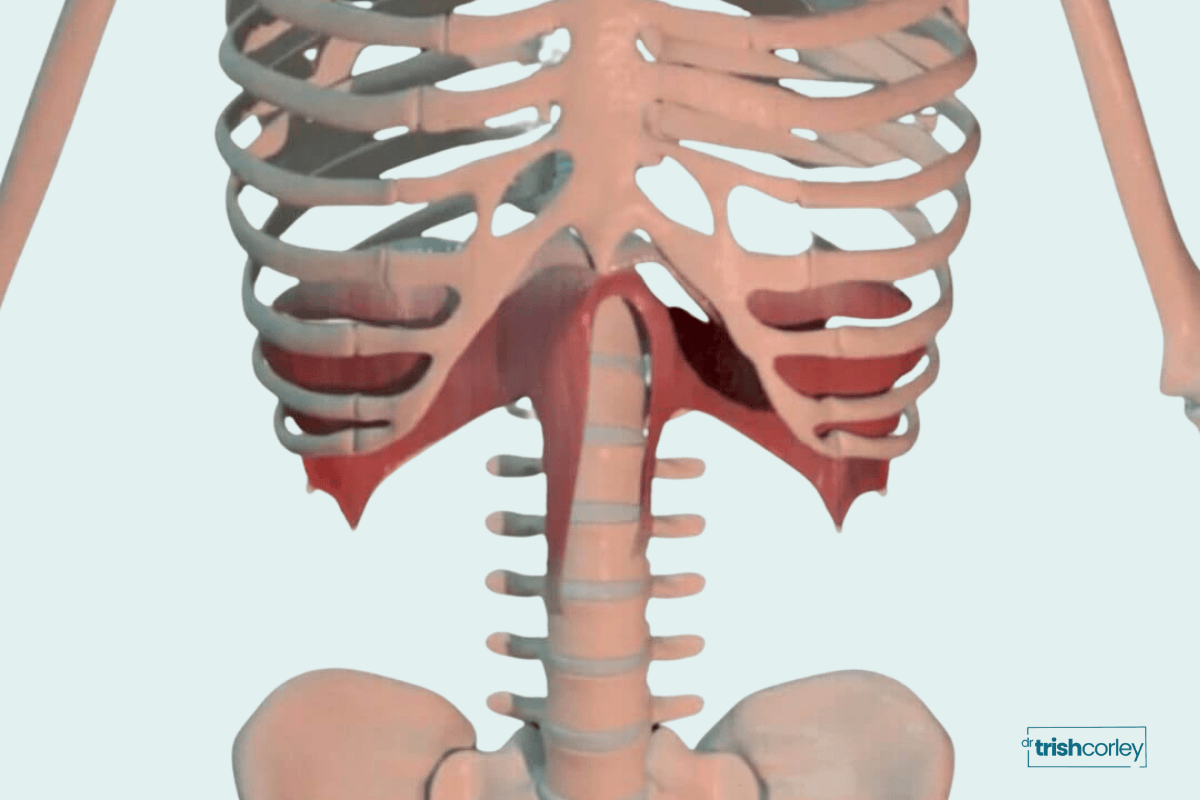
Your ribs connect to your thoracic spine, so how your ribs move affects how your spine moves. That connection shows up in backbends, twists, and every breath you take. 5 Reasons Yoga Teachers Should Study the Spine and Ribs explains why it matters for your cues.
The Nervous System and Breath
Every movement of the body starts as a signal from your nervous system. Yoga teachers talk about energy constantly, and there's real anatomy behind much of what we feel. I trace it in The Anatomy of Energy in Yoga: A Nervous System Guide.
While breathing happens on its own (you don’t need to think about how to breathe), you can also control your breath intentionally. Purposely changing how you breathe is one of the easiest ways to influence your nervous system. Conscious Breathing in Yoga: It's Neuroscience explains why. Even the breath you cue during a transition matters, as you'll see in Breath Cues in Yoga: Inhale or Exhale to Float Forward?
Connective Tissue and Healing
Quick anatomy lesson here: Ligaments connect bone to bone. Tendons connect muscle to bone. A sprain involves a ligament, and a strain involves a muscle or tendon. As yoga teachers, we can count on working with students with pain and injuries. Knowing the difference between things like a sprain and a strain helps you understand what a student is experiencing and allows you to offer better modifications. Learn more in Sprains and Strains in Yoga: What Yoga Teachers Need to Know.
It’s also important to understand some of the physiology of healing. Tissue heals in phases, and each phase asks something different of a student's practice. My four-part series starts with A Yoga Teacher's Guide to Healing Injuries, Part 1: Inflammation Phase.
What Yoga Teachers Need to Know
You can let go of memorizing the origin and insertion of every muscle. Your students will never ask. I promise. Here's what makes a real difference in your teaching.
Start with Tadasana
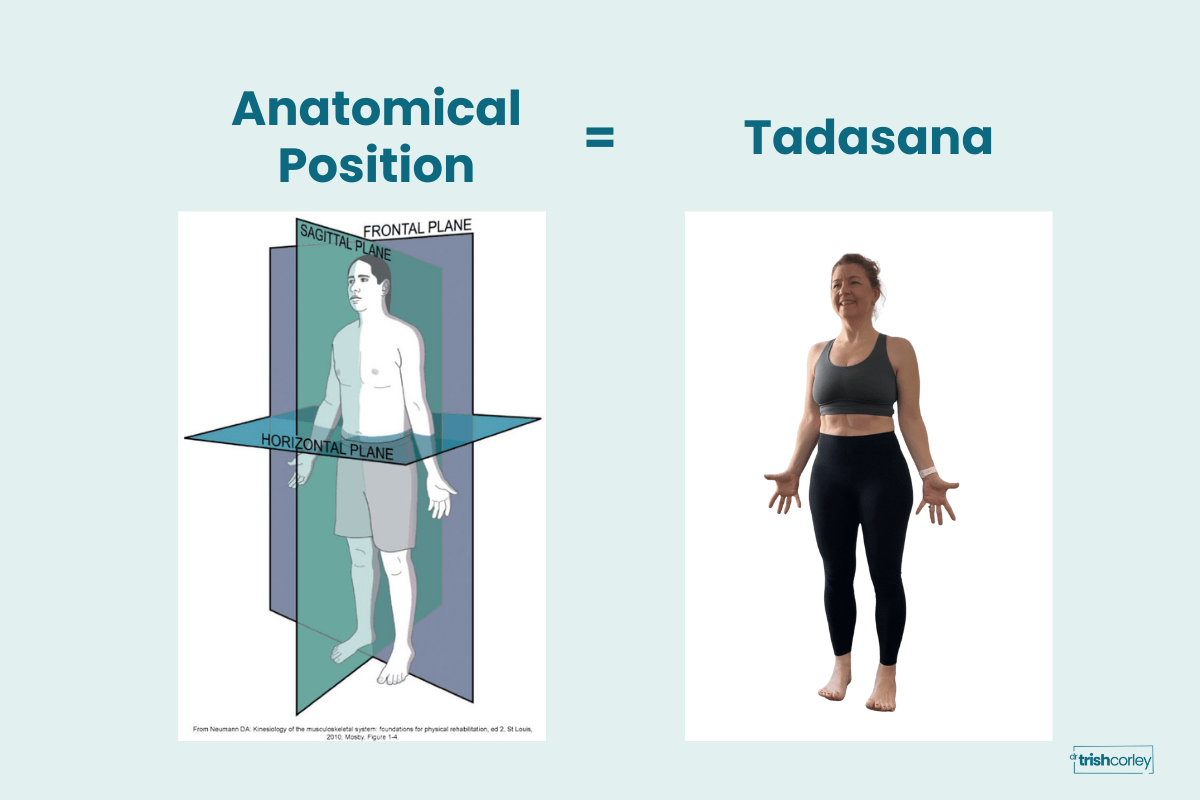
Tadasana closely mirrors anatomical position, the standard reference position used to describe the body. When you understand alignment in Tadasana, you can carry the same principles into every posture you teach. Why Tadasana Is the Foundation for Alignment of Every Yoga Posture shows you how.
Cue What Students Can Feel
Bones are easier to find than muscles. A cue that points to a bone gives students something concrete, and the right muscles often respond on their own. I explain why in Yoga Alignment Cues: Why Bones Matter More Than Muscles.
I get the desire to use flowery and unique cues. And I will tell you that simple foundational cues can be much more effective. And speaking of foundation, start cueing from the foundation of postures. In standing postures, the feet are the foundation. When you press down into your hands or feet, the ground presses back, and that creates lift through the rest of your body. Yoga Foundation Cues: Why Pressing Down Creates Lift walks through the principle in detail.
Once you can see clearly, the next skill is saying it clearly. That's the focus of Effective Yoga Cues: The 3-Part Formula for Clear, Confident Teaching.
See the Whole Body
What happens at your feet affects your knees, hips, spine, and shoulders. The place where a student feels stuck is often not where the most helpful cue belongs. When you learn to see these connections, your teaching becomes precise. Seeing the whole body also makes adapting postures simpler. One principle, the base of support, helps you modify any posture for any student. Learn it in Yoga Modifications: How to Adapt Any Posture.
Alignment matters, and it's only part of the story of keeping students safe. For a physical therapist's view on that balance, read Does Yoga Alignment Keep Students Safe?
Yoga Anatomy in Action
I will keep on preaching about this for a long time: The knowledge of anatomy is useless for yoga teachers if you don’t know what to do with it in practice and teaching. That’s why I often break down yoga postures and look at the alignment and cues that make a difference.
Why Heels Don't Touch in Downward Dog
Muscle Contractions in Plank and Chaturanga
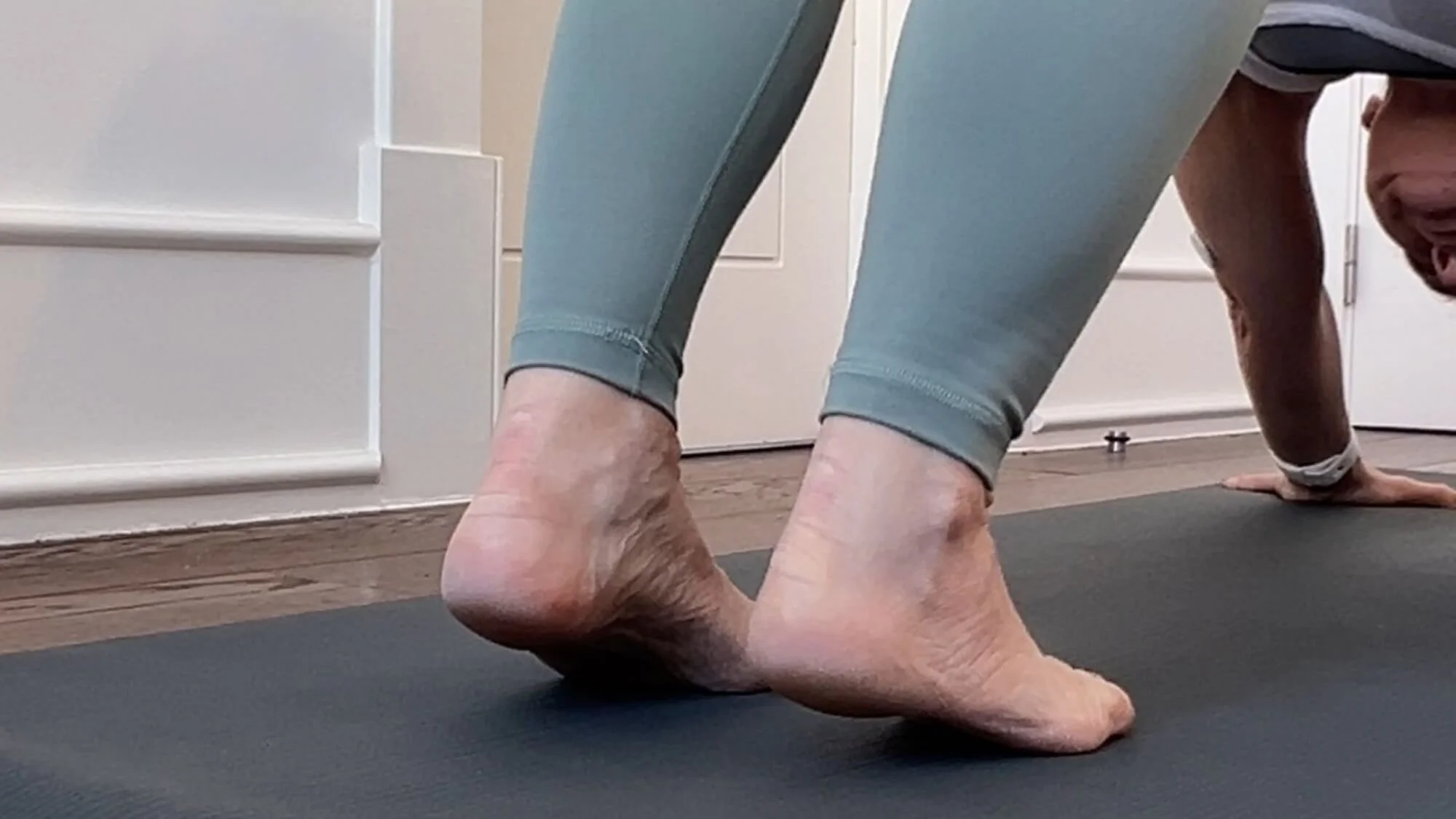
Many students assume their heels are supposed to reach the floor. Whether they do depends on a few things including calf muscle length, ligament restrictions, and the bone structure of the ankle. Some of that may change with practice, and some of it won't. Either way, heels off the floor can still be a strong, well-aligned Downward Facing Dog.
Teaching takeaway: cue what's happening in the posture, not the distance to the floor. Read Why Your Heels Don't Touch in Downward Dog (And Why That's Okay). For what's happening in your lower back in the same posture, see Downward Dog Alignment: How to Keep the Lumbar Curve.
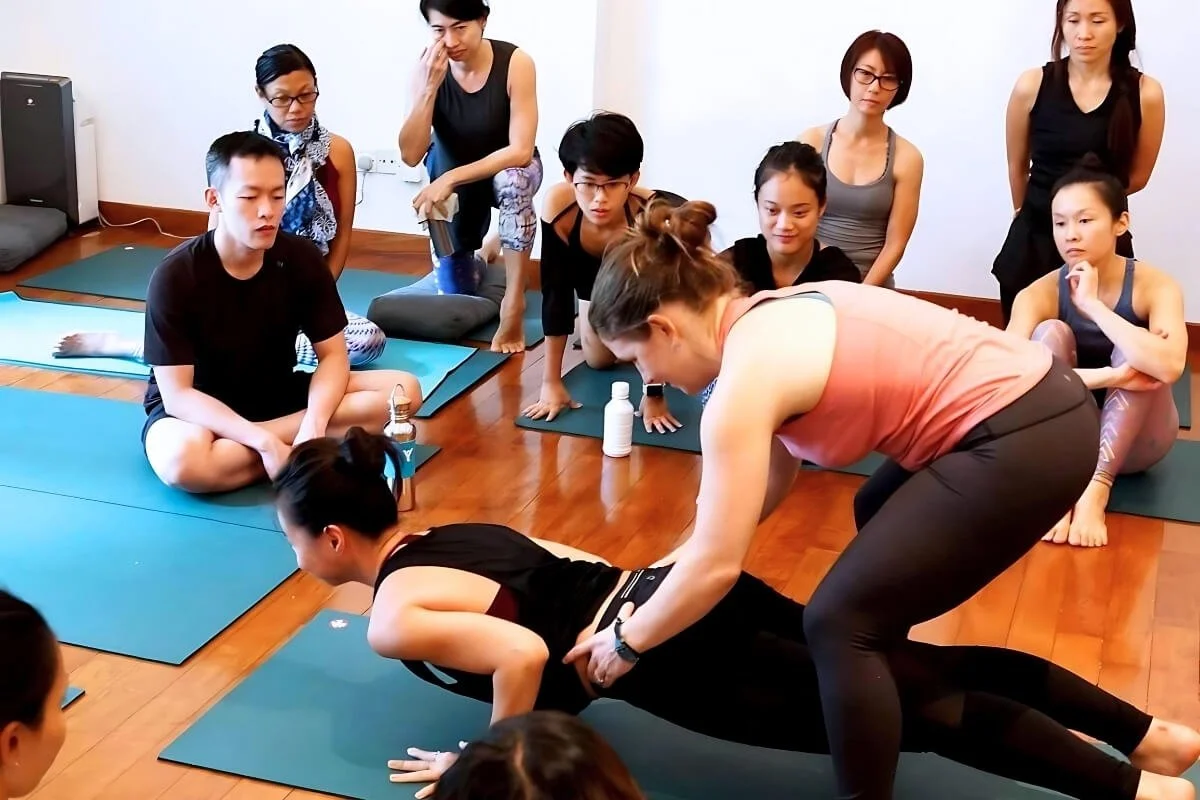
Holding plank requires mostly isometric muscle contractions. While your body stays still, your muscles actually work hard. Lowering into Chaturanga requires many muscles to eccentrically contract. For example, your triceps lengthen under control as you lower. Pressing back up to plank has the muscles work in opposite directions and therefore the triceps contract concentrically.
Teaching takeaway: the lowering phase often asks the most control, so slowing it down can build strength in a functional way, with lots of eccentric contractions. See why Chaturanga challenges so many students in Why Is Chaturanga So Hard?
Finding Neutral Pelvis
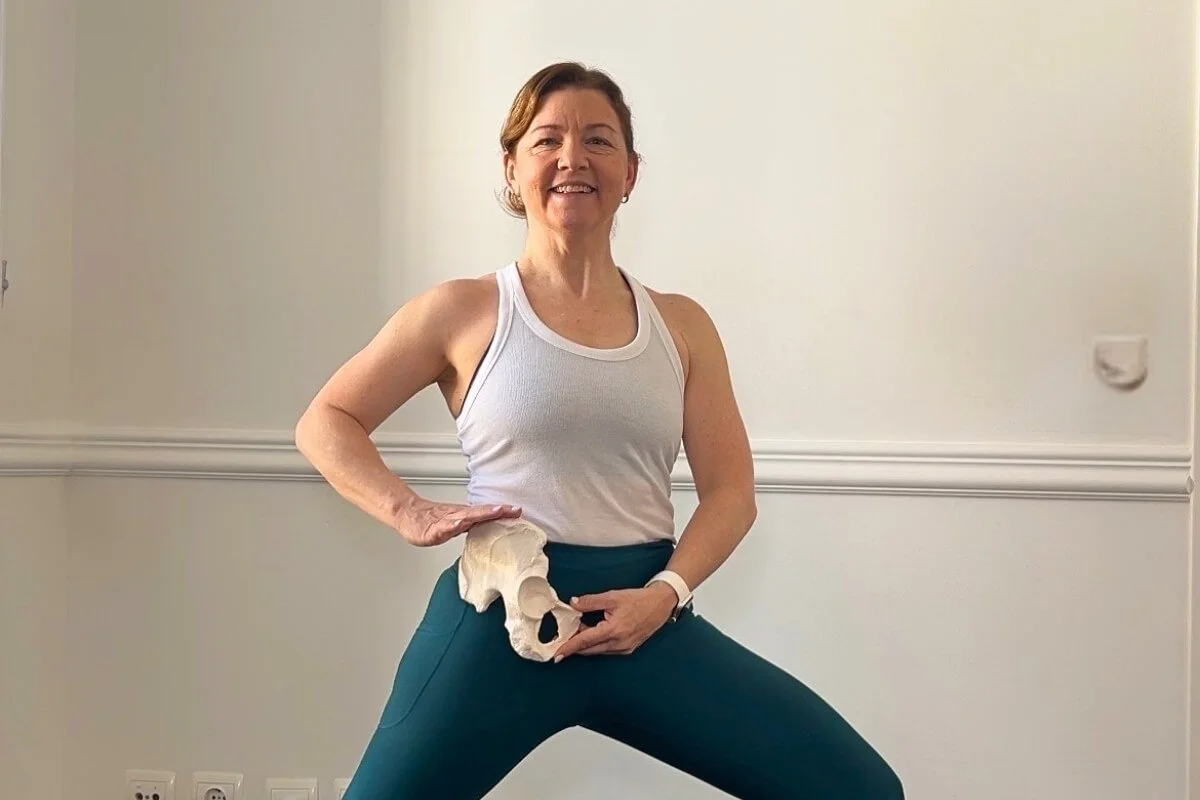
Neutral pelvis is the position where your pelvis sits balanced, not tipped far forward or back. From here, your lower back can more easily keep its natural curve, and many postures feel steadier and easier.
Teaching takeaway: once you can find neutral pelvis in your own body, you'll start seeing it (and its absence) in your students. Learn how in How to Find Neutral Pelvis in Yoga (And Why It Changes Everything).
Shoulders Up or Down?
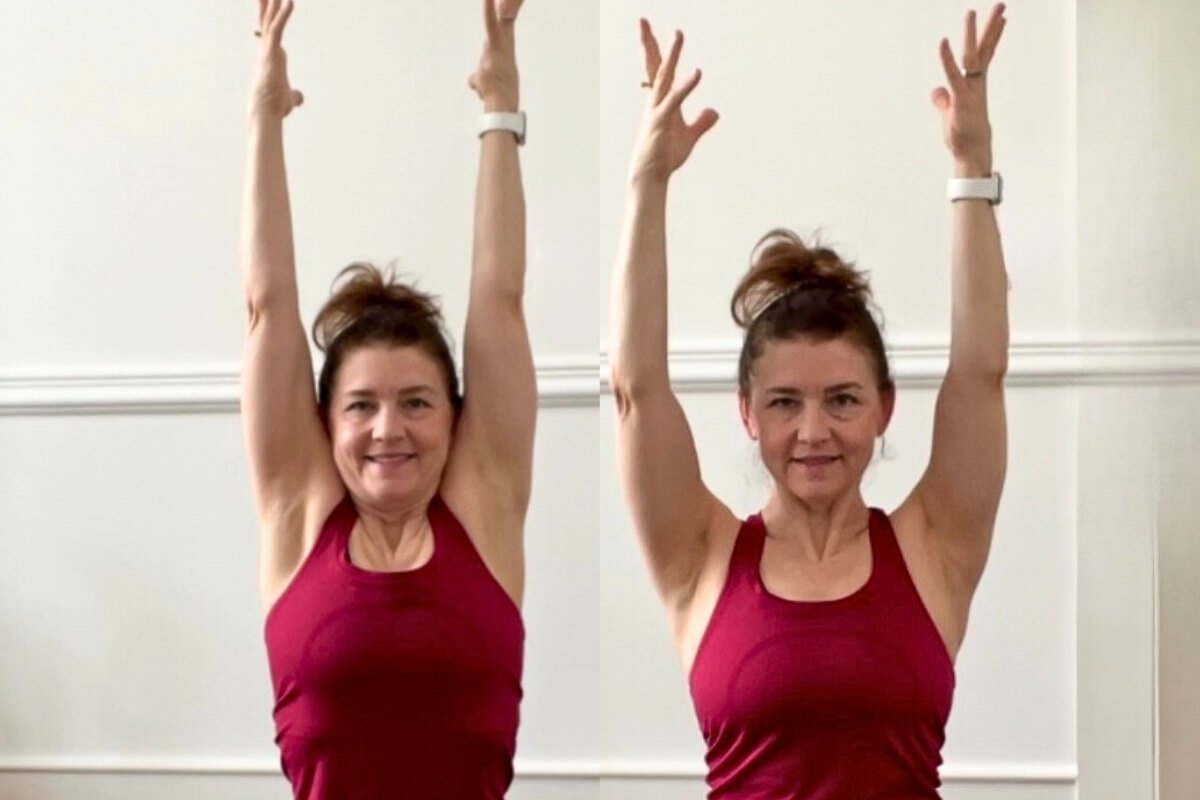
It seems yoga teachers keep debating (or getting confused) about whether it’s okay to cue the shoulders to go up or down when the arms go overhead in postures like Warrior One. What many are missing is a real understanding of the biomechanics of the shoulders. Many say the shoulders need to elevate and confuse shoulder elevation with upward rotation of the shoulder blade. There is a difference!
Teaching takeaway: the right shoulder cue depends on where your arms are. The full anatomy is in Shoulders Up or Down? The Anatomy Behind Yoga's Most Confusing Cue.
Notice the pattern? Each example teaches a principle that travels into many postures. That's the heart of how I teach: principles, not postures.
A Framework Built for Yoga Teachers: Balanced Posture Alignment
I kept seeing smart, dedicated yoga teachers overwhelmed by anatomy information they couldn't use. So I built something different.
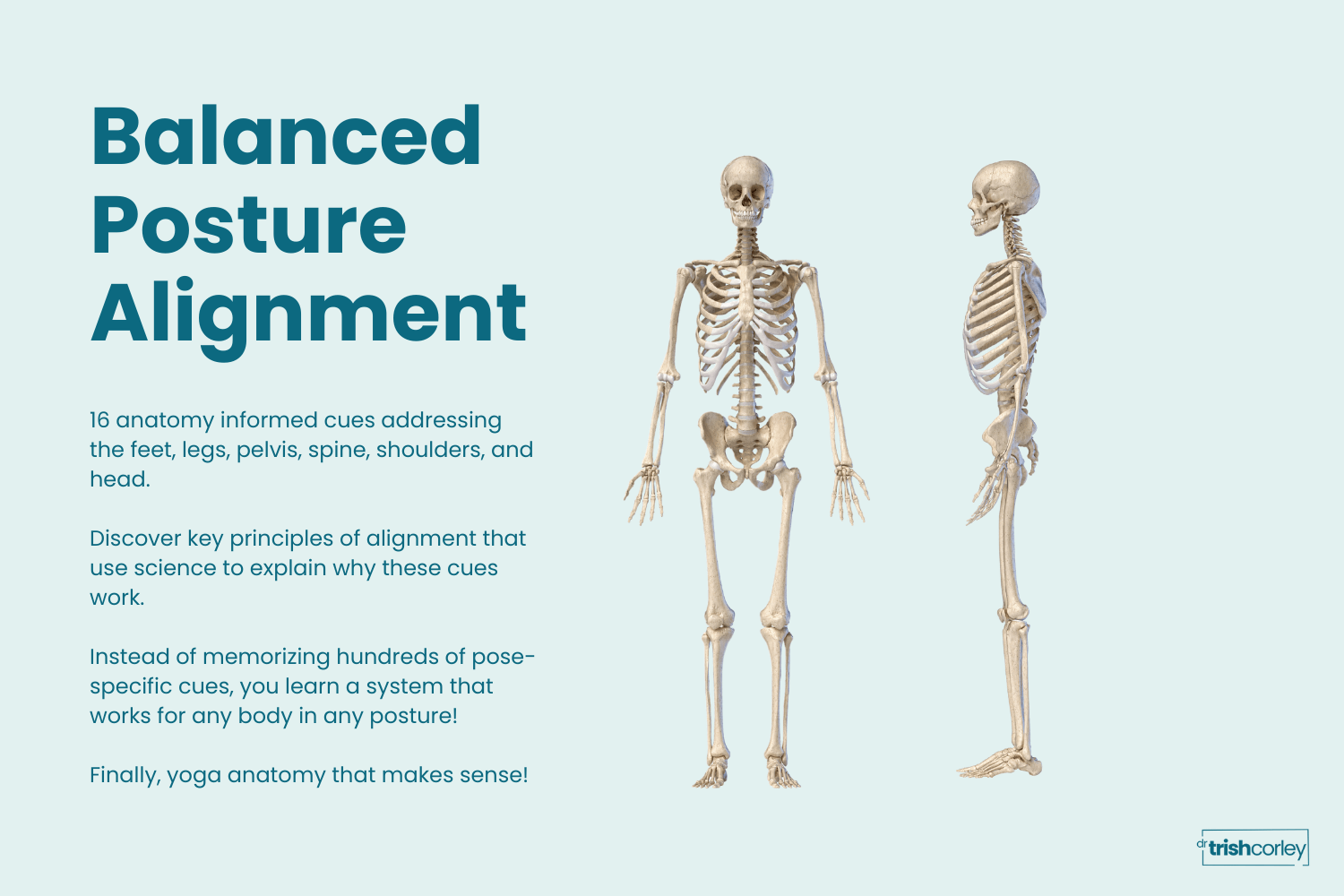
It's called Balanced Posture Alignment, or BPA. It's a framework of 16 anatomy-informed cues organized by body region (feet, legs, pelvis, spine, shoulders, and head) and grounded in principles that apply to every posture.
Instead of memorizing hundreds of posture-specific cues, you learn one system. Instead of guessing, you observe. Instead of repeating cues you heard somewhere, you understand why they work (or don't). Get a look inside in What Is Balanced Posture Alignment? The complete framework is what I teach inside the Enlightened Anatomy Course.
Where to Start Learning Yoga Anatomy
The best place to start is your own body, one concept at a time. Learn it on your mat first, then take it into your teaching. I lay out a step-by-step approach in How to Learn Yoga Anatomy (Without the Overwhelm).
The Bottom Line
Yoga anatomy for teachers doesn't have to be overwhelming. When you learn anatomy built for yoga (not medical school), you can observe any body, in any posture, and know how to respond. Start with one concept, feel it in your own body, and let it change how you see your students.
Anatomy gives you clarity and confidence. It helps you offer cues students can feel and follow, support different bodies in the same posture, and answer student questions with real understanding instead of guesses.
Questions & Answers About Yoga Anatomy
What is yoga anatomy?
Yoga anatomy is the term commonly used to describe the study of anatomy applied to yoga. How it’s taught varies. If you want to learn more yoga anatomy, be sure to choose a teacher and training that will apply anatomy to asana and other yoga practices.
What does yoga anatomy include?
Yoga anatomy includes physical anatomy (bones and joints, muscles, the spine, the nervous system and breath, and connective tissue) along with biomechanics, which explains how these parts move in yoga postures. It can also include subtle anatomy, such as the chakras and the elements. I teach the physical body first, because it's what many of us can feel and relate to right away. And when you speak to the physical body, you're also speaking to the subtle body. Starting with the subtle body alone can leave students unsure what to actually do in a posture.
What anatomy should yoga teachers know?
Yoga teachers benefit most from understanding how joints move, what limits range of motion (muscles, ligaments, or bone structure), how the body works as a connected system, and how to turn that knowledge into clear cues. You don't need to memorize every muscle. You need a framework for seeing and responding to bodies in motion.
Do yoga teachers need to study anatomy?
Studying anatomy makes a real difference in your teaching, especially when it's taught for yoga. Medical-style anatomy can overwhelm many yoga teachers with information they'll rarely use. Anatomy designed for yoga is practical and focused on observation and cueing.
Can you teach yoga without knowing anatomy?
It’s possible. However, if you teach asana, you are speaking to the human body. So if you don’t know anatomy, you will end up talking about what you don’t know. That can easily leave a yoga teacher in doubt. Knowing some anatomy adds depth to what you already offer, allows you to give more precise cues, and gives you more confidence.
How much anatomy is covered in a 200-hour yoga teacher training?
Yoga Alliance's standards for 200-hour trainings set a minimum of 30 hours for anatomy and physiology. How much of that time connects to real teaching varies widely from one training to another. While time spent on a subject matters, the quality is more important. If you are looking for a 200 hour yoga teacher training and want to feel confident with the anatomy, do your research to ensure the school is not just doing the bare minimum to check the box.
How do I learn yoga anatomy as a teacher?
Start with your own body and one concept at a time, then bring it into your teaching. My step-by-step approach is in How to Learn Yoga Anatomy (Without the Overwhelm).
What is the best yoga anatomy course for teachers?
The best yoga anatomy course for teachers is one designed for yoga teachers. Look for practical application, a clear framework, and instruction that carries directly into your classes. The Enlightened Anatomy Course teaches the Balanced Posture Alignment framework, with 16 cues organized by body region.
Go Deeper with your understanding of yoga anatomy and cueing:
Want to see anatomy-informed cueing in action? My free guide, Cue with Confidence, gives you three cues you can use in your very next class, plus the anatomy behind why they work.
Get the Free Cue with Confidence Guide →
Ready for the complete framework? The Enlightened Anatomy Course takes Balanced Posture Alignment through every major body region.
About the Author
Dr. Trish Corley is a Doctor of Physical Therapy (Physiotherapy) and yoga teacher trainer with over two decades of clinical experience. She helps yoga teachers learn anatomy, give clear cues, and create classes their students love. Based in Lisbon, Portugal, she leads the Enlightened Anatomy Course, the Elevate Your Impact Mentorship, and the Power to Lead 200-Hour YTT.