
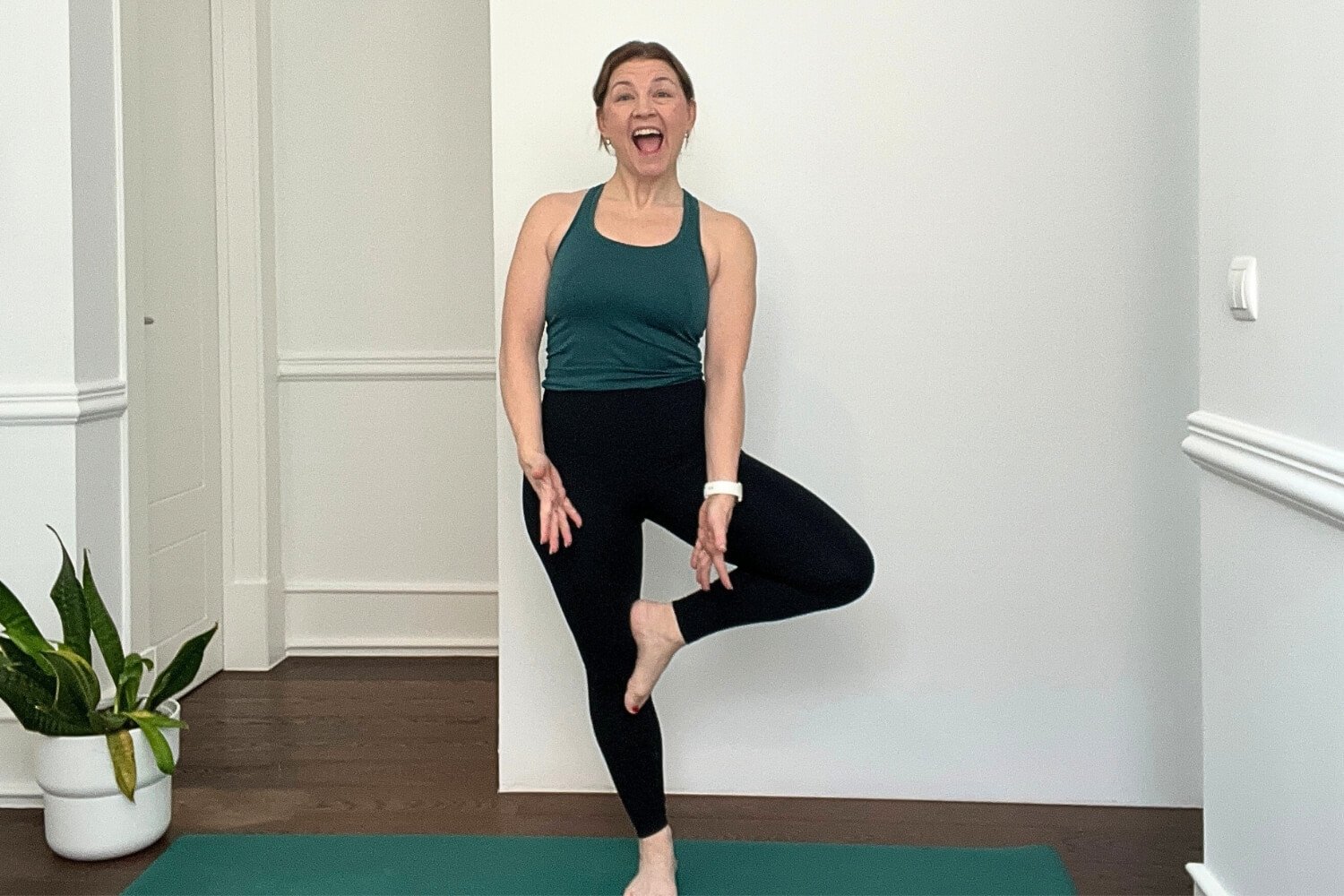
You'd think I would have questioned it sooner.
I'm a Doctor of Physical Therapy. I was a gymnast. I've put my body in positions far more precarious than standing on one leg. But when yoga teachers said "don't put your foot on your knee," I just nodded and moved my foot. That's what good students do, right? We don't typically pause mid-class to request a biomechanical explanation. Most students just do what the teacher says….and I did too.
(Honestly, it's a little embarrassing in hindsight.)
Eventually my curiosity caught up with me. I started wondering where this rule came from and whether it actually held up. So I did what any self-respecting anatomy nerd would do: I put my foot directly on my knee with curiosity about what was happening. What did I feel? What was the experience? What are the biomehanics?
It didn't hurt. In fact, it felt stable. Really stable. Now I really wanted to explore the biomechanics more. Hence, this article!
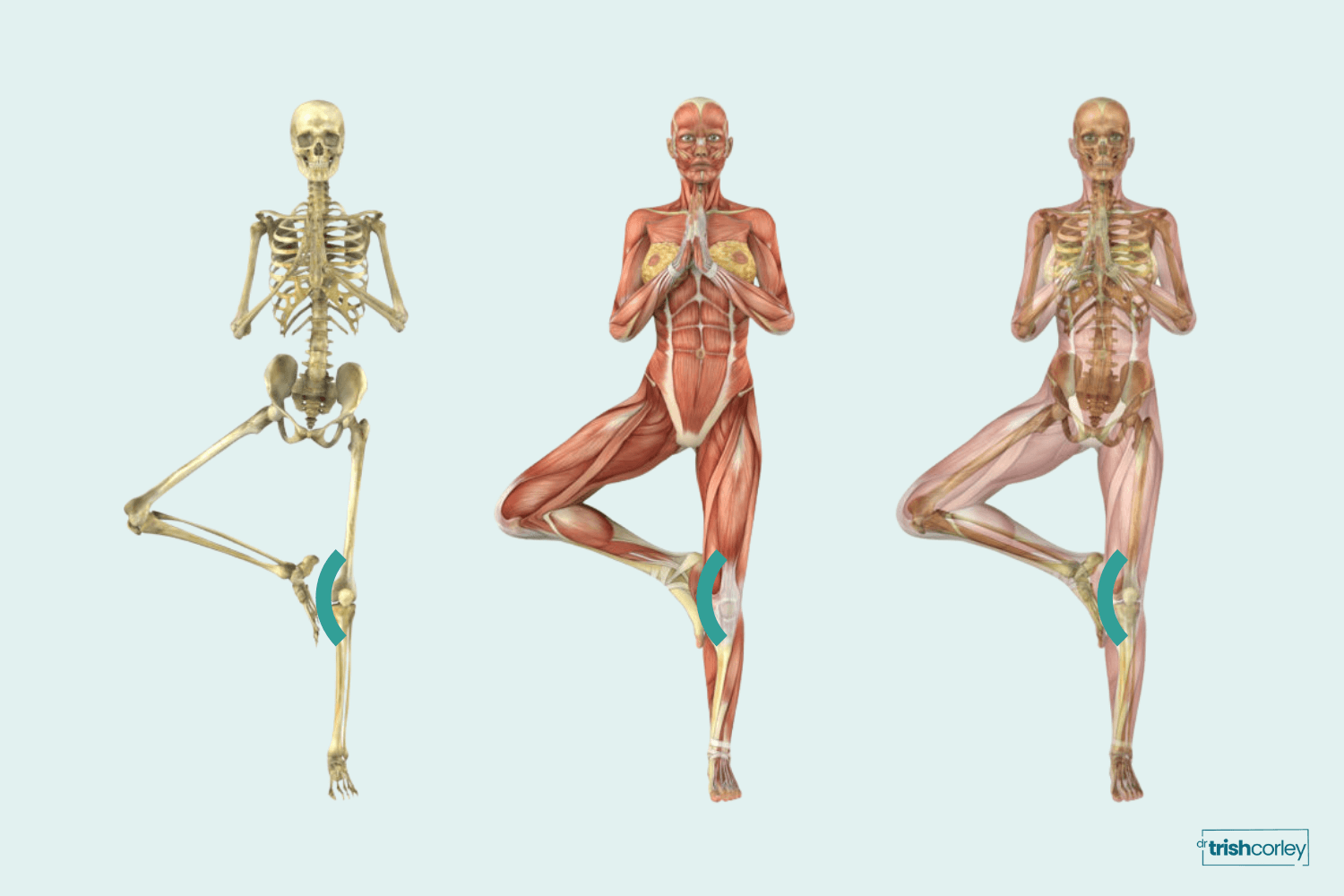
Here's what I've found after 20+ years as a physical therapist and yoga teacher: placing your foot on your knee in tree pose can actually provide MORE stability than above or below it. When you press into both bones at once, you're not creating a sliding force on either one. You're mimicking what your own ligaments do naturally.
I first wrote about this years ago, and since then I've watched more teachers start questioning this cue. Biomechanics-minded folks like Jenni Rawlings have made similar points. And yet? I still hear "anywhere but the knee" in classes. I recently watched a teacher say it during a training I was co-leading. When I shared my analysis afterward, he looked at me like I'd just told him water isn't wet. It clearly wasn't something he'd ever thought to question.
And that's the real issue, isn't it? Where did he learn that? Where did any of us learn it? Someone said it, we repeated it, and here we are, still passing it down without asking why.
Students trust us. They follow our cues without stopping to analyze them. If we're going to have that kind of influence, we have a responsibility to understand what we're saying.
In This Article:
Why the "no knee in tree pose” rule gets passed down
The knee anatomy that explains what's really happening
A simple yoga block experiment you can try
What actually matters for knee safety in tree pose
The Knee Isn't a Simple Hinge Joint
While we're questioning things, let's address another common myth: that the knee is a hinge joint.
It's not, actually. Your knee also rotates slightly. But honestly? That's not even the point here. The point is that this is the kind of thing we assume is true without really examining it. And when we assume the knee only moves one way, we get overly cautious about anything that looks like it might stress the joint sideways.
So let's look at what actually matters for stability in tree pose.
What Your Collateral Ligaments Do:
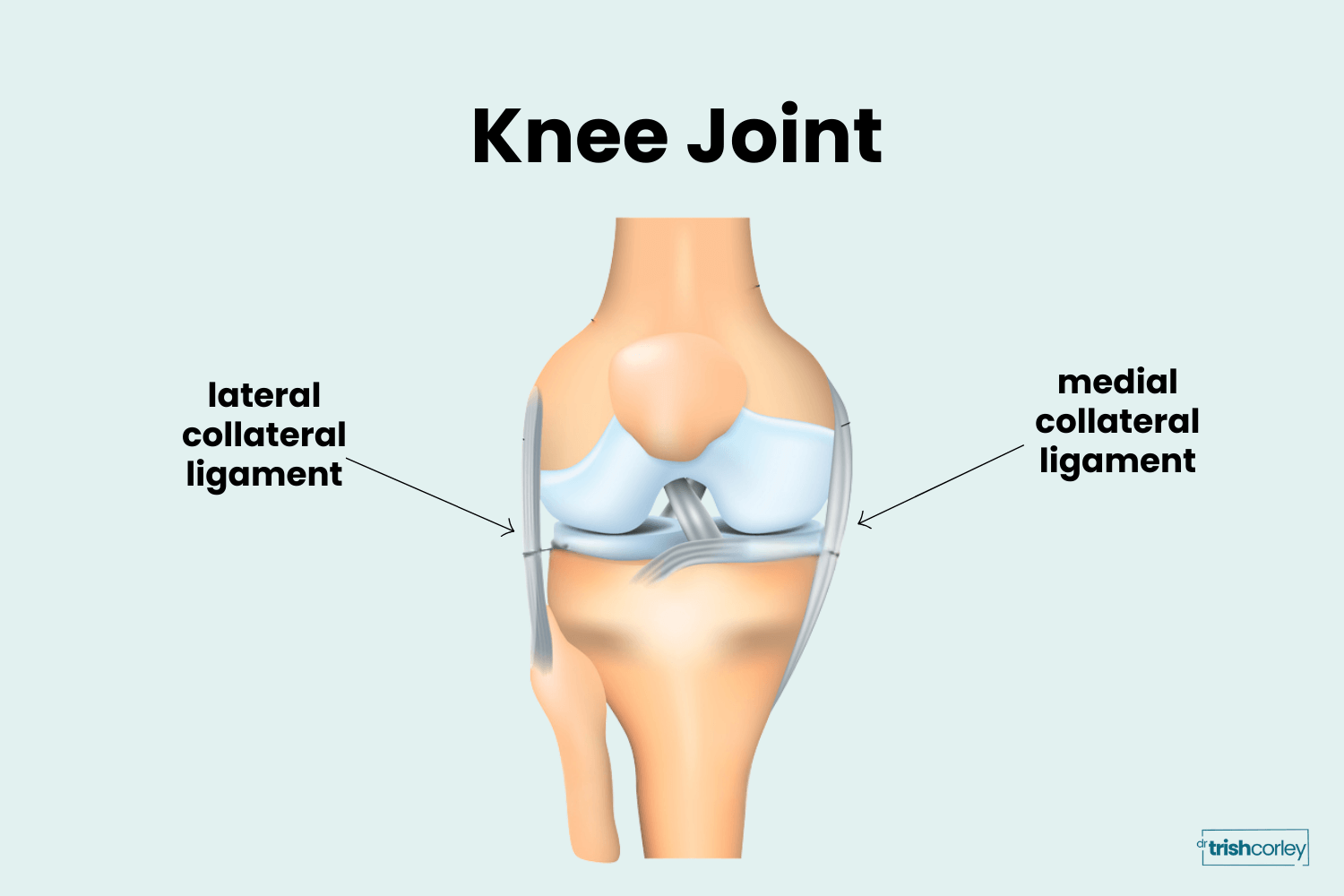
Two ligaments run along the sides of your knee: the lateral collateral ligament on the outside, and the medial collateral ligament on the inside. Their main job is preventing your knee from bending side to side.
Here's the interesting part. When you place your foot on the outside of your knee in tree pose, your foot does something similar to what the medial collateral ligament does. It provides support to the inner knee.
Your foot isn't working against the joint. It's working with it.
The Yoga Block Experiment
Try this at home. Stack two yoga blocks on top of each other at their tallest height. The top block represents your thigh bone. The bottom block represents your shin bone.
Now push on the side of just the top block. It slides off.
Restack and push on just the bottom block. It moves, and the top block comes crashing down.
Now restack and press into both blocks at the same time, right at the seam where they meet. They stay put.
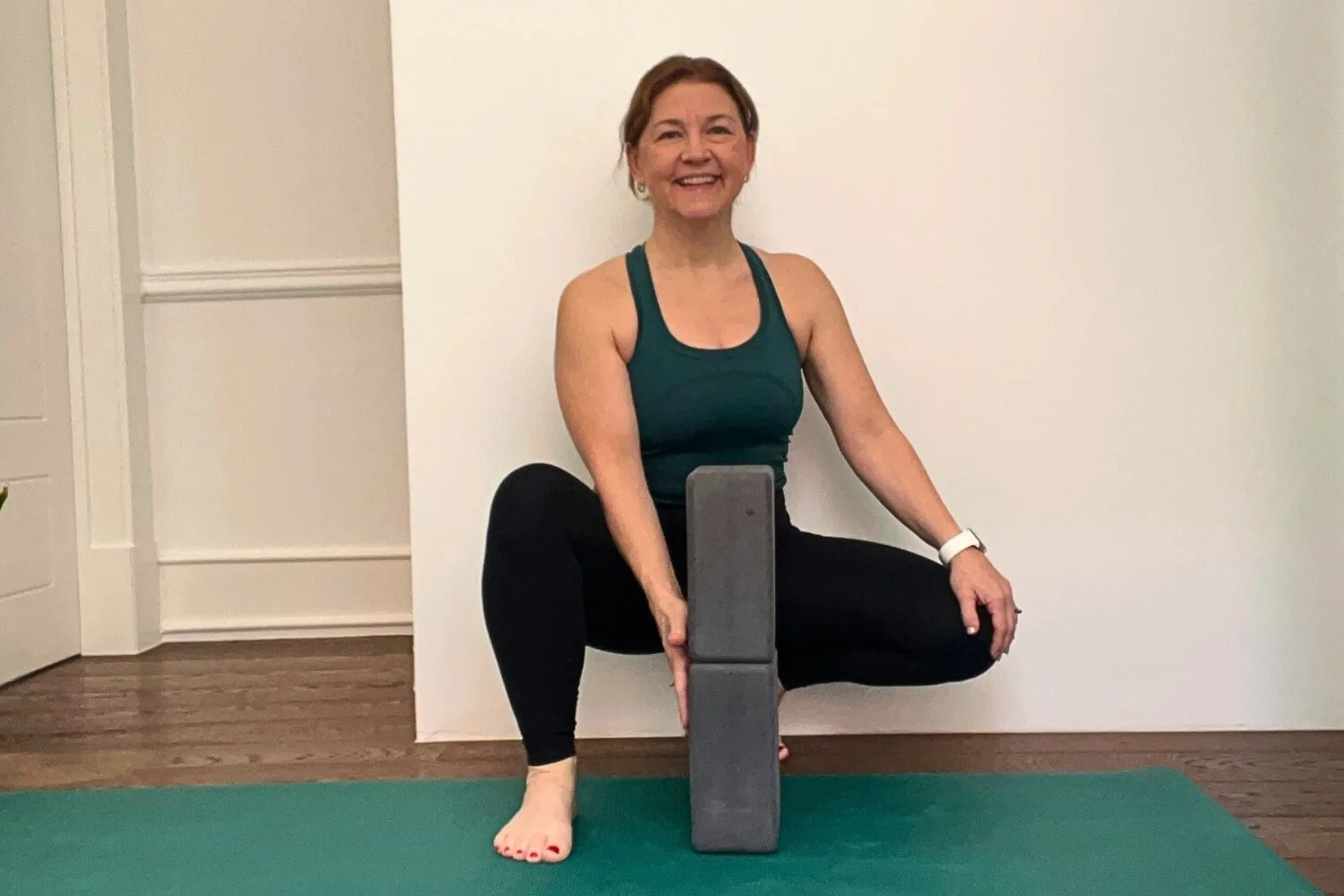
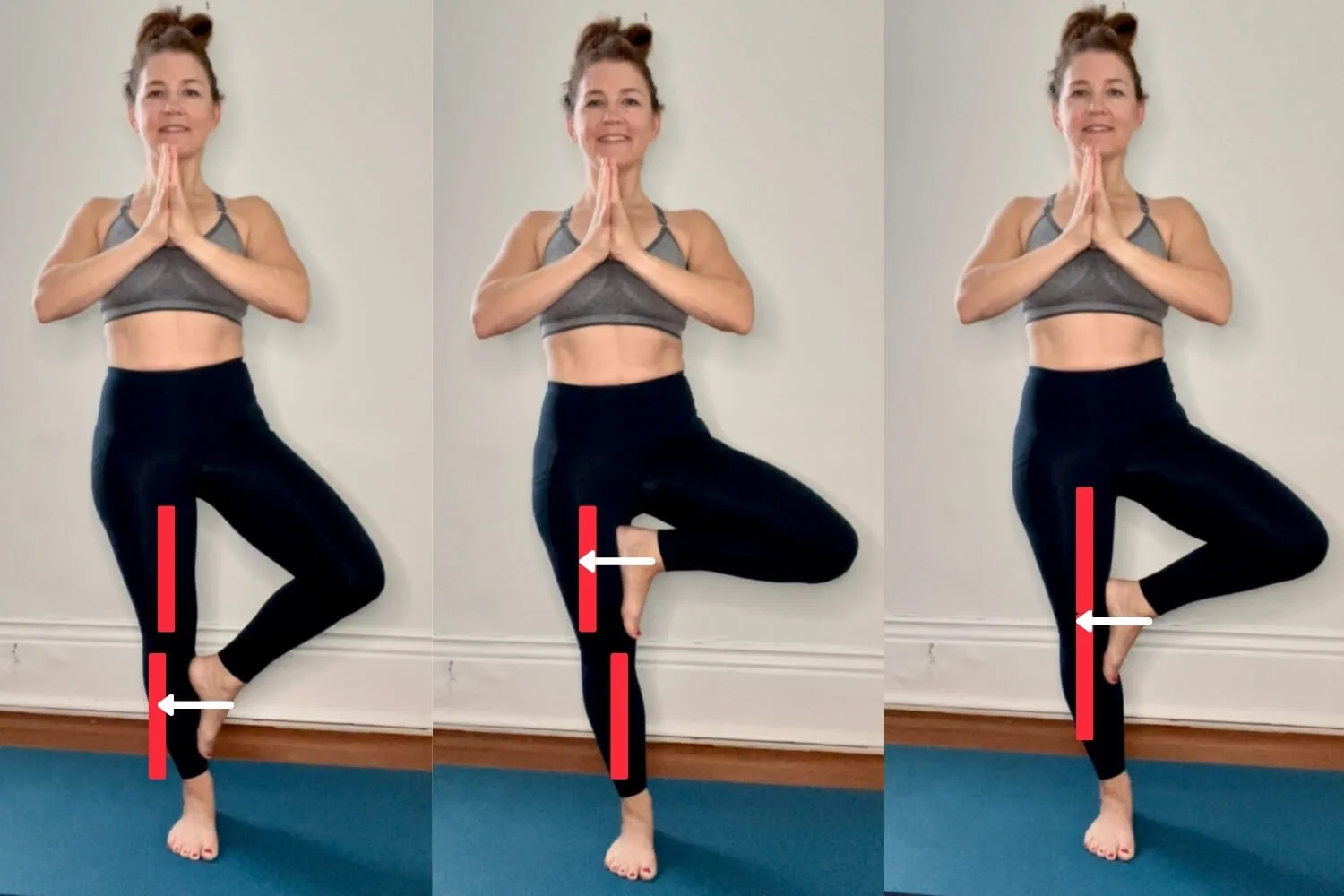
This is what happens with your foot placement in tree pose:
Foot below the knee (on your calf): you're pressing your shin bone away from your thigh bone
Foot above the knee (on your thigh): you're pressing your thigh bone away from your shin bone
Foot on the knee: you're pressing into both bones, so neither slides
But What About All Those Forces?
Here's some perspective. Soccer/football players put their knees through high-velocity rotational forces while running, stopping, and colliding with other players. Those forces are dramatically higher than anything happening in tree pose. Yet most soccer players never injure their knee ligaments.
The amount of force you can create by pressing your foot into your leg during a standing balance posture is quite minimal compared to what your body handles every day.
So can we please stop creating fear about injuring the knee in tree pose?
What Actually Matters for Your Knee
Where you place your foot is only one piece of the puzzle. How you place it matters more.
If you just hang your heel on your knee passively, that might not feel great. Instead:
Press the four corners of your lifted foot into your standing leg.
Press your standing leg back into your foot (that reciprocal action creates stability).
Press the four corners of your standing foot down into the ground.
A strong tree has deep roots and a stable trunk. That's what allows it to withstand even the strongest winds.
The Bottom Line
You can put your foot on your knee in tree pose. The forces involved are low, and the position may actually support your knee rather than stress it. What matters more than exact foot placement is muscle engagement, reciprocal pressing, and listening to your body.
If putting your foot on your knee hurts, that discomfort might be about which muscles you're activating (or not), rather than the placement itself. And if you can't find a way to make it feel good? Put your foot wherever you want. Tree pose is about finding your balance, not following arbitrary rules.
Get Curious! Q&A
Why do yoga teachers say not to put your foot on your knee in tree pose?
This cue has been passed down through generations of teachers without much questioning. It likely started from a general caution about knee safety, but when you look at the actual biomechanics, the reasoning doesn't hold up. The forces in tree pose are low, and pressing into both bones at the knee joint can actually create stability.
Can tree pose hurt your knee?
Tree pose involves very low forces compared to what your knee handles in daily life and sports. If you experience knee discomfort, it's worth exploring your muscle engagement and alignment rather than assuming the posture itself is harmful. Activating the muscles around your knee and pressing your foot and leg into each other creates support.
What's the safest foot placement in tree pose?
There isn't one "safest" placement. Your foot can go on your ankle, calf, knee, or thigh. What matters more is how you engage: pressing the four corners of your lifted foot into your leg, pressing your standing leg back into your foot, and grounding through your standing foot.
What if putting my foot on my knee doesn't feel good?
That's useful information and an opportunity to explore whether adjusting your alignment changes the sensation. If it still doesn't feel right, choose a different placement. Tree pose should feel stable and grounded, not uncomfortable.
How do I make tree pose more stable?
Press the four corners of your standing foot into the ground. Press your lifted foot and standing leg into each other. Find a steady gaze point. Stability comes from how you engage, not from avoiding certain foot placements.
Go Deeper with Anatomy
This article answers one question. But here's what I've learned after two decades of teaching: when you understand the why behind your cues, you stop second-guessing yourself. You teach with clarity. Your students trust you more.
If you're ready to build that kind of confidence, my free guide breaks down 3 anatomy-informed foot cues (including more on those "four corners") and the science behind each one.
Get the free guide: Cue with Confidence →
About the Author
Dr. Trish Corley is a Doctor of Physical Therapy (Physiotherapy) and yoga teacher trainer with over two decades of clinical experience. She helps yoga teachers learn anatomy, give clear cues, and create classes their students love. Based in Lisbon, Portugal, she leads the Enlightened Anatomy Course, the Elevate Your Impact Mentorship, and the Power to Lead 200-Hour YTT.