
Can Yoga Rebuild the Arches of Your Feet?
A student came up to me after class once, shoes already back on, ready to leave. "I have completely flat feet," she said. "Is there any point in me even trying to work on my arches?"
She'd been told her whole life that flat feet were just how she was built. Permanent. Fixed. Something to manage, not change.
I told her what I'm going to tell you now.
Yoga can change the shape of your foot arches, and understanding why starts with knowing what your arches are actually made of.
In This Article:
What are the arches of the foot and what do they do
The two factors that determine arch shape
Why muscles are the key to changing your arches
What yoga actually does to foot arches over time
What this means for your practice
Your Foot Has Three Arches (Not One)
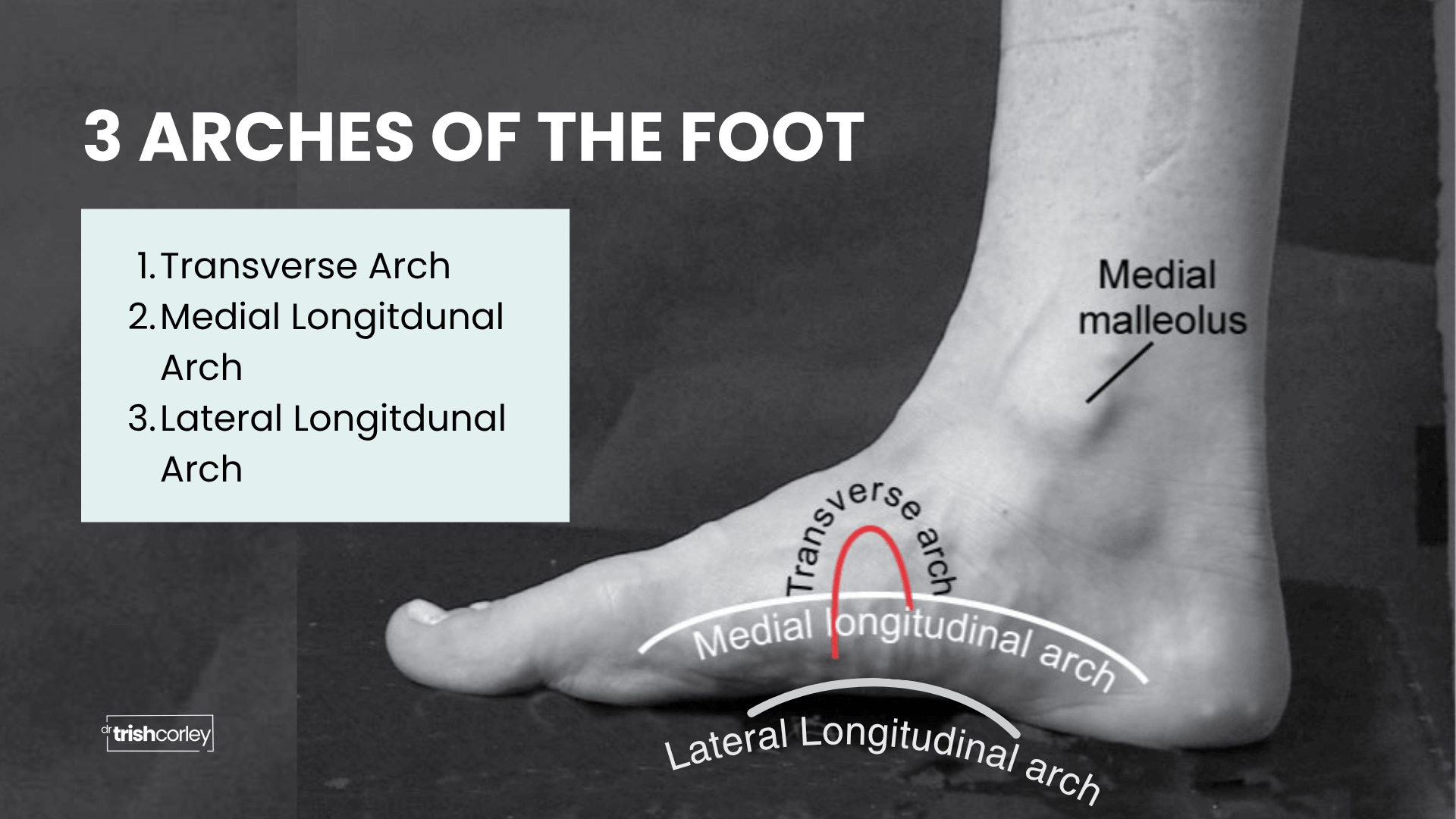
Most people think of the arch of the foot as a single structure. There are actually three.
The medial longitudinal arch runs along the inside of your foot, from your heel to the ball. This is the one people are usually referring to when they talk about flat feet. It's the highest of the three and carries the most load.
The lateral longitudinal arch runs along the outside of your foot, parallel to the medial arch.
The transverse arch runs across the foot, just behind the ball.
Together these three arches work like a spring. They absorb shock, distribute your body weight, and give you the elastic recoil that makes walking, running, and moving through yoga postures feel effortless when they're working well. When the arches are lower than optimal, the spring loses some of its efficiency. More muscular effort is required for the same movement.
What Yoga Actually Does for Flat Feet Over Time"
Two things determine the shape of your foot arches: your bones, and your soft tissues. Understanding the difference between them is what makes the answer to "can yoga help?" actually meaningful.
1.Your Bones
Your foot contains 26 bones. The shape of each one contributes to the overall shape of your foot, including your arches. Think of it like building a stone arch: the shape of each stone matters.
Bone shape is largely set by early adulthood. For most people, the bony architecture of the foot isn't going to change significantly after that. So if your arches are low partly because of how your bones are shaped, that's a factor yoga won't alter.
That's not the end of the story though.
2. Your Soft Tissues
The second factor is your soft tissues: ligaments, muscles, tendons, and fascia. These are the structures that connect bone to bone and muscle to bone, and they have something the bones don't: adaptability.
Ligaments hold your joints together and influence how your bones sit relative to each other. They can become overstretched over time, which may contribute to lower arches. They don't tend to recoil back on their own, so ligament laxity isn't something yoga reliably reverses.
Muscles are a different story entirely.
Why Muscles Are the Key to the Arches
Muscles are the most adaptable structures in your foot. They contract, they respond to training, and they change with consistent use. That's what makes them the lever yoga can actually work with.
When the muscles of your foot and lower leg contract, they pull on your bones. That pulling changes the position of those bones relative to each other, which changes the shape of your foot, including your arches. With repeated practice, those muscles adapt. They get stronger, they develop better tone at rest, and your nervous system learns to recruit them more efficiently.
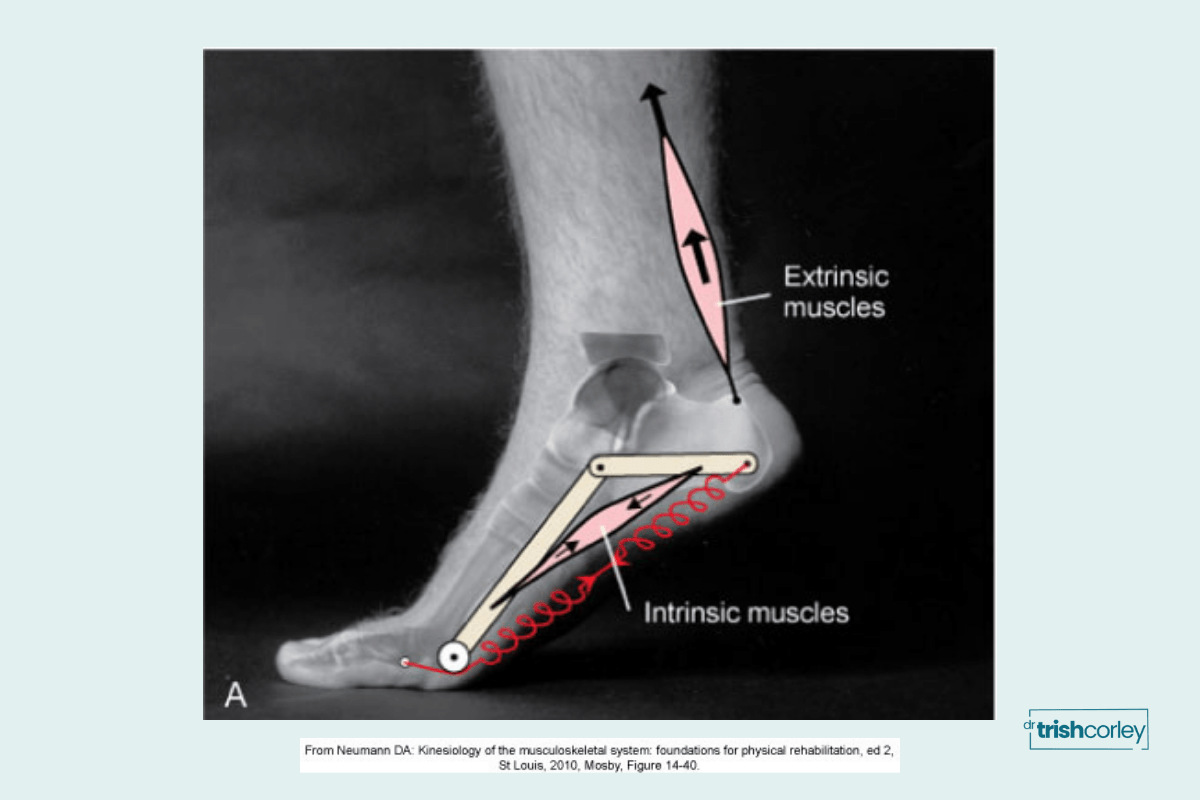
There are two groups of muscles involved. The intrinsic muscles live entirely within the foot. The extrinsic muscles originate further up the leg, on the shin bones, and travel down into the foot via long tendons. Both groups contribute to arch support.
Here's something that often surprises people: muscles further up the chain matter too. The position of your pelvis and spine influences the position of your feet. So the muscles that act on your hips and pelvis can, indirectly, affect your arches. This is one of the reasons a whole-body practice like yoga has the potential to influence foot structure in a way that isolated foot exercises might not.
If you teach yoga, this is exactly why cueing the bones rather than the muscles tends to get better results.
What Yoga Actually Does to Your Foot Arches Over Time
Yoga doesn't change your arches by targeting one muscle in isolation. It works because it trains the whole system repeatedly, in weight-bearing positions, with attention to alignment.
Every standing posture is an opportunity for the muscles of your feet and legs to work. When you practice with awareness of how your feet are connecting with the ground, you're giving those muscles consistent, meaningful input. Over time that input adds up.
The nervous system plays a role here too. It's not just about muscle strength. It's about your brain learning to recruit the right muscles at the right time. That's a trainable skill, and yoga practice, particularly a regular one, is one of the ways you train it. This is one reason why understanding foot anatomy matters for every posture, not just standing balances. If you've ever wondered why heels don't touch in downward dog, foot structure is part of that answer too.
The research specifically on yoga and arch height is limited. What we do have is solid evidence that targeted intrinsic foot muscle training can measurably improve arch support. A 2013 study by Mulligan and Cook found that a four-week intrinsic foot muscle training program decreased navicular drop by an average of 1.8mm, with continued improvement to 2.2mm at eight weeks.(1) Yoga, practiced with attention to foot alignment, trains those same muscles in weight-bearing positions across many repetitions. The mechanism is there. The direct studies on yoga specifically are still catching up.
What I can tell you is what I've observed clinically and in my own body: consistent practice with alignment awareness does change things over time. Students have pointed out their arches to me years into a practice, surprised by what they didn't expect to see change.
The Bottom Line
Your foot arches are not fixed. They are shaped by two things: your bones, which don't change much after early adulthood, and your soft tissues, particularly your muscles, which are highly adaptable.
Yoga can influence your arches because it trains the muscles that support them, repeatedly, in weight-bearing positions, with whole-body context. That's not a small thing. It's exactly the kind of input those muscles respond to.
The changes are gradual and they require consistent practice with attention to alignment. They are possible, and for many people, they are real.
Get Curious! Q&A
Can flat feet be corrected with yoga?
"Corrected" implies a permanent structural fix, and that's not quite the right frame. What yoga can do is improve the muscle tone and neuromuscular control that support your arches, which may change how your feet look and function over time. For many people that's a meaningful and visible difference. Whether the underlying bony structure changes is a separate question, and for most adults it won't. Function and appearance can both improve with consistent, alignment-focused practice.
Does it matter what type of yoga you practice?
The most important factor isn't the style, it's the attention to foot alignment within whatever you're practicing. Standing postures practiced with awareness of how your feet connect with the ground give the muscles of your feet and lower legs consistent, meaningful work. A style that keeps you on your feet and encourages alignment awareness will serve you better than one where foot engagement is an afterthought.
How long does it take to see changes in foot arches from yoga?
There's no universal timeline. The research on intrinsic foot muscle training suggests measurable changes can begin within four to eight weeks of consistent targeted exercise. Yoga works the same muscles within a broader movement context, so results vary. What most people notice first is improved stability in standing postures, often well before any visible arch change.
Do I need to have flat feet for this to matter?
No. Foot and arch strength are relevant to everyone who practices yoga. Even people with average or higher arches benefit from training the muscles that both maintain the arches and allow them to be mobile and functional. This matters particularly for the function of the arch itself, including load distribution, shock absorption, and single-leg balance work.
Can yoga make flat feet worse?
Practiced without attention to alignment, any weight-bearing activity can reinforce existing patterns rather than change them. Yoga itself isn't the risk. Practicing with consistent inward collapse of the ankles and no awareness of foot engagement is. The difference is attention, not the practice itself.
Go Deeper with your understanding of foot anatomy and alignment
If this got you curious about how anatomy shapes the way you move and practice yoga, the Cue with Confidence guide is a good next step. It walks you through three anatomy-informed foot cues, the science behind each one, and how they create stability and alignment from the ground up.
Download the free Cue with Confidence guide →
References
Mulligan EP, Cook PG. Effect of plantar intrinsic muscle training on medial longitudinal arch morphology and dynamic function. Manual Therapy. 2013;18(5):425-430. doi:10.1016/j.math.2013.02.007. PubMed
About the Author
Dr. Trish Corley is a Doctor of Physical Therapy (Physiotherapy) and yoga teacher trainer with over two decades of clinical experience. She helps yoga teachers learn anatomy, give clear cues, and create classes their students love. Based in Lisbon, Portugal, she leads the Enlightened Anatomy Course, the Elevate Your Impact Mentorship, and the Power to Lead 200-Hour YTT.