
Why Is Chaturanga So Hard?
The first time I really paid attention to my Chaturanga, I was already a yoga teacher. I'd been practicing for years, moving through sun salutations the way most of us do — on autopilot. And every single time I got to Chaturanga, something felt off. My shoulders ached. My low back complained. I'd land on the mat with a thud and quietly wonder what I was doing wrong.
I assumed I wasn't strong enough.
Chaturanga is one of the most commonly practiced and least taught postures in yoga, and that gap between doing it and understanding it is exactly where the struggle lives.
In This Article:
Why Chaturanga feels so hard for so many people
The real role of alignment in this posture
Why generic cues often make it harder, not easier
How to start approaching Chaturanga differently
The Struggle Is Real
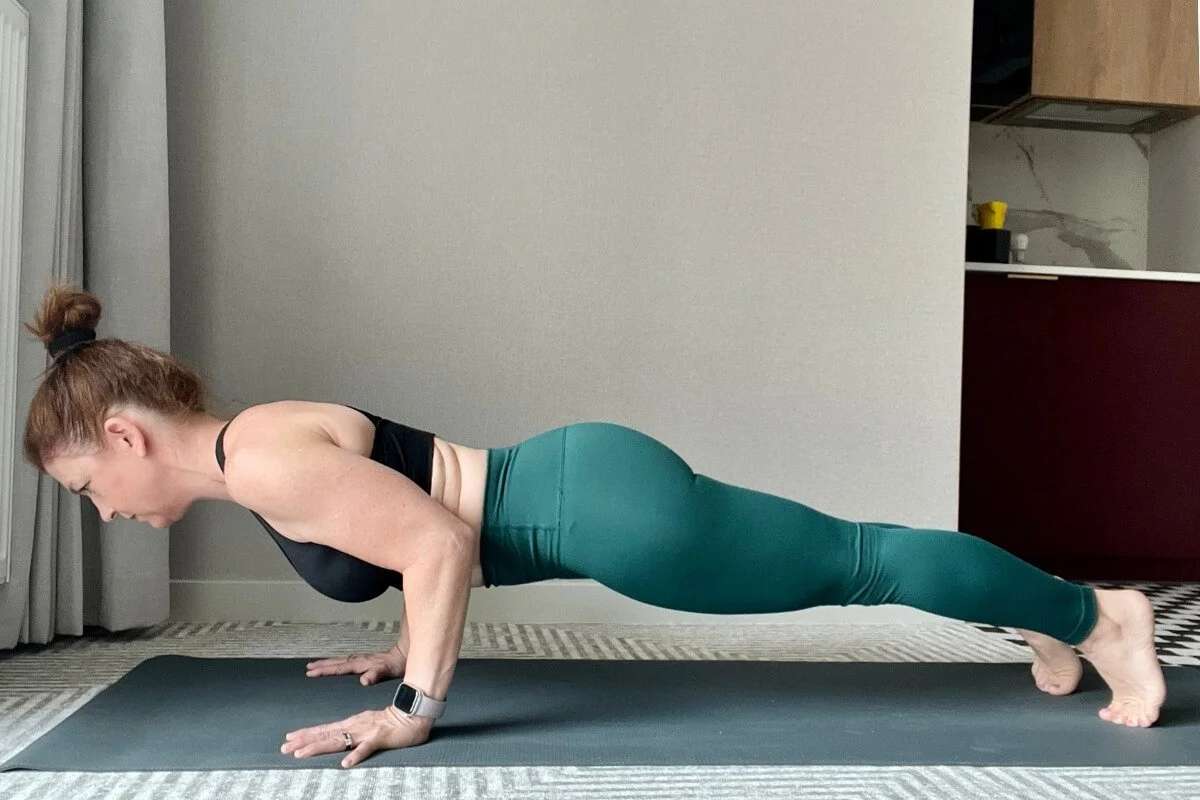
Chaturanga Dandasana, Four-Limbed Staff Pose, is deceptively challenging. Most people who struggle with it assume the problem is strength, specifically upper body strength. But that's exactly the trap.
Chaturanga asks just as much of your legs and pelvis as it does of your arms and shoulders. When your lower body is fully engaged, your upper body doesn't have to work nearly as hard. The posture becomes a whole-body effort, and that's precisely what makes it sustainable.
What most people are missing isn't strength. It's an understanding of how to align the whole body in the posture.
The Real Reason Chaturanga Feels Hard
There are two things that show up most consistently when Chaturanga breaks down.
Alignment goes unnoticed. Without awareness of where your shoulders, pelvis, hands, and feet are, the whole posture unravels. Shoulders dip too low. The pelvis tips forward. The parts of the body that need to be working together stop communicating. These imbalances don't just make the posture harder. Over time, they can lead to discomfort and injury.
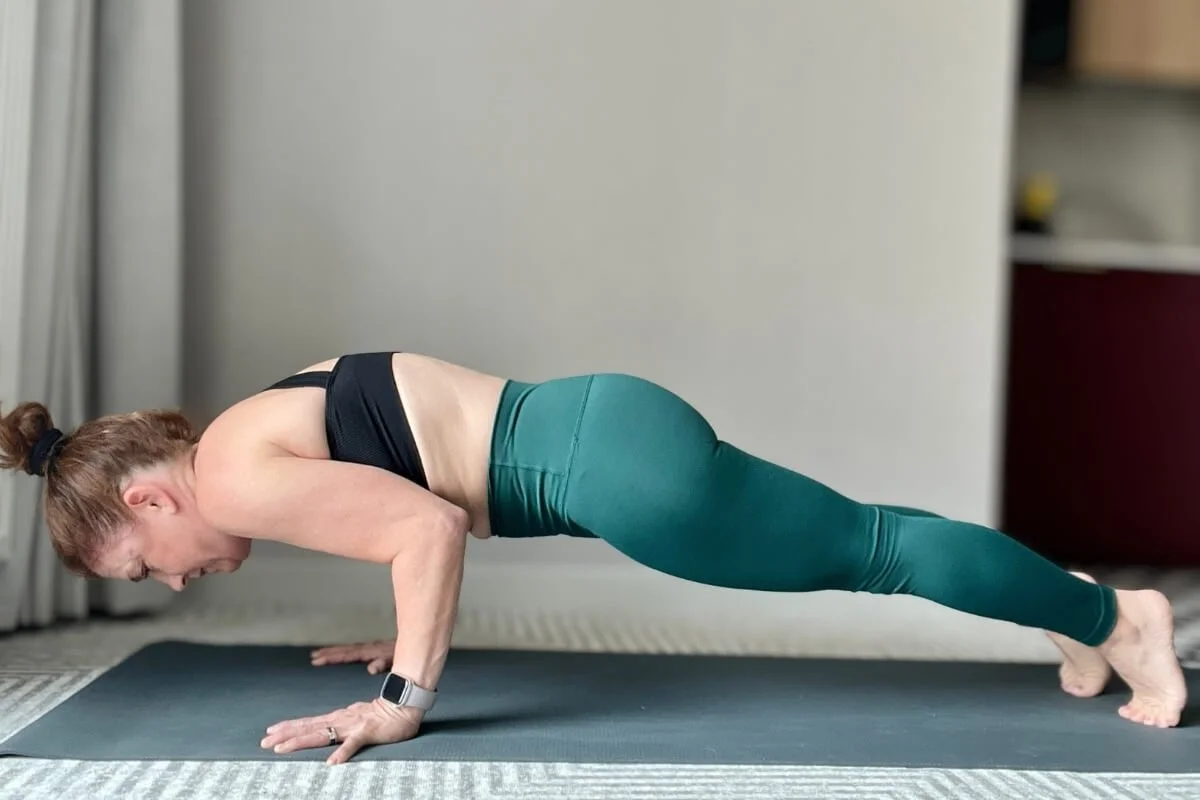
Cues don't land. Instructions like "lower down" or "engage your core" are well-intentioned, but they don't tell you much if you don't already know what you're looking for. Chaturanga is a complex posture. It deserves more than a passing mention during a sun salutation.
What Actually Helps
During a posture clinic in one of my 200-hour trainings, a participant raised her hand and said her arms weren't strong enough for Chaturanga. It's something I've heard many times. We spent an entire session breaking the posture down, looking at balanced alignment, common patterns that work against the body, and cues that actually create change.
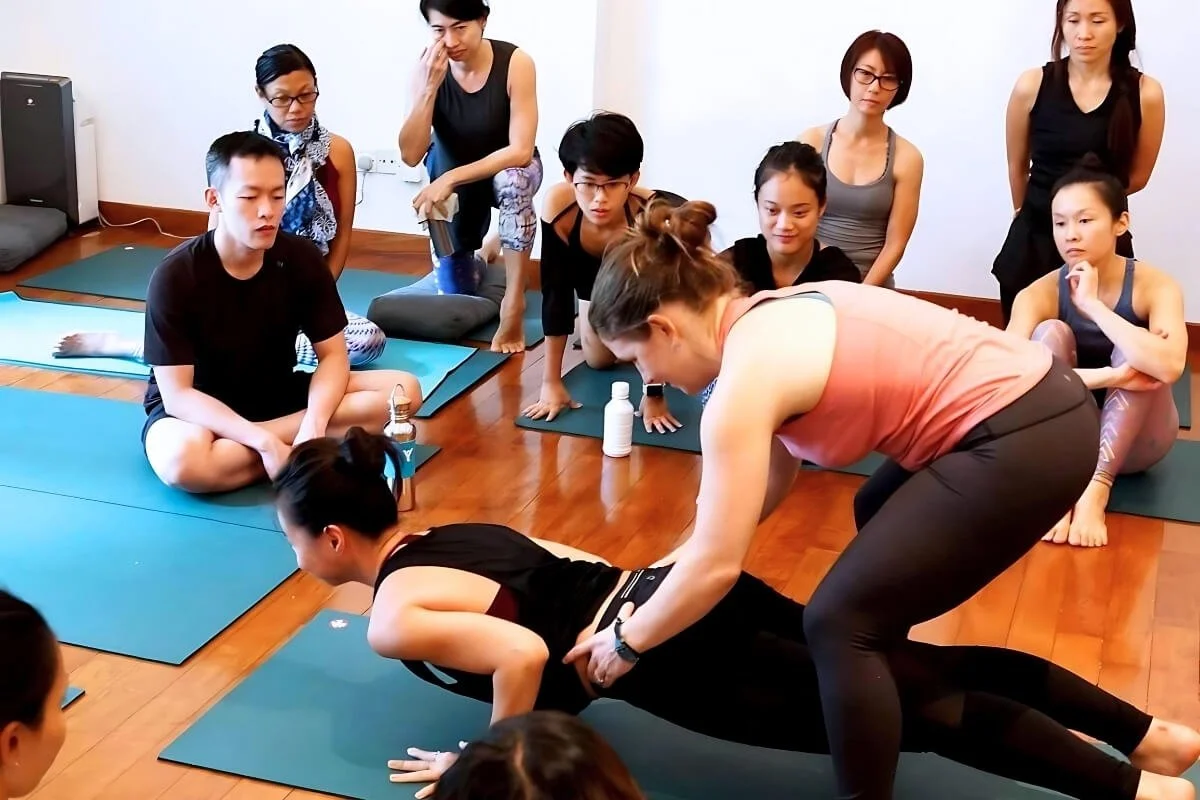
By the end, that same participant said: "Wow, just a few alignment adjustments and I feel so much stronger."
That shift happens when you understand what the posture is actually asking of your body. The work you put in to understand Chaturanga is exactly what makes it feel easier. Not easier in the sense that it stops being challenging, but easier because your whole body is finally working together. Think of it like a team where everyone shows up and does their job. When only one or two parts are working and the rest aren't engaged, those parts carry the whole load. That's where the struggle comes from. It's not weakness. It's inefficiency.
This is the foundation of the Balanced Posture Alignment framework: cues that engage the full body so no single part carries more than its share. When every part shows up, the posture becomes sustainable.
Here's where to start:
Break it down. Rather than muscling through, slow down and work through the posture from the ground up. Feet and legs first. Then pelvis and spine. Then hands and shoulders. Use a mirror, or ask someone to observe your alignment.
Look for more specific cues. If the instruction you're getting is just "chaturanga" with no further guidance, ask for more. Once you understand how the shoulder joint works in this posture, the cues start to make a lot more sense.
Adapt without apology. Props are not a workaround. They're a tool. Blocks under the shoulders or a strap around the upper arms can give you the feedback you need to find alignment you can actually feel. Lowering the knees is always a valid option when it lets you practice with more awareness.
The Bottom Line
Chaturanga is hard for most people not because they lack strength, but because they haven't been taught how to align the whole body in it. When every part shows up and does its job, the posture stops fighting you. It's still challenging. But it becomes doable, sustainable, and worth practicing. Head position matters too — and it's one of the most commonly overlooked parts of the posture.
Get Curious! Q&A
Why do I always collapse in Chaturanga?
Collapsing in Chaturanga is almost always an alignment issue rather than a strength issue. When the legs and pelvis aren't engaged, the upper body carries the full load and gives out. Start by pressing actively through your feet and legs before you lower down. You may be surprised how much that changes things.
Is Chaturanga bad for your shoulders?
Chaturanga practiced with balanced alignment is not inherently harmful to the shoulders. Discomfort tends to come from repeated misalignment, particularly when the shoulders dip below the elbows or when the upper body is doing all the work without support from the rest of the body.
Should I Modify Chaturanga?
It's always a good idea to stay open to adapting any posture, and Chaturanga is a great one to explore in different ways. Rather than thinking of it as modifying, think of it as creating a version of the posture that works for where you are right now. And because we're always changing, that version can keep evolving too.
Lowering your knees, using blocks under your shoulders, or wrapping a strap around your upper arms can all help you find the alignment your body needs. A variation practiced with full awareness will serve you far better than the seemingly more advanced version practiced with imbalanced alignment.
How long does it take to learn Chaturanga?
It varies. Some people find that a few specific alignment cues shift the posture immediately. For others it takes consistent practice over weeks or months. The key is understanding what the posture is asking of your whole body, not just pushing through repetitions.
Go Deeper with your understanding of yoga anatomy and alignment
Chaturanga is one posture. The principles behind it — how the whole body works together, how alignment creates efficiency, how one good cue changes everything — carry across every posture you teach and practice. That's exactly what the Enlightened Anatomy Course is built around.
Explore the Enlightened Anatomy Course →
About the Author
Dr. Trish Corley is a Doctor of Physical Therapy (Physiotherapy) and yoga teacher trainer with over two decades of clinical experience. She helps yoga teachers learn anatomy, give clear cues, and create classes their students love. Based in Lisbon, Portugal, she leads the Enlightened Anatomy Course, the Elevate Your Impact Mentorship, and the Power to Lead 200-Hour YTT.