
Muscle Contractions in Yoga: The 3 Types You Need to Know
"What muscles work in triangle pose?"
A yoga teacher asked me this after a workshop. I smiled. "Probably all of them."
She looked at me like I was dodging the question.
But here's the thing. It's true. Almost all of your muscles are working in triangle posture, and in any posture! The problem is that "working" is vague. It doesn't tell you much.
The better question is how your muscles are working. And that comes down to three types of muscle contractions.
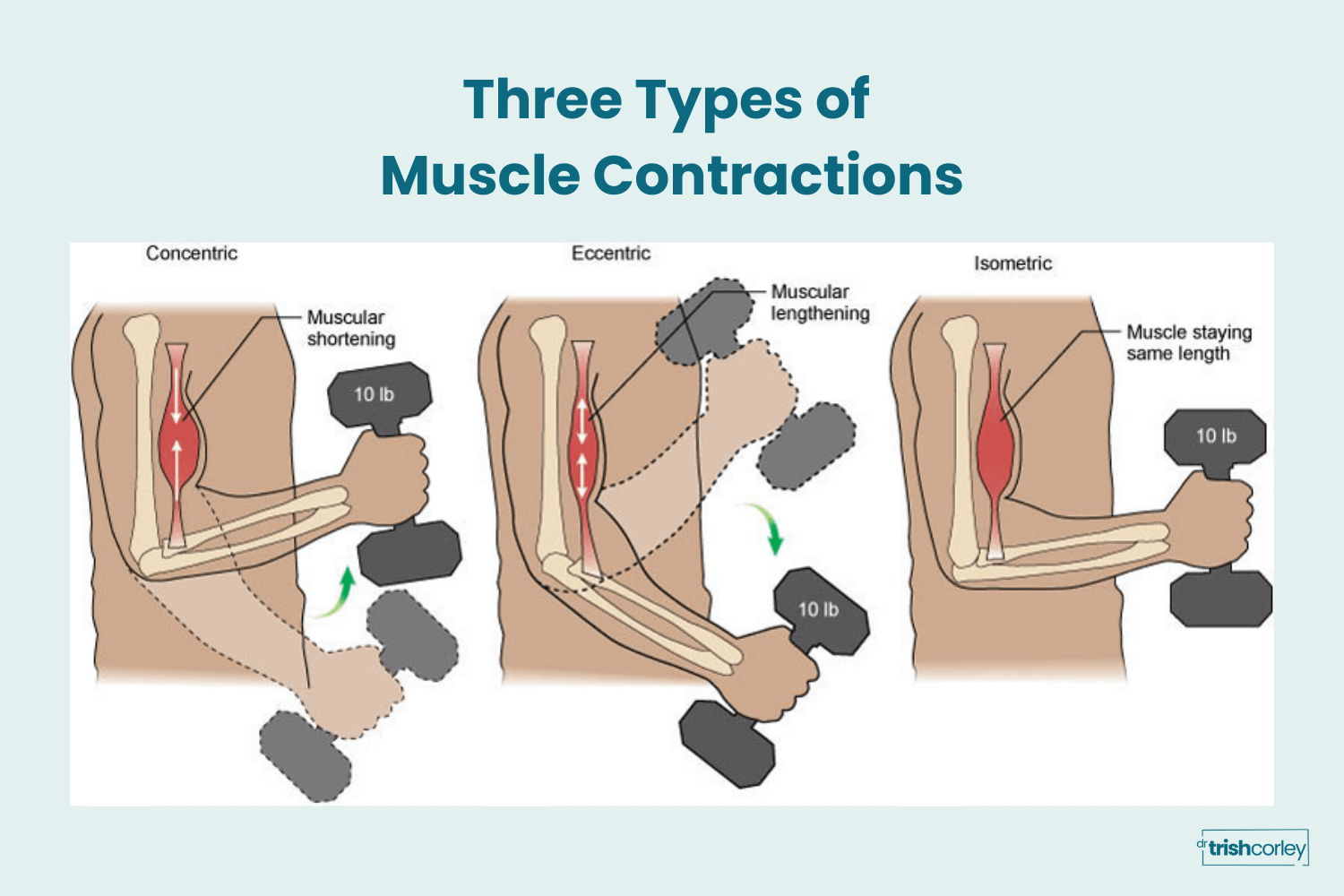
1. Concentric: the muscle shortens
2. Eccentric: the muscle lengthens under control
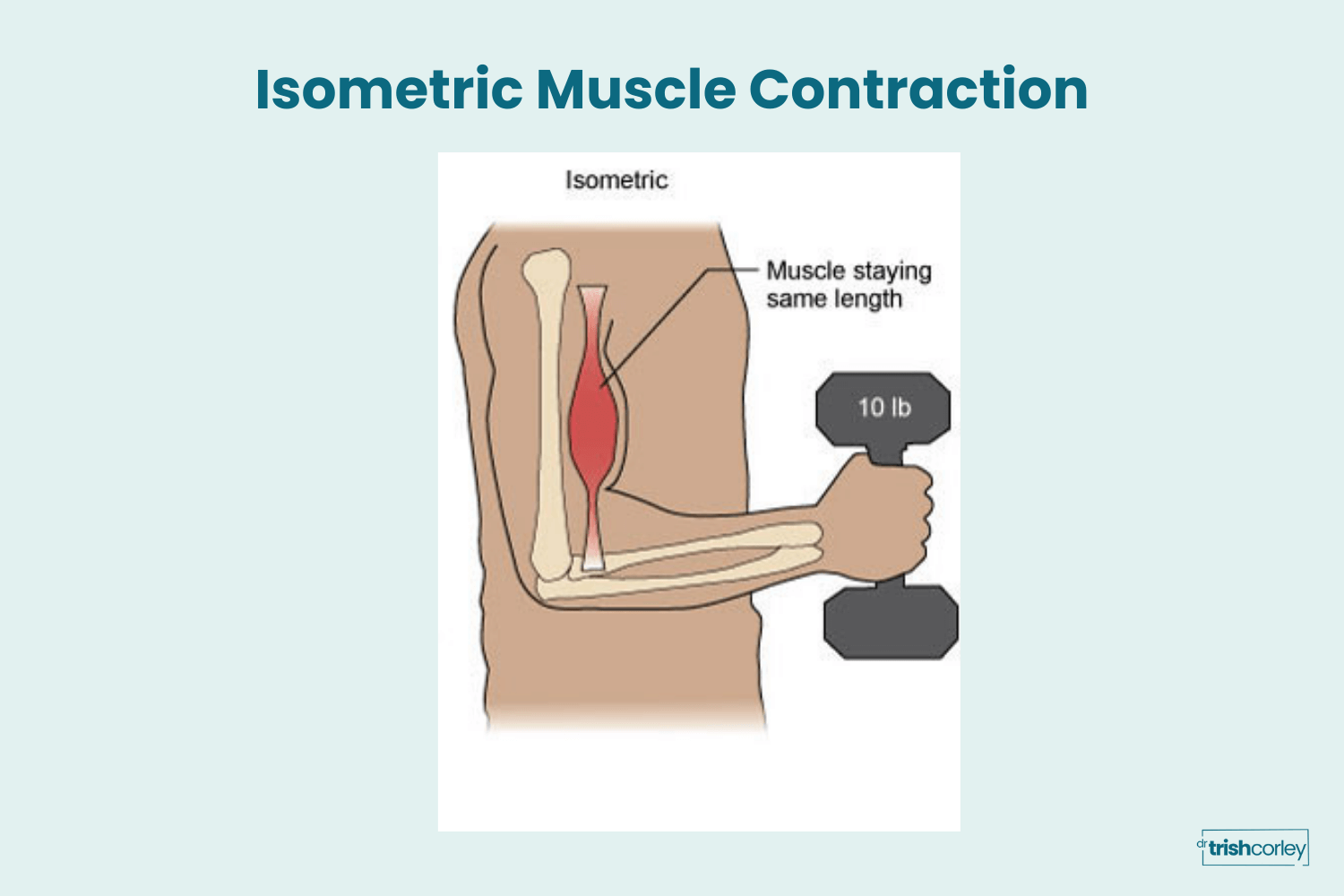
3. Isometric: the muscle stays the same length while active
Once you understand these, you'll have a clearer picture of what's actually happening with the muscles in any yoga posture.
As a Doctor of Physical Therapy and former functional anatomy professor, I've spent a lot of time making this stuff accessible for yoga students and teachers. And honestly? It clicks pretty quickly once you feel it in your own body.
In This Article:
The three types of muscle contractions in yoga
A simple exercise to feel all three contraction types
How to use this knowledge in your practice or teaching
The 3 Types of Muscle Contractions in Yoga
After you've done twenty sun salutations or held Warrior II for ten breaths, you might start to feel your muscles "working." What you're feeling is fatigue as your muscles contract against resistance and load — the stimulus that makes them stronger over time.
There are three types of muscle contractions, and all three show up throughout your yoga practice.
Concentric Contraction
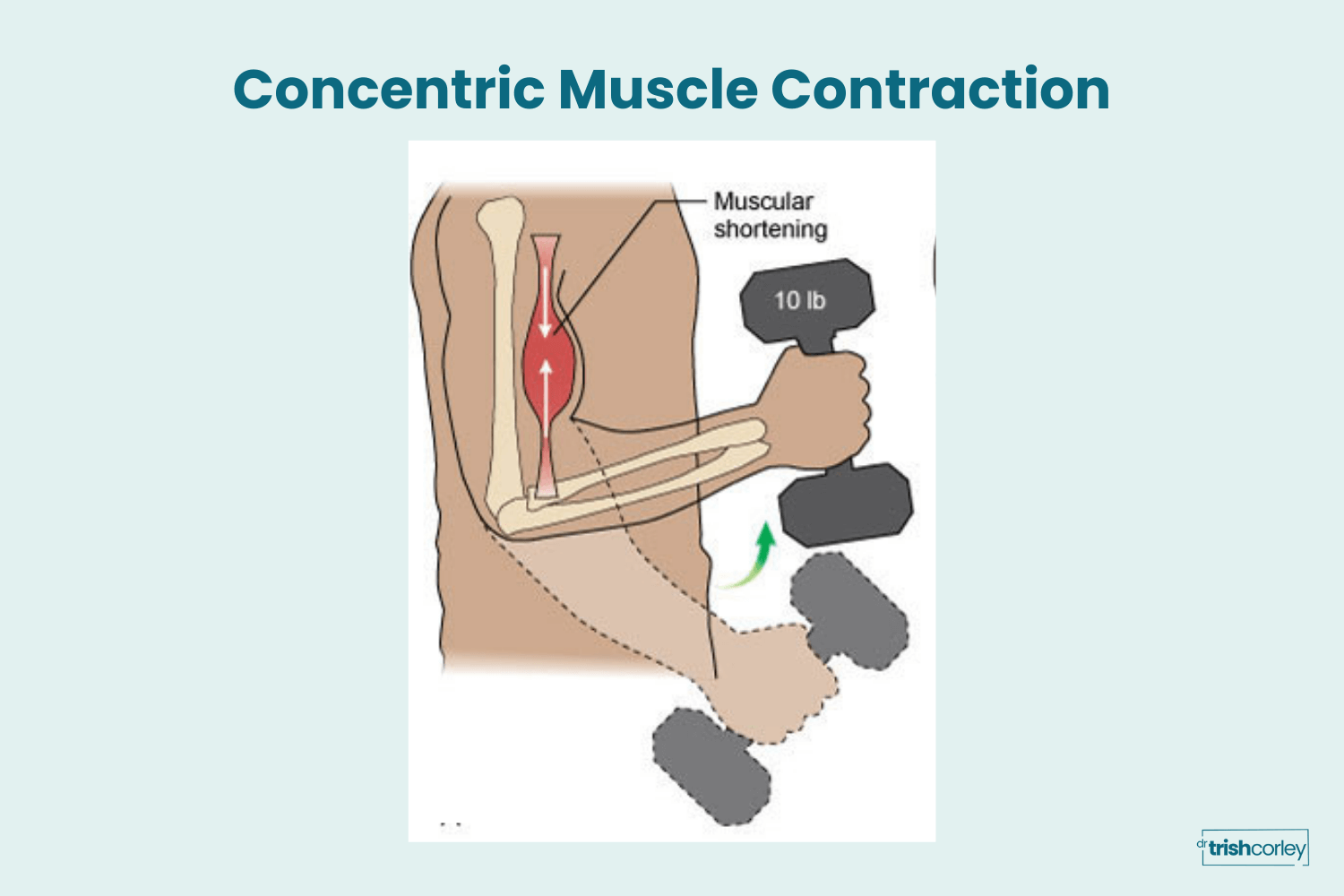
When a muscle performs a concentric contraction, the muscle actively gets shorter.
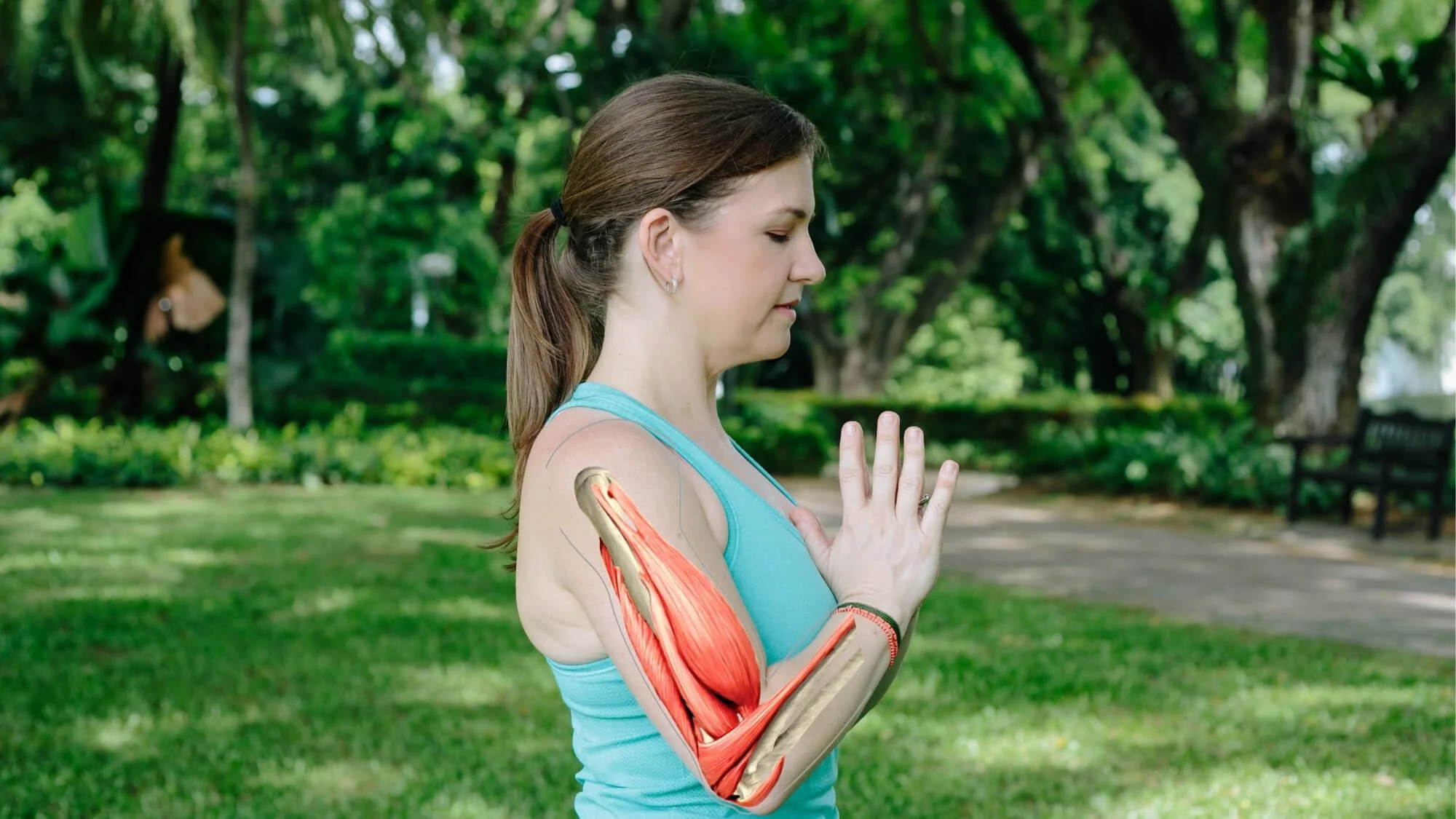
Consider your biceps. As the muscle shortens, it bends your elbow. For example, as you bend both of your elbows to bring your hands together in prayer position, your biceps contract concentrically. You'll notice them bulge as they shorten.
Even if you're not looking to show off bulging biceps, you use concentric contractions constantly in your yoga practice.
Eccentric Contraction
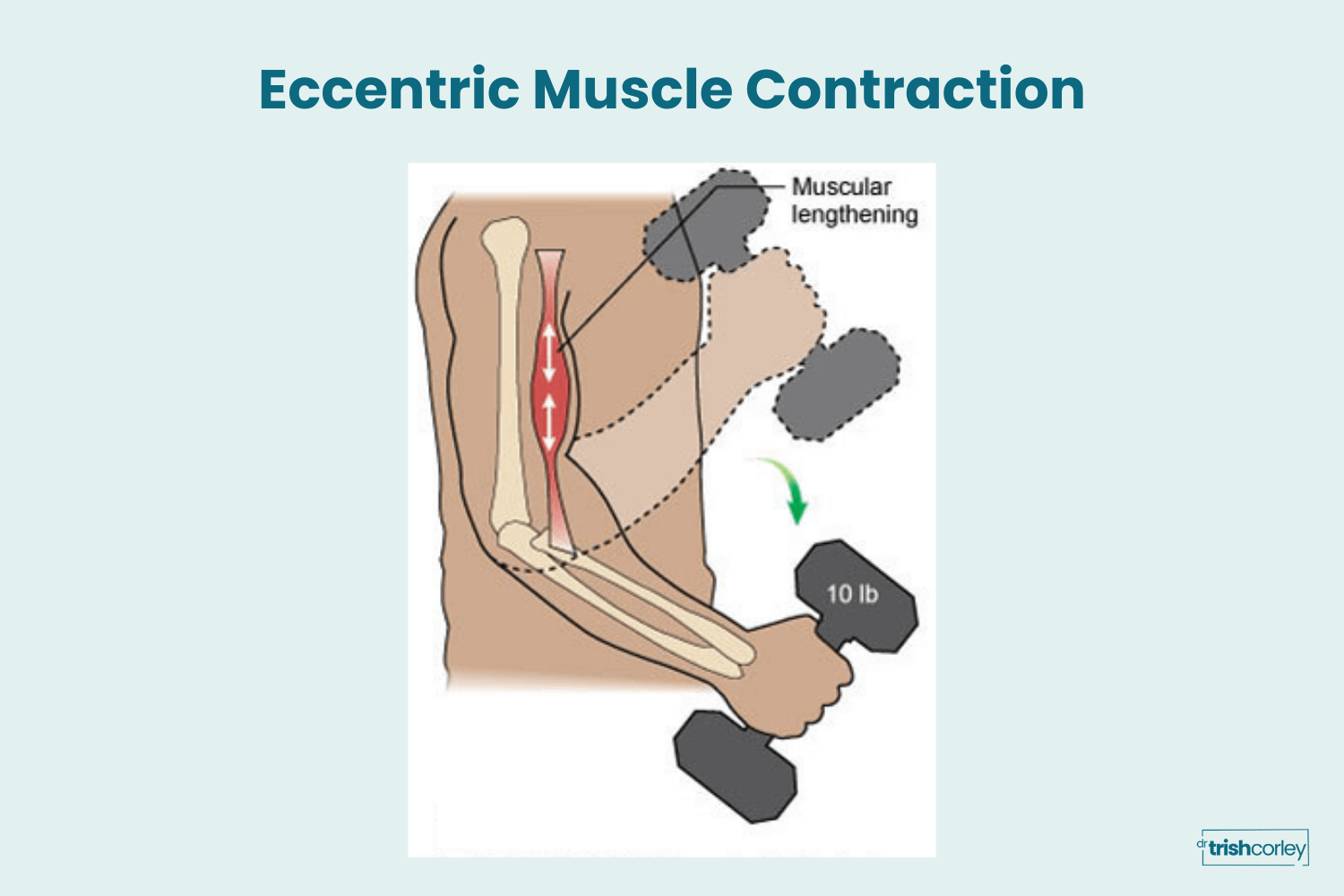
During an eccentric contraction, the muscle lengthens while still contracting. The muscle controls its movement against the pull of gravity.
Now consider how your biceps create an eccentric contraction. As you unfold your hands from prayer position and lower them down by your sides, your biceps lengthen. But there is a significant difference between a passive stretch and an eccentric contraction. In the case of lowering your hands down by your sides, your biceps are active. If you feel your bicep muscle as you lower your hand down, you will notice tension in the muscle. The primary purpose of the eccentric contraction is to provide controlled movement so that gravity does not just pull your hands down rapidly.
Eccentric contractions are used frequently in yoga.
Isometric Contraction
When a muscle is isometrically contracted, the length of the muscle does not change. There is no movement. The muscle is, however, active. Isometric contractions are used primarily to maintain stability.
Isometric contractions are very common in yoga, particularly when postures are held for several breaths. As you move into and out of a posture, you are likely using a combination of concentric and eccentric contractions. When you hold a posture, you are using isometric contractions.
The longer you hold, the more the muscle fatigues. That may be when you want to come out of the posture. But if you stay? That's when the strengthening happens.
Try This: Feel All 3 Contraction Types
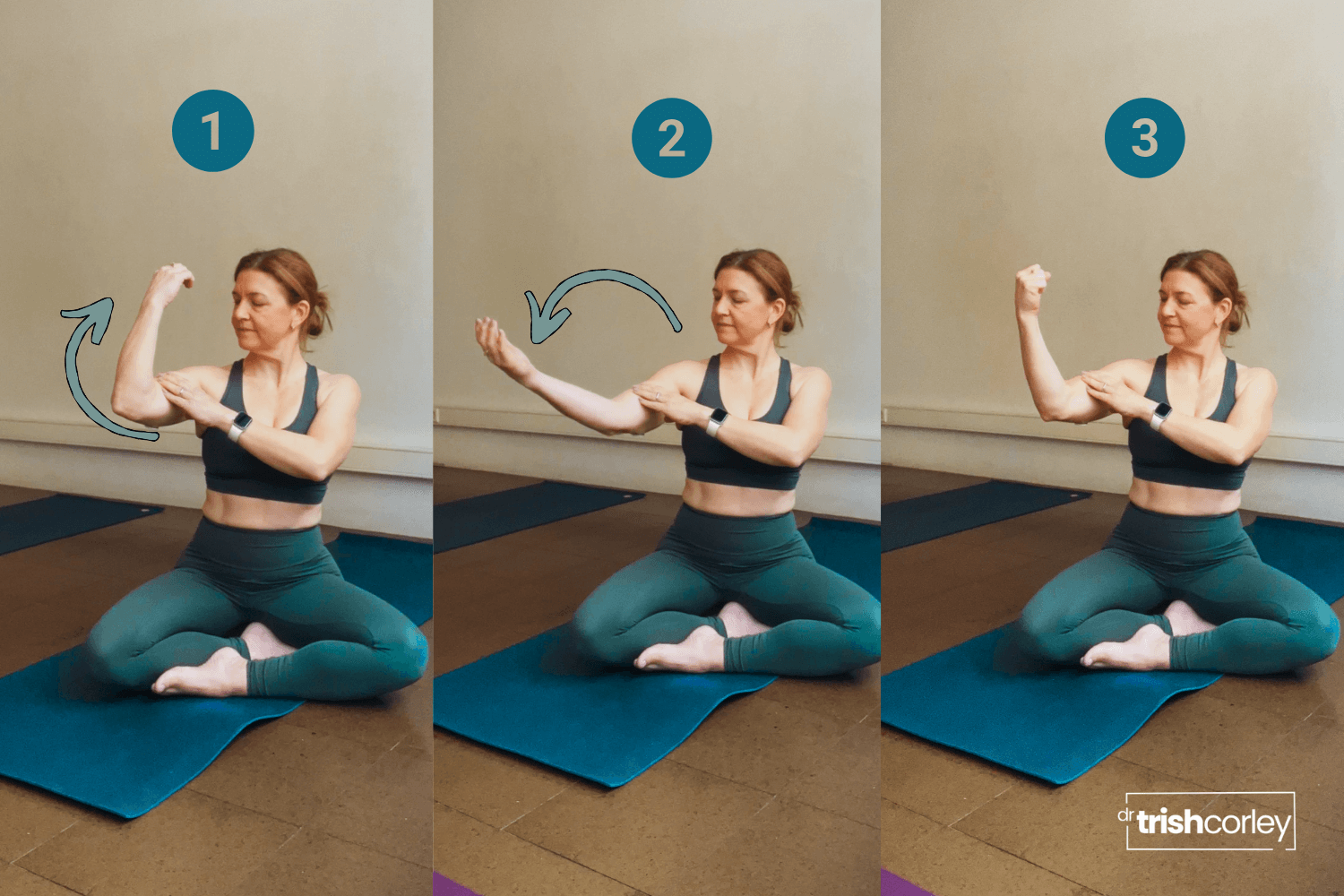
Here's a simple way to experience all three types right now. You'll use your right arm for the exercise and feel your right bicep with your left hand.
1. Place your left hand on your right bicep. Now bend your right elbow and bring your right hand toward your shoulder. Feel your bicep tighten and bulge? You just performed a concentric contraction. Your bicep got shorter.
2. Now slowly lower your right hand back down by your side. Feel the tension as you lower? Your bicep performed an eccentric contraction. Since you don't want to just drop your arm down carelessly, you used muscle activation to control the descent.
3. Keep your right arm bent at about a 90° angle. Keep your left hand feeling your right bicep. Still tight, but not moving. Your bicep is performing an isometric contraction. The muscle is holding steady but not changing length.
That's it. One muscle, three types of contractions. Now imagine this happening in dozens of muscles as you flow through a single sun salutation.
Why This Matters for Your Practice (and Teaching)
When someone asks "what muscles work in this pose?" you now have a better answer. It's not just which muscles. It's how they're working.
This understanding helps you:
Give clearer cues (you can invite students to "control the descent" rather than just "lower down")
Understand why postures feel different (holding versus moving requires different contraction types)
Appreciate what's happening in your own body (that shaking in a long hold? Isometric fatigue)
This kind of understanding is what separates confident teachers from those still figuring it out. (If you're curious about other shifts that build teaching confidence, check out one of my most popular articles: What Yoga Teachers Should Not Do)
A word of caution: please resist the urge to share all this with your students mid-class. Nothing kills the vibe quite like announcing "now feel your quadriceps performing an eccentric contraction!" This knowledge is for you. It makes you a more informed teacher and practitioner. Your students just need clear, simple cues.
The Bottom Line
There are three types of muscle contractions in yoga: concentric (muscle shortens), eccentric (muscle lengthens with control), and isometric (muscle holds steady). You use all three every time you practice. Understanding this gives you a clearer picture of how your body actually works in yoga.
Get Curious! Q&A
What is a concentric contraction in yoga?
A concentric contraction is when a muscle shortens while contracting. For example, your biceps perform a concentric contraction when you bend your elbows to bring your hands to prayer position.
What is an eccentric contraction in yoga?
An eccentric contraction is when a muscle lengthens while still contracting, controlling movement against gravity. For example, your biceps perform an eccentric contraction when you slowly lower your hands from prayer position down by your sides.
What is an isometric contraction in yoga?
An isometric contraction is when a muscle is contracting but doesn't change length. There's no movement. For example, your biceps perform an isometric contraction when you hold your hands in prayer position.
Why do my muscles shake when holding a yoga pose?
Muscle shaking during a held posture is a sign of isometric fatigue. Your muscle fibers are working hard to maintain the contraction. As some fibers tire out, others get recruited to help. This back-and-forth causes the trembling. It's completely normal and often a sign you're building strength.
Which type of contraction is most common in yoga?
All three types are common in yoga. Isometric contractions happen every time you hold a posture. Concentric and eccentric contractions happen as you move into and out of postures. A well-rounded practice uses all three types of contractions.
Where can I learn more about yoga anatomy?
Start with my Yoga Anatomy for Teachers Guide, which covers the foundations every teacher needs uses all three.
Go Deeper with Yoga Anatomy
Understanding muscle contractions is your first step toward truly understanding what's happening in your body during yoga. If this clicked for you and you want more, my Enlightened Anatomy Course takes you deeper.
You'll learn key alignment cues you can use in your own practice and teaching. But what's really powerful is you'll learn the anatomy behind these cues, including the muscles and the actions of the muscles. You will actually understand why and when to use the cues.
Learn more about Enlightened →
Want to see anatomy in action? Read Why Your Heels Don't Touch in Downward Dog for a practical example of how understanding your body changes your practice and teaching.
About the Author
Dr. Trish Corley is a Doctor of Physical Therapy (Physiotherapy) and yoga teacher trainer with over two decades of clinical experience. She helps yoga teachers learn anatomy, give clear cues, and create classes their students love. Based in Lisbon, Portugal, she leads the Enlightened Anatomy Course, the Elevate Your Impact Mentorship, and the Power to Lead 200-Hour YTT.