
Why Tadasana Is the Foundation for Every Yoga Pose (And the Only Alignment You Need to Master)
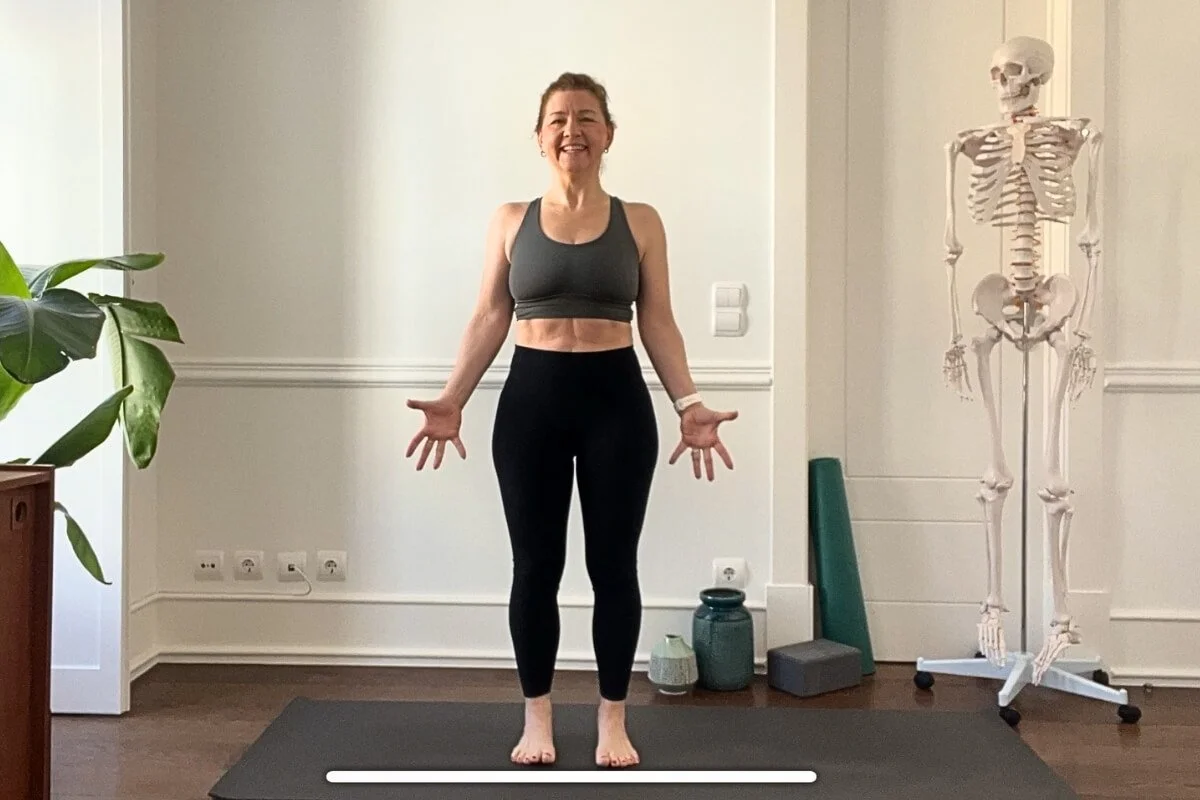
"The alignment of Tadasana exists in every posture."
I remember the first time I heard a yoga teacher say this. Honestly? I thought it was one of those things yoga teachers pass down without really understanding why.
But I had an advantage most yoga teachers don't. Before I ever stepped onto a yoga mat to teach, I'd spent years studying human movement as a physical therapist, treating patients in the clinic, and eventually teaching functional anatomy to future clinicians.
Anatomical position is the reference point for all human movement. It's where physical therapists, physicians, and biomechanists start when they want to understand what the body is doing. And when I looked at it next to Tadasana, I realized they're essentially the same thing.
Tadasana mirrors anatomical position, the starting point for understanding all human movement. Master this one posture, and you have the alignment blueprint for every yoga posture you'll ever practice or teach.
In This Article:
What anatomical position is and why it matters for yoga
How Tadasana and anatomical position are essentially the same thing
Why learning Tadasana alignment translates to every other posture
How to use this as your "road map" for teaching any posture
What Is Anatomical Position?
If you've ever looked at an anatomy textbook, you've seen it: a person standing upright, arms at their sides, palms facing forward.
This is anatomical position. It's the baseline for how movement experts name and understand every movement the human body makes. Flexion, extension, rotation—all of it is described relative to this one position.
Now look at Tadasana.
See the resemblance?
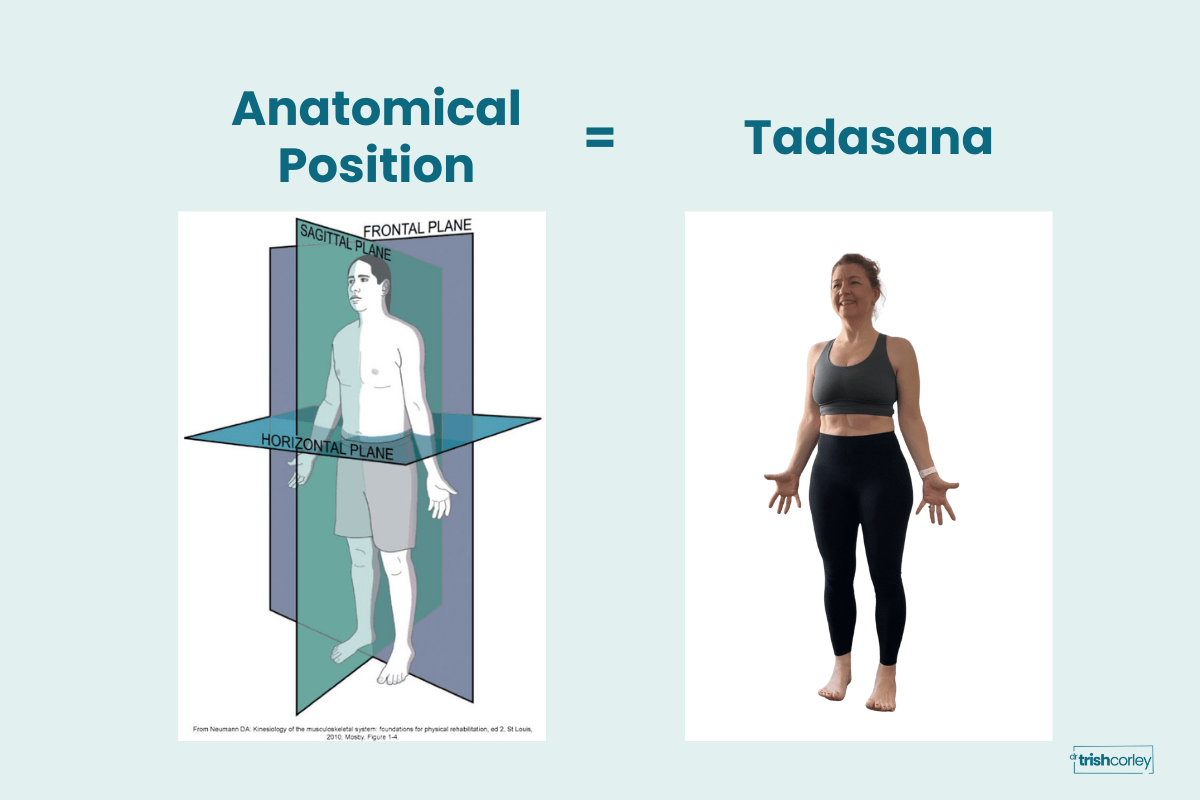
Tadasana Is Anatomical Position
Tadasana is essentially anatomical position on a yoga mat.
You might also call it Mountain Pose or Samasthiti. In Sanskrit, "tada" means mountain and "asana" means posture. Samasthiti translates to "standing equal."
In my practice and teaching, I teach Tadasana with the palms facing forward, just like anatomical position. Some teachers cue palms facing the thighs. Neither is wrong—just different.
What matters is this: just as physical therapists use anatomical position as the starting point to understand human movement, yoga teachers can use Tadasana as the starting point to understand any yoga posture.
If you're curious about how this fits into the bigger picture, I break down my full approach in What is Balanced Posture Alignment?
Why Learning Tadasana Teaches You Every Pose
Here's where it gets practical.
The common denominator in every yoga posture isn't the posture itself. It's the human body. Physical therapists don't memorize movement patterns for every sport, job, or activity. They learn how the body moves. Once you understand that, the principles apply to anything.
The same is true for yoga.
Once you know how to find balanced alignment in Tadasana, you can find it in Warrior I, Downward Dog, or Full Wheel. The cues that create stability and ease in Tadasana work everywhere else. Sometimes you adjust for direction—"reach your tailbone toward the mat" becomes "reach your tailbone toward the ceiling" in an inversion—but the principle stays the same.
This is why I developed what I call Balanced Posture Alignment. It's a framework rooted in the alignment of Tadasana that simplifies cueing across all postures. When you start to feel unsure in an unfamiliar posture, you can always come back to the main road.
If you've ever wondered why yoga anatomy feels so hard, this is the shift that makes it click. You don't need to memorize more. You need a framework.
Your Road Map for Any Posture
Think of Tadasana alignment as a road map.
Every good road map has a main route. Balanced Posture Alignment gives you that main route. It's essentially all you need. But a good road map also lets you explore. You can travel from Tadasana to Warrior I, to Full Wheel, even to Eka Pada Koundinyasana.
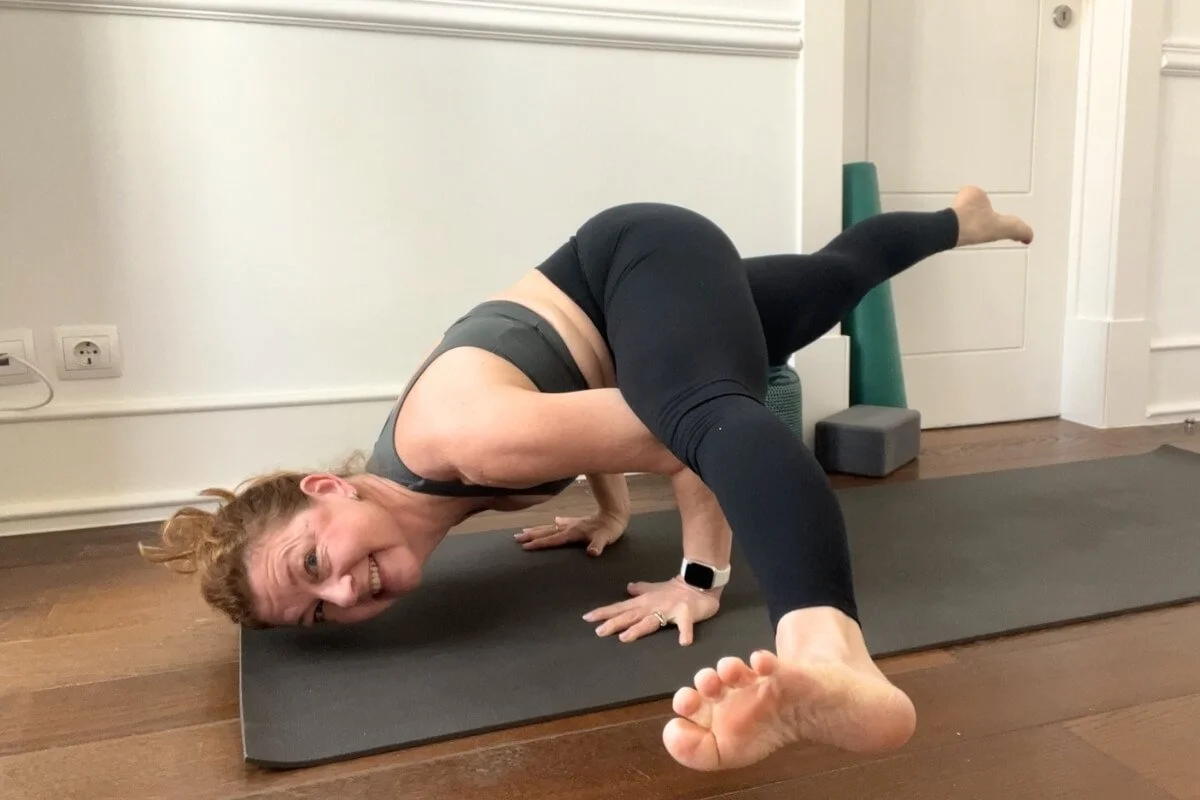
And when you start to feel unstable or unsure, you head back to the main road.
This is what makes anatomy accessible instead of overwhelming. You don't need to memorize the alignment of every posture. You need to understand one posture deeply, and then apply those principles as you go.
I've watched hundreds of yoga teachers learn this framework in a single weekend and walk away able to teach any posture with more confidence and ease. Not because they memorized more, but because they understood the foundation.
The Bottom Line
You don't need to memorize the alignment of every yoga posture. You need to master one: Tadasana. Because Tadasana mirrors anatomical position, the same principles that create balanced alignment here apply everywhere else. Learn this posture deeply, and you have a framework for teaching any posture with confidence.
Get Curious! Q&A
Why do yoga teachers say Tadasana is the foundation for all poses? Tadasana mirrors anatomical position, the reference point used in movement science to understand how the body works. The alignment principles you learn in Tadasana transfer directly to every other yoga posture.
Is Tadasana the same as anatomical position? Essentially, yes. Both involve standing upright with a neutral spine, arms at the sides, and feet pointing forward. The main difference is that some yoga traditions cue palms facing the thighs rather than forward.
Do I need to memorize alignment for every yoga pose? No. When you understand the alignment of Tadasana, you have a framework you can apply to any posture. The cues adapt slightly for direction and orientation, but the principles stay the same.
What is Balanced Posture Alignment? Balanced Posture Alignment (BPA) is a framework I developed based on my background as a physical therapist and anatomy professor. It uses the alignment principles of Tadasana as a road map for cueing any yoga posture.
Can this approach help me teach poses I've never practiced? Yes. When you understand how the body moves rather than memorizing individual postures, you can teach postures you've never done yourself. The principles apply regardless of the shape.
Go Deeper with Anatomy
Tadasana is just the beginning. If you want to learn how to apply anatomy-informed cues across all your classes, I've put together a free guide: 3 Foot Cues Every Yoga Teacher Should Know.
These three cues create stability, balance, and grounding from the ground up. They're part of the same Balanced Posture Alignment framework, and they work in every single posture.
References:
Cameron MH, Monroe LG. 2008. Physical Rehabilitation: Evidence-Based Examination, Evaluation, and Intervention. Elsevier.
Dr. Trish Corley is a Doctor of Physical Therapy (Physiotherapy) and yoga teacher trainer with over two decades of clinical experience. She helps yoga teachers learn anatomy, give clear cues, and create classes their students love. Based in Lisbon, Portugal, she leads the Enlightened Anatomy Course, the Elevate Your Impact Mentorship, and the Power to Lead 200-Hour YTT.