
What to Cue in Warrior 2 (And Why One Principle Beats a List Every Time)
We were at a wine bar last week, my husband, me, our friend Kim who's a chef, and her husband.
My husband loves to cook. Learned from his grandmother. His favorite cookbook is Weights and Measures, not for the recipes, but for the underlying principles. He reads cookbooks the way other people read novels, for inspiration.
At some point he and Kim started talking about cooking, and I just watched.
They could have gone all evening. Finishing each other's thoughts, riffing on technique, talking about why things work, not what steps to follow. Two people fluent in the same language.
I follow recipes. Keep having to check back, figure out what to do next, find my place again. And when I don't have a recipe, I make scrambled eggs with greens, walnuts, olive oil, and salt. (Every time.)
Watching them, I felt the gap.
And sitting there, I kept thinking about the yoga teachers I work with, in studios, in teacher training programs, and the question I hear most often: "What do I cue for Warrior II?"
Posture by posture. A different recipe for each one.
Teaching yoga from principles instead of posture-specific cue lists is what lets you walk into any class and teach from presence, not just from memory.
Dr. Trish Corley is a Doctor of Physical Therapy (Physiotherapy) and yoga teacher trainer with over two decades of experience. She works with yoga teacher training programs and teaches yoga teachers how to cue with anatomy-informed confidence.
In This Article:
Why posture-by-posture cue lists keep teachers in their heads
The shift from memorizing facts to yoga teaching principles
One principle in Warrior II and how to find it
How that same principle travels into Triangle and Extended Side Angle
What this means for your confidence as a yoga teacher
Why Teachers Default to Cue Lists (And Why It's Not Their Fault)
If you learned to teach by memorizing what to say for each posture, you're not doing it wrong. That's how many teacher trainings work. You get a list of cues for Warrior II, a different list for Triangle, another for Extended Side Angle.
It feels thorough. It feels safe.
The problem shows up the moment something unexpected happens in the room. A student does something you didn't plan for. You skip a posture. You need to adapt on the spot. And because you learned cues, not principles, you go blank.
I see this pattern everywhere. On Reddit and Facebook, teachers post asking exactly what to say for a specific posture, running through options, asking which one is correct. The dedication is real. The gap isn't effort. What's missing is the framework underneath the cues.
The teachers who walk in with no notes and just teach aren't running through a list. They're reading the room and responding from what they actually understand. That's what yoga teaching principles actually look like in practice — and it's available to any teacher willing to learn them.
The One Principle That Changes Everything in Warrior II
Here's where it gets interesting. Instead of a cue list, let's try something.
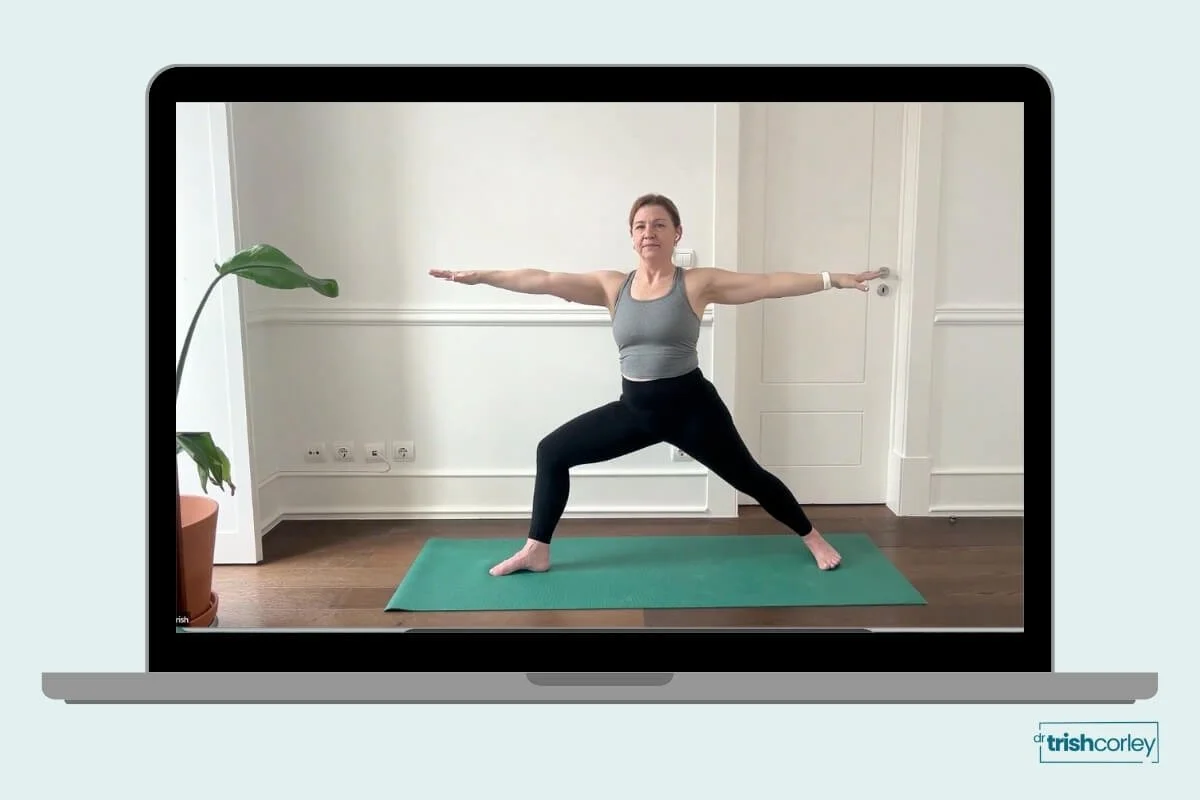
Come into Warrior II.
Now start with the foundation. Press the outer edge of your back foot down into the ground.
Observe what happens from there. The muscles of the back leg are likely to engage, the pelvis is likely to shift towards neutral, the spine may shift to lengthen the side of the body. All of this happens from something real rather than being cued into a shape.
That's the principle at work: start with the foundation and build from there.
The cue didn't describe the whole posture. It found the base and let the body respond.
"Come into Warrior II. Start with the foundation — press the outer edge of your back foot down into the ground."
Try it in your next class. Notice where it travels.
I used this exact cue in my Cue with Clarity course recently and watched it move through the room in real time. That kind of moment, finding the one cue that does the most work, is exactly what we explore inside Elevate Your Impact Mentorship.
How This Principle Travels (This Is the Part That Changes How You Teach)
A posture-specific cue list stays in one posture. A principle travels.
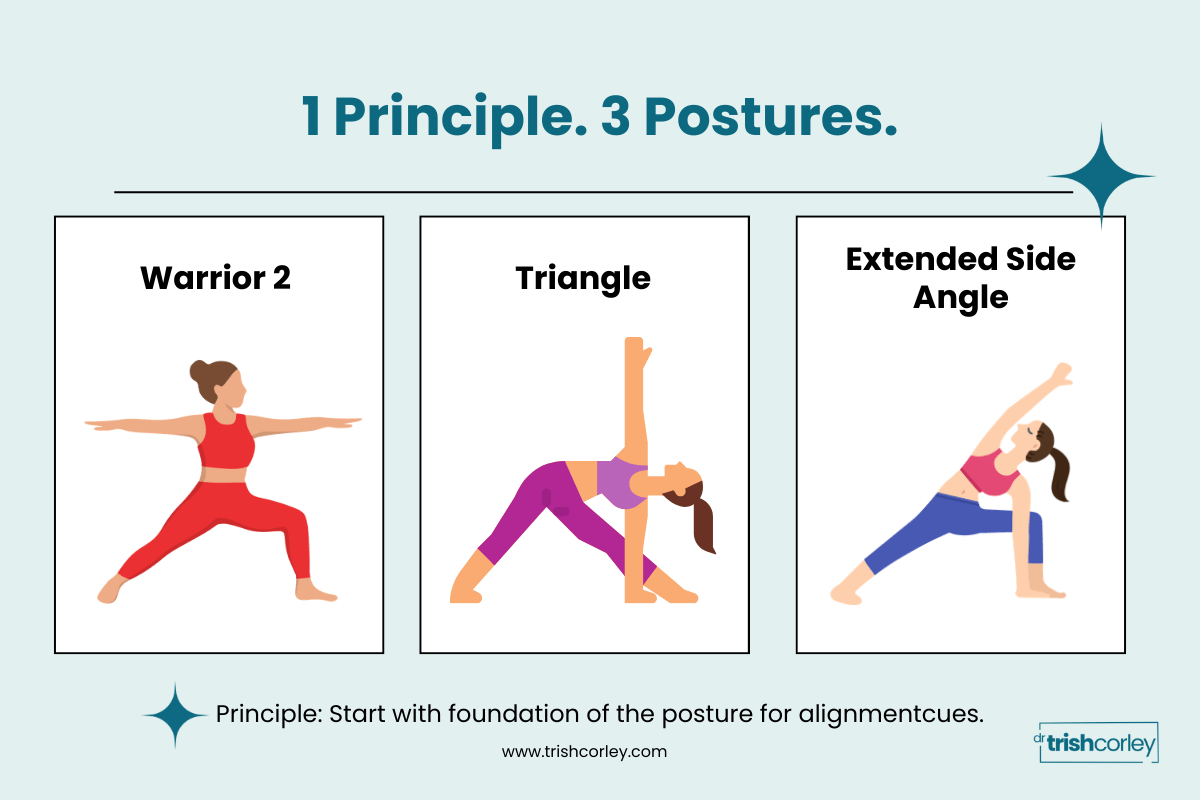
The same foundation-first approach that organizes Warrior II is doing a similar job in Triangle posture. Come into Triangle and start the same way. Press the outer edge of your back foot down into the ground. Notice what happens. The muscles of the back leg are likely to engage, the pelvis is likely to shift towards neutral, the spine may shift to lengthen the side of the body. All of this from something real rather than being cued into a shape.
Take it into Extended Side Angle. Same principle, same starting point, a similar chain of events through the body.
One thing you understand deeply is likely to serve you more than thirty things you've memorized.
When you know why the foundation matters, you can walk into any standing posture and know where to start. You can adapt in the moment. You can respond to what's actually in the room, not just what you planned to say on the way there.
This is what yoga teacher confidence actually feels like. Not performing a sequence of steps you memorized. Knowing something well enough to teach from it.
The Bottom Line
Yoga teachers who learn principles can walk into any class and teach from presence. Teachers who memorize cue lists are often one unexpected moment away from going blank.
The shift isn't about learning more. It's about understanding what you already know at a deeper level, well enough that you can talk about it the way my husband and Kim talked about cooking. Fluently. From the inside out.
That's the teacher you're capable of being.
Get Curious! Q&A
Is it wrong to use cue lists when I'm starting out?
No. Cues that you know work can be a useful scaffold when you're new. The goal is to understand the “why” and the yoga teaching principles underneath them well enough so that you know how to work with the cues; as opposed to just hope you say the right thing.
How do I know which principle to focus on in a posture?
Knowing which principles to draw from takes time and practice to master. But here's the thing. You have to start somewhere. For cuing postures, one place I always encourage teachers to begin is with the foundation. Find what creates stability at the base, and observe how it travels up through the body from there.
What if I cue the principle and students don't respond?
That's useful information. It often means the cue needs to be more specific or embodied. "Press the outer edge of your back foot into the ground" tends to create more response than "ground down." Specificity helps.
Can one principle really travel into multiple standing postures?
Many can. That's what makes principle-based teaching so freeing. You're not learning something new for each posture. You're deepening your understanding of something that keeps showing up.
How does learning principles affect yoga teacher confidence?
Significantly. When you understand why a cue works, you're not dependent on memory. You can read the room, adapt in the moment, and teach from a place of genuine knowledge rather than hoping you don't lose your place.
Go Deeper with your understanding of cueing.
If this way of thinking about cueing resonates, I'd love to have you inside Elevate Your Impact Mentorship.
This is exactly the work we do together. Not more cue lists. The principles underneath the cues, how to see them in real bodies, and how to teach from them with confidence in any class, any posture, any room.
Elevate Your Impact is my group yoga teacher mentorship program with a six pillar of curriculum, live coaching calls, and a community of teachers who are serious about their craft. If you're ready to stop going it alone, I'd love to have you in the room.
Discover Elevate Your Impact →
If you're ready to start cueing from what you observe rather than from a script, the Cue with Confidence guide is a good place to start. It walks you through three anatomy-informed cues that demonstrate how understanding the "why" behind an instruction changes the way you deliver it, and the way it lands.
Download the Cue with Confidence Guide →
About the Author
Dr. Trish Corley is a Doctor of Physical Therapy (Physiotherapy) and yoga teacher trainer with over two decades of clinical experience. She helps yoga teachers learn anatomy, give clear cues, and create classes their students love. Based in Lisbon, Portugal, she leads the Enlightened Anatomy Course, the Elevate Your Impact Mentorship, and the Power to Lead 200-Hour YTT.