
What Melody Discovered Inside a Yoga Teacher Mentorship
It's one hour before class. Melody is mentally running through her sequence for the third time. Does she have enough variety? Is it interesting enough? What if someone has been to three of her classes already this month?
This is the mental loop she knew well.
Melody Billings is a vinyasa yoga teacher who came into the Elevate Your Impact Mentorship carrying a belief most teachers carry: to be a good yoga teacher, you need a million sequences in your back pocket.
What she discovered inside Elevate wasn't just a new approach to sequencing. It was a complete shift in how she thinks about what makes a great teacher.

In This Article:
The belief Melody carried into Elevate
Why hearing "teach one sequence" isn't enough to actually change
The coaching that made the shift real
What Melody would tell any teacher considering mentorship
The Belief Most Teachers Carry Into the Room
Melody came in prepared. Years of teaching vinyasa yoga, a dedicated practice, and a mental library of sequences ready to pull from at any moment.
She described it this way:
"I always used to believe that in order to be a good yoga teacher, I had to have like a million sequences in my back pocket that I would just pull out of my bag of tricks."
Sound familiar?
This is one of the most common beliefs I see among yoga teachers, especially in those first few years of teaching. Variety feels like value. Complexity feels like expertise. Novelty feels like what students are paying for.
The thing is, most teachers have heard the opposite. Plenty of books and trainings will tell you that simplicity is the answer. That one sequence taught well is worth more than a hundred sequences taught while distracted.
Melody had probably heard some version of that before she joined Elevate.
So why hadn't it landed?
Why Hearing It Isn't Enough
This is the part that matters most, and it's what I see over and over in my work with teachers.
The concept of simplicity is not hard to understand. The resistance to it runs much deeper than the intellect. It lives in our identity as teachers. In the pressure of what we think is expected of us. In the fear that if we stop adding more, we will somehow become less.
That's why the first pillar inside Elevate is entirely dedicated to the mindset shift. Before we touch sequencing, cueing, or anatomy, we go inward. I use journal prompts to help teachers get clear on what actually matters to them, their teaching philosophy, their students, their why. Not the why they think they're supposed to have. Their actual why.
For Melody, tuning into that cut through a lot of noise.
"It allowed me to get really clear about how I wanted to teach and what the purpose of teaching is. The big why."
That clarity is what made the sequencing work possible. Without it, simplicity just sounds like settling. With it, simplicity becomes a choice you make with intention.
The Sequencing Shift (And What It Actually Unlocks)
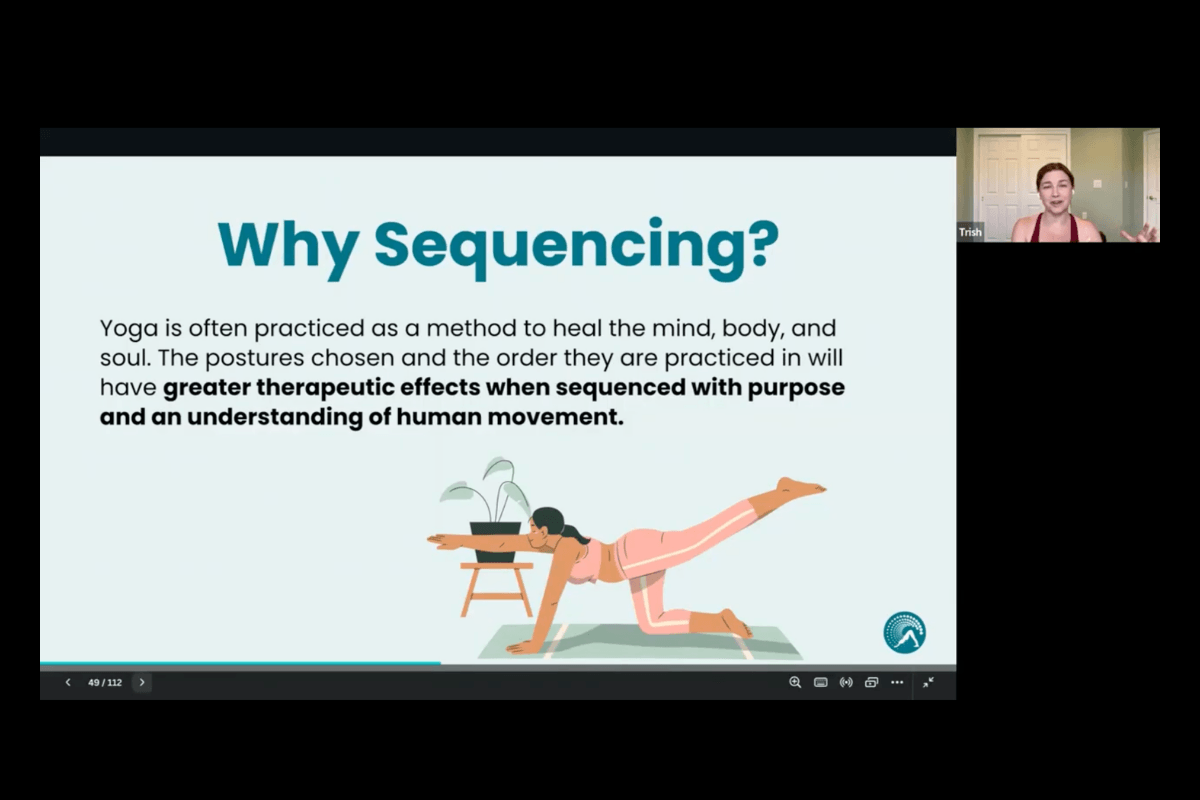
Once the mindset foundation is there, we go deep into sequencing inside Elevate. And I want to be clear: this is not a module that tells you to pick one sequence and repeat it forever. That would be its own kind of rigidity.
What I teach is one sequence as a home base, something you know so well that you can teach it without thinking, which frees you to actually be in the room with your students.
I spent time coaching Melody through what this looks like in practice, showing her how to find creativity within a familiar structure rather than chasing it through constant novelty.
Here is what Melody noticed when that shift happened:
She got off her mat. When she already knew what came next, she could look up and see what was actually happening in the room.
The mental chatter stopped. No more "did I do the left side?" mid-cue.
She felt more present with the people in front of her, which is what they actually came for.
"That kind of thing really, really opened my eyes regarding how to effectively teach a class without putting the pressure that I put on myself to always have something new to share, always have something different.
And here is the part that surprised her:
She felt more creative, not less. Because when you are not spending your mental energy on what comes next, you have space to actually respond to what is in front of you.
"That took a lot of pressure away from me."
On Anatomy
Anatomy was also something Melody was navigating coming into Elevate
"The subject of anatomy is so complex. We never stop learning."
Having anatomy broken down in a way that connected directly to real teaching made it feel more approachable. This is something I bring into everything I teach: anatomy should serve your teaching, not overwhelm it.
What Melody Would Tell You
Melody came into Elevate wanting to be better prepared. She left with something more valuable: a clear sense of who she is as a teacher and why she does what she does.
If you have ever felt the pressure to constantly create something new, to always have something different ready, or to quietly wonder whether what you are offering is enough, you are not alone. That pressure is real, and it is one of the things we work through directly inside Elevate.
The concept of simplicity is easy to agree with in theory. Making it real in your teaching is a different thing entirely. That is what the coaching is for.
The Bottom Line
Melody's transformation inside Elevate wasn't just about sequencing. It was about identity. When she got clear on her why, stopped performing variety for its own sake, and trusted that one sequence taught with full presence was genuinely valuable, her teaching changed. That shift didn't happen from reading a tip. It happened through coaching, community, and the kind of honest reflection that the Elevate container is designed to create.
If you're further along in your teaching journey and wondering if Elevate is still for you, Tracy Simmons's story answers that question.
Get Curious! Q&A
What is the Elevate Your Impact Mentorship?
Elevate Your Impact is a mentorship program for yoga teachers focused on mindset, systematic teaching frameworks, confident cueing, and authentic presence in the room. It includes live coaching, recorded content, journal prompts, and community support designed to help teachers go beyond what they learned in their training.
Who is Elevate for?
Elevate is for yoga teachers who want to teach with more clarity, confidence, and intention. Whether you are a few years in or well established in your teaching, the program works with what you already know and helps you apply it with more skill and purpose.
How is a yoga teacher mentorship different from a yoga teacher training?
A yoga teacher training gives you your certification and foundational knowledge. A mentorship takes you beyond the training, working with what you already know and helping you apply it with more skill, intention, and confidence in real teaching situations.
What if I already know I should simplify my teaching but can't seem to actually do it?
That is exactly the gap Elevate is designed to close. Understanding a concept and integrating it into your identity as a teacher are two different things. The mindset work, coaching, and community inside Elevate create the conditions for that integration to actually happen.
Is the Elevate Your Impact Mentorship open for enrollment?
Elevate enrollment only opens a few times per year. Contact me to get on the waitlist for next open enrollment.
Go Deeper with your impact as a yoga teacher.
Elevate Your Impact is my group yoga teacher mentorship program with a six pillar of curriculum, live coaching calls, and a community of teachers who are serious about their craft. If you're ready to stop going it alone, I'd love to have you in the room.
Discover the Elevate Mentorship Program →
About the Author
Dr. Trish Corley is a Doctor of Physical Therapy (Physiotherapy) and yoga teacher trainer with over two decades of clinical experience. She helps yoga teachers learn anatomy, give clear cues, and create classes their students love. Based in Lisbon, Portugal, she leads the Enlightened Anatomy Course, the Elevate Your Impact Mentorship, and the Power to Lead 200-Hour YTT.