
Crow Pose Alignment: 3 Cues That Create Balance
It's common when I teach crow pose, especially with people who haven't practiced it before, that they look at the posture and decide, before they've even tried it, that they aren't strong enough.
The thinking makes sense. Crow is an arm balance, so it must require serious upper body strength. And if your arms don't feel strong enough, why bother?
Here's what I've learned from teaching crow pose for over two decades: many people who think they can't do it actually have plenty of strength. What's missing is an understanding of how alignment creates balance. When that understanding lands, the posture changes. So does something in the person practicing it.
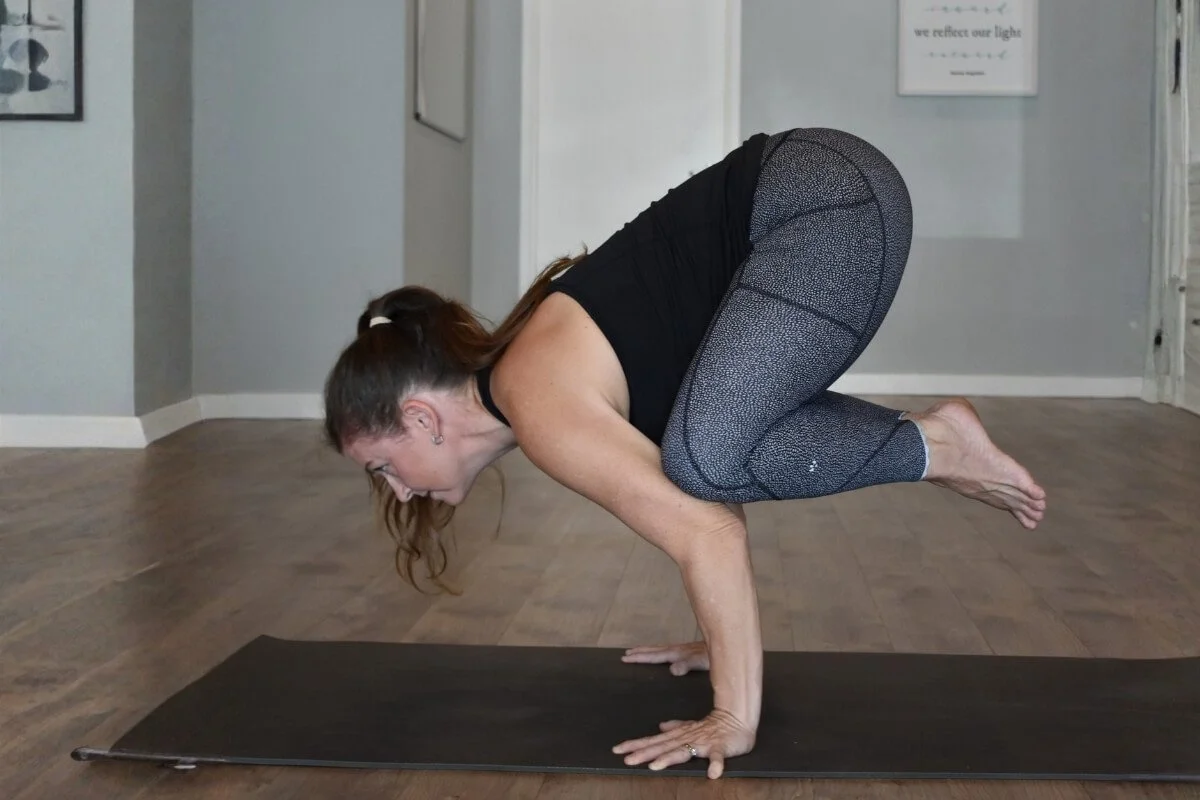
Crow pose alignment is about using your whole body to create balance. Some strength is required, but not much. Alignment is what gets you off the ground.
In This Article:
Why crow pose is more about balance than strength
Three alignment cues that create lift-off
How your foundation, gaze, and feet work together in crow
Expand Your Foundation: Spread Your Fingers Wide
Balance in crow starts at the ground.
Spread your fingers wide and press them actively into the mat. This widens your base of support and distributes your weight more evenly across both hands.
Press through the four corners of your hands. That contact with the mat is what creates the grounding that makes lifting feel possible. If you want to understand the physics behind why pressing down creates lift, this post on yoga foundation cues goes deeper.
Focus Forward: Find Balance Through Your Gaze
Where you look in crow matters more than most people realize. Your gaze isn't a minor detail. It's what creates balance.
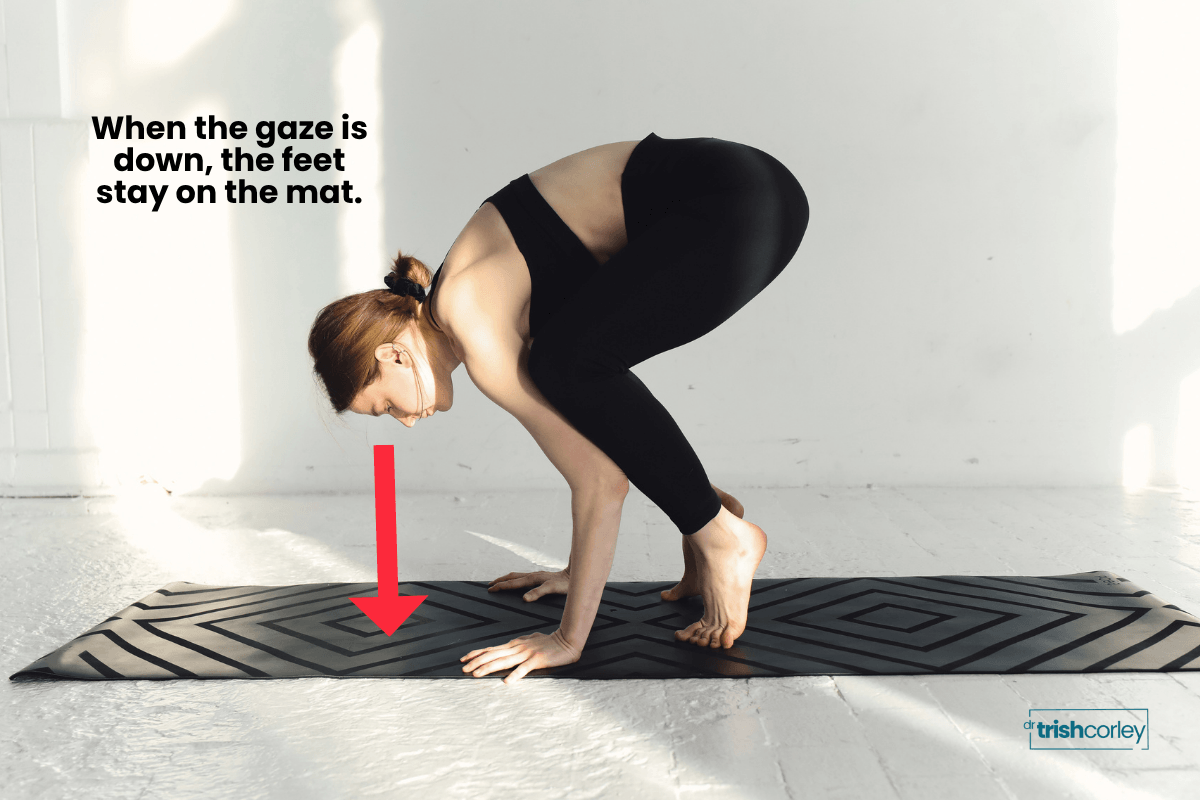
Picture your body in crow as a seesaw, balanced on the fulcrum of your hands. For the seesaw to level out, weight needs to be distributed evenly in front of and behind your wrists. Your gaze is what shifts that weight forward.
As you lift into crow, find a spot on the floor just in front of your mat and keep your eyes there. That forward focus is what brings weight in front of your hands. When you look down, your energy drops and it becomes difficult to find equilibrium between the front and back of your body. When your gaze pulls too far back, your feet find the mat again. Forward, soft, and steady is where balance lives.
When you find it, you'll feel it. That sense of lightness is what crow is really about.
Energize Your Feet: Activate Your Toes for Lift
The upper body gets most of the attention in crow. Your feet matter too.
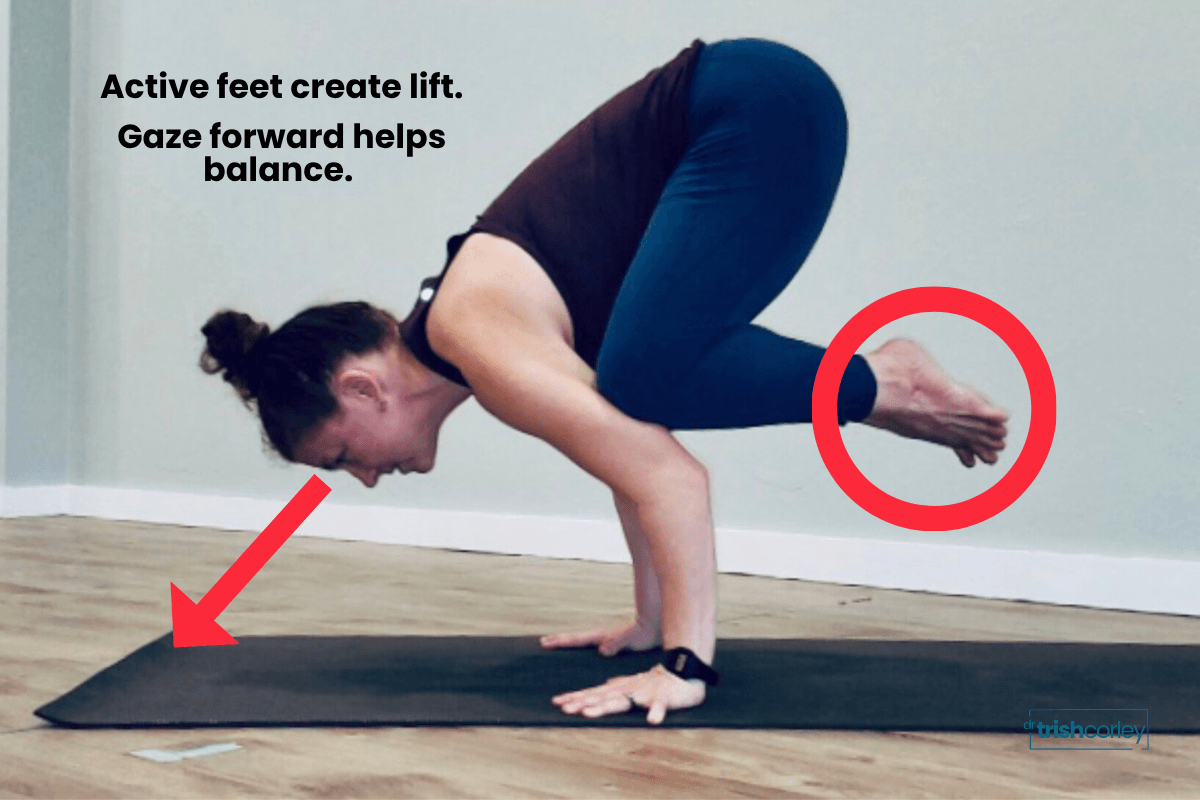
Actively stretch your toes and either point or flex your feet as you balance. This isn't just about making your feet look pretty. When you engage your feet, whether you stretch your toes wide, point, or flex, you create active muscular contractions that send energy all the way to the most distal part of your body. And that activation doesn't stay in your feet. Muscles work in synergistic ways. Activating the muscles of your feet wakes up muscles in your lower legs, which connects into your quads, which then helps activate your hips and your spine.
Suddenly you have a whole body working together instead of just two arms holding you up.
This is really the heart of crow pose. People see it and immediately think it's an arm balance. It is. But it's also a whole body posture. Every part of you is contributing. Engaged feet feel lighter and easier to hold up. Passive feet make crow heavier than it needs to be. Energized feet feel like flight.
The Bottom Line
Crow pose comes down to three things: a grounded foundation, a forward gaze, and active feet. When all three come together, the posture stops feeling like something you either have the strength for or you don't. It becomes a practice of balance. And finding that balance in crow is, for many people, the moment they start believing they're capable of more than they thought.
Get Curious! Q&A
Can anyone do crow pose?
Many people can, yes. Crow pose requires some upper body strength, but alignment and balance are what make it accessible. When you understand how your foundation, gaze, and feet work together, the posture becomes far more approachable than it looks.
What is the most common reason people can't balance in crow pose?
The gaze. Looking forward is what shifts your weight forward, and that forward weight is what creates balance. When you look down, your energy drops and it becomes difficult to find equilibrium between the front and back of your body. The shift is simple: find a spot on the floor just in front of your mat and keep your eyes there.
Do I need to be able to do a push up to do crow pose?
No. A push up requires active pressing strength and is more physically demanding than crow. Crow is a balance posture. You need enough strength to support your bodyweight on your hands, but you are not pushing yourself up from the ground. Many people who find push ups difficult can still find crow once they understand how alignment creates balance.
Is crow pose bad for your wrists?
No posture is inherently bad for you. What matters is whether you have the strength, mobility, and endurance to do it for the duration you are asking of yourself. Crow pose is no different. If your wrists are not yet used to bearing weight, start with shorter holds and take more rest between attempts. That is how you build the strength over time. Spreading your fingers wide and pressing through all four corners of your hands helps distribute the load more evenly. For a deeper look at why that works, this post on wrist pain in yoga covers the anatomy. Build gradually and crow pose is perfectly accessible for most people.
Go Deeper with your understanding of yoga alignment and arm balances
If crow pose sparked your curiosity about how anatomy informs alignment, the Cue with Confidence guide is a great next step. It walks you through three anatomy-informed cues from the Balanced Posture Alignment framework, so the why behind every cue starts to make sense.
Download Cue with Confidence →
About the Author
Dr. Trish Corley is a Doctor of Physical Therapy (Physiotherapy) and yoga teacher trainer with over two decades of clinical experience. She helps yoga teachers learn anatomy, give clear cues, and create classes their students love. Based in Lisbon, Portugal, she leads the Enlightened Anatomy Course, the Elevate Your Impact Mentorship, and the Power to Lead 200-Hour YTT.