
Ground Reaction Force in Yoga: Why Pressing Down Works
"Press down into the earth and feel the earth push back." Perhaps you have said this cue, or heard it, in a yoga class. It is quite common. What is less common is understanding what is actually happening when you say it.
That is what this article is for.
I hear this gap constantly when training yoga teachers. They know the cue. They do not always understand the mechanism underneath it. So the cue gets repeated without real intention or meaning. I recently talked to a yoga teacher who told me she has been saying "ground down" without fully knowing why it helps a student find more stability. She had some sense of the value in the cue, and though admitted she just said it because it’s what she heard other yoga teachers say.
So I helped her understand a bit more about ground reaction forces. And if that word seems intimidating, I get it. In physical therapy school the concept overwhelmed me. So here I simplify it.
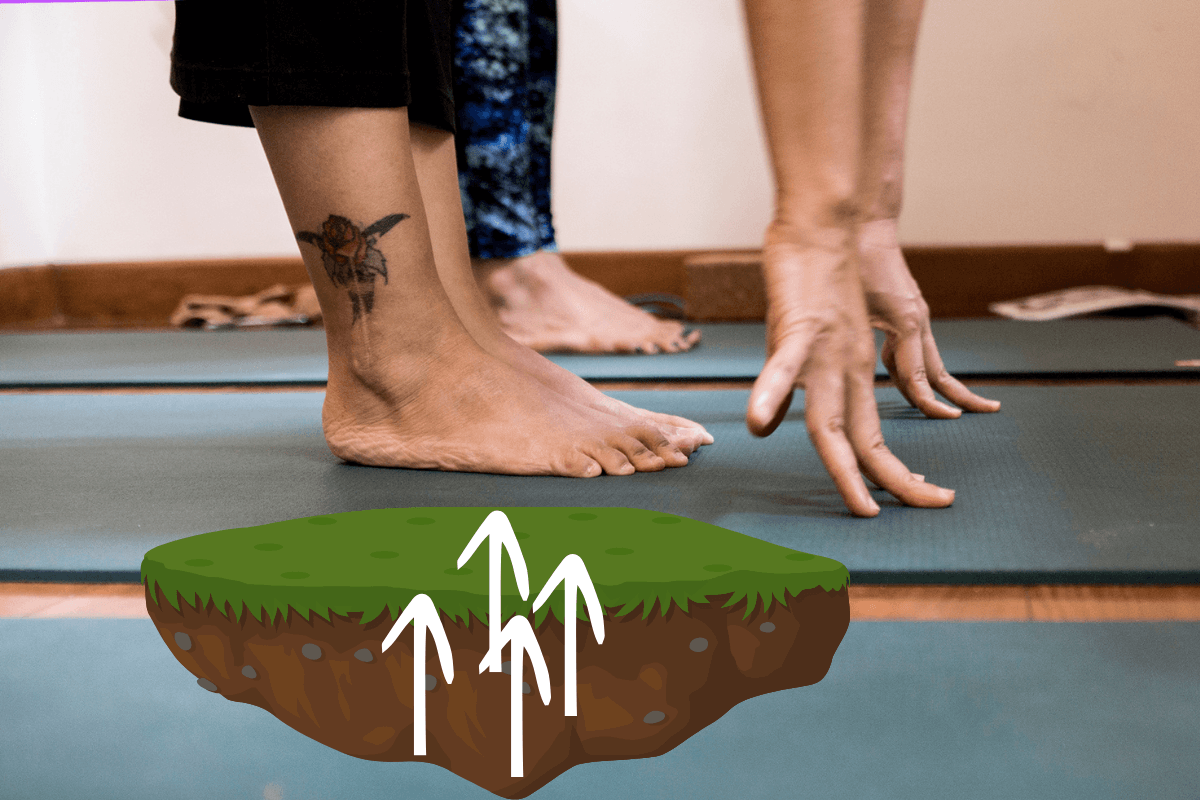
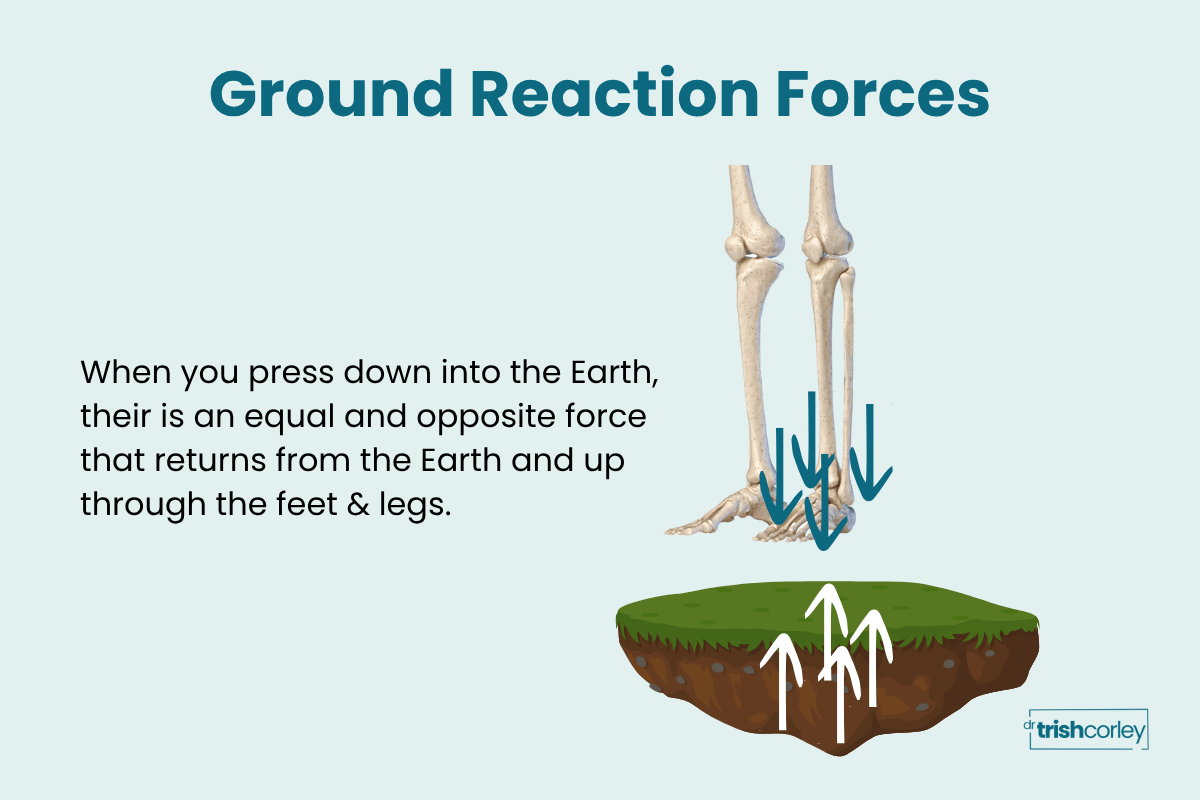
Cues to press down work because of physics. When you press down into the ground, the ground presses back with equal force. That reactive force is what creates lift, stability, and ease in your posture. It is also what is called ground reaction force.
In This Article:
The physical principle behind every "press down" cue (and why it isn't just a figure of speech)
How this shows up in Downward Facing Dog and Tree Posture
A more empowering way to cue foundation, beyond "ground down"
How this connects to the posture you're teaching this week
What's Actually Happening When You Press Down Into the Yoga Mat
Here's the mechanism. Every time your hand or your foot presses into the mat, the ground presses back with the same amount of force, in the opposite direction. In biomechanics, this has a name: ground reaction force. It is the exact force researchers measure when they study how the body moves, walks, and stabilizes itself against the ground.
Stay with me, because this is where it gets useful.
That force does not stop at your skin. It travels. Press your feet into the ground in Tadasana, and the ground reaction force moves up through your ankles, your shins, your knees, into your hips. Press your hands down in Downward Facing Dog, and the same force travels through your wrists, your arms, into your shoulders.
This is why "press down to lift up" is not just a nice phrase. It describes a force your body can feel, immediately, every time you try it.
As a doctor of physical therapy, I think about ground reaction force constantly, in the clinic and on the mat. It is one of the first concepts I teach in training, because once a teacher can feel the ground reaction forces in their own body and see it in others bodies, they can easily give cues with more intention. This results in a greater experience for their students and more confidence in their teaching.
You can see this same force behind other cues you have likely used or received. ‘Root down.’ ‘Press into your feet.’ ‘Ground through your hands.’ Different words, same force.
Feeling Ground Reaction Force in Your Own Yoga Practice
Reading about ground reaction force is one thing. Feeling it is another. Try this in your own practice, then bring it to your next class.
In Downward Facing Dog, press your hands evenly into the mat, spreading through your fingers and the base of your palm, the same even pressure that supports the arches of your hand and your wrists. Notice what happens in your arms and shoulders. Press your feet down with the same intention, and notice the response through your legs and into your hips. The more evenly you press, the more lift you feel through your hips and spine.
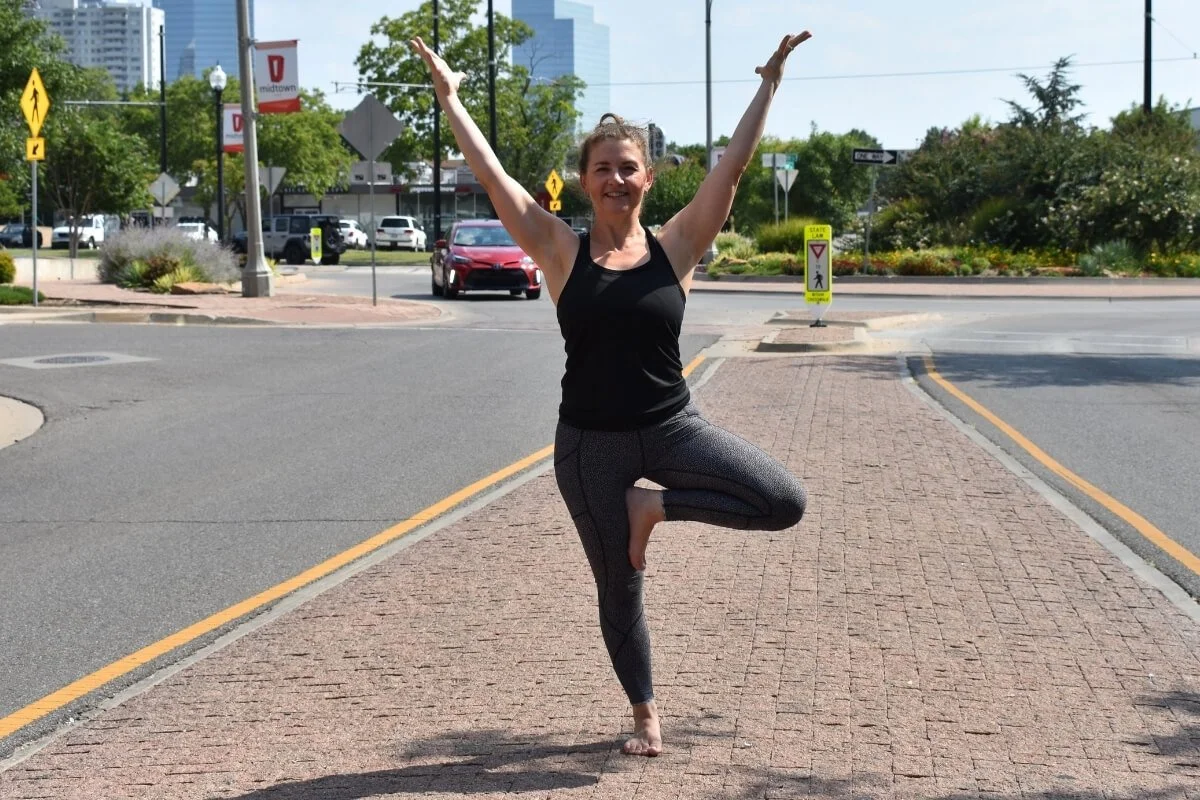
In Tree Posture, the principle gets even more obvious, because you only have one foot on the ground. Press the four corners of your standing foot down into the ground and feel how the rest of your leg responds. Many teachers cue "find your balance" in Tree. Balance is not something a student finds by trying harder to hold still. It is a result of pressing down intentionally. So instead of simply saying “ground down” give them an actionable cue that will create the ground reaction forces.
This can truly be useful in any posture. I wrote more about the cue I use to create ground reaction forces and help with shoulder alignment in upward facing dog. It starts with pressing down!.
The Bottom Line
Press down, and the ground presses back with equal force, traveling up through your body to create lift, stability, and ease. You do not need to memorize the physics to use this. Instead practice various postures with an intention to press down and create ground reaction forces. Feel what you feel. Then teach with cues that create ground reaction forces and see your students experience those powerful forces.
Get Curious! Q&A
What is ground reaction force in yoga?
Ground reaction force is the force the ground exerts back on your body when you press into it. It is the same force biomechanics researchers measure when they study walking and standing. In yoga, you feel it every time you press your hands or feet into the mat and notice lift through the rest of your body.
Why do yoga teachers say "press down" so often?
Because it works, even when the explanation is missing. Pressing down triggers ground reaction force, which creates lift, stability, and ease in nearly every standing or weight bearing posture. Teachers often pass the cue along without the mechanism behind it, which is part of why it can start to feel repetitive instead of useful.
Does pressing down harder create more lift?
Not necessarily. Even, intentional pressure through the whole hand or foot creates more lift than gripping or pressing as hard as possible in one spot. Distributing the pressure evenly is what activates the full response through your limbs and core.
Can I use this principle in postures beyond Down Dog and Tree?
Yes. Any posture with a part of your body pressing into the ground can use this principle, standing postures, arm balances, even seated postures where your sit bones press down. Wherever your body meets the ground is where to start your cue.
Is this the same thing as "grounding" in yoga?
It is related, though grounding is often used as a more general or energetic term. Ground reaction force gives that idea a specific, physical mechanism. When you cue grounding with this mechanism in mind, students get something concrete to do instead of something to imagine.
Know your anatomy. Trust your cues.
When you understand what’s really happening beneath the surface, you stop second-guessing and start seeing your students clearly. The right words come easily, and your students feel the difference.
Start with My Free Resources for Yoga Teachers →
References
Winiarski, S. Estimated ground reaction force in normal and pathological gait. Acta of Bioengineering and Biomechanics. PMID: 19739592. https://pubmed.ncbi.nlm.nih.gov/19739592/
About the Author
Dr. Trish Corley, PT, DPT, E-RYT 500, is a Doctor of Physical Therapy, former anatomy professor, and yoga teacher trainer. She has taught anatomy in yoga teacher trainings since 2011 and has led her own 200-hour trainings since 2016.