
One Magical Cue for Shoulder Alignment in Upward Facing Dog
I was standing at the front of the room watching a student move through her vinyasa. Shoulders up by her ears in upward facing dog, every single time. I'd already offered a few cues. "Draw your shoulders down your back." "Roll them back and down." She tried. She adjusted for a breath, then drifted right back.
I wasn't going to give her three more shoulder cues. So I walked up, waited for her next updog, and said quietly: "Press the four corners of your hands into the mat."
Her shoulders dropped away from her ears. Just like that.
The most effective cue for shoulder alignment in upward facing dog doesn't mention the shoulder at all.
In This Article:
Why shoulders creep up in upward facing dog
How a hand-press cue creates shoulder stability
The anatomy behind why it works
How to try it in your own practice and teaching
Start with the Foundation
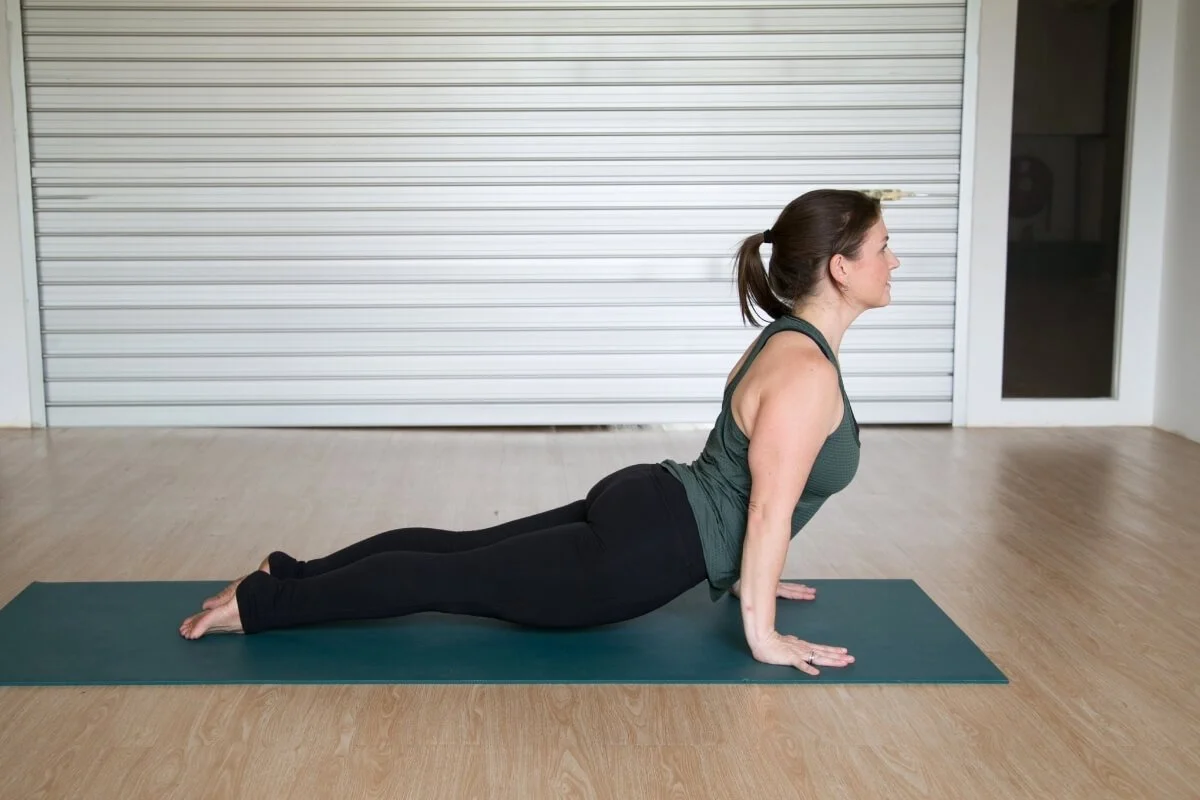
When you observe alignment in a yoga posture, start with the foundation. The foundation is what's touching the ground. Everything else is supported by it. In upward facing dog, the foundation is the hands and the tops of the feet.
The cue to "press the four corners of your hands down into the mat" fosters a sense of rootedness. It also gives students something tangible to do. Unlike more abstract cues that can lead to confusion, pressing the hands into the mat is something students understand immediately. They know where their hands are. They know where the mat is. That clarity gets them present.
At this point you might be thinking: hands make sense, but why cue the hands when the misalignment is in the shoulders?
Because when the hands are weight-bearing, any action initiated through them influences the shoulders. Here's what that looks like.
Engagement of Shoulder Stabilizers
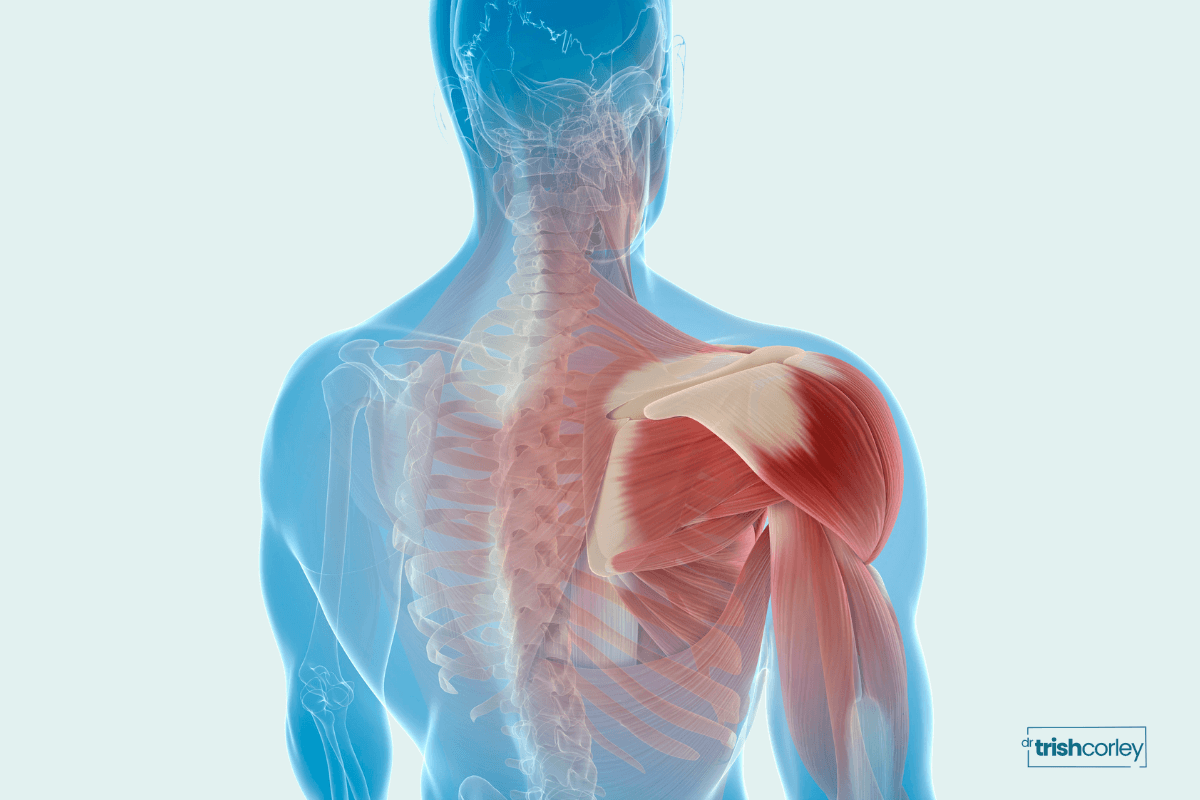
Pressing into the hands activates the muscles surrounding the shoulder joint. These muscles work together to stabilize the shoulder girdle, and stability matters here. Weight is moving through the shoulders in upward facing dog. The more those stabilizers are online, the more support the joint has.
How the Cue Aligns the Shoulders
When a student's shoulders are up by their ears in upward facing dog, their shoulder blades are elevated. That elevation is what creates the tension and cramped feeling many students describe.
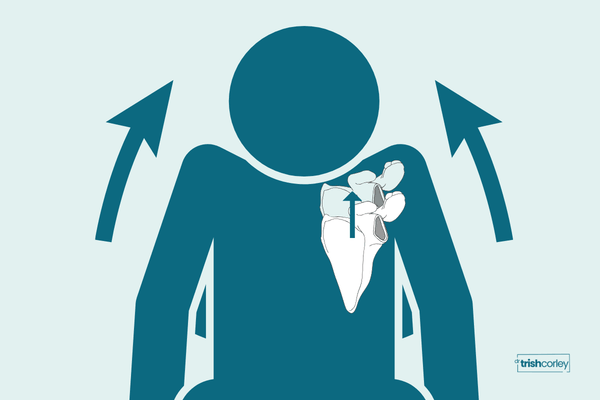
When the hands press down into the mat, the muscles of the arms and shoulders activate to create shoulder blade depression. That depression is exactly what moves the shoulders away from the ears.
There are other cues commonly used for shoulder alignment in upward facing dog. I recently heard a well-known yoga teacher offer these two:
"Roll your shoulders up and back, then down."
"Bring your shoulder blades down your back."
There's nothing wrong with either of those. I tried them myself. They produced some positive changes. My shoulders still felt tight and slightly elevated.
Then I reset into a deliberately "lazy" upward facing dog, shoulders right up by my ears, and cued myself to press the four corners of my hands down into the mat.
I could feel the muscles throughout my arms and shoulders activate. I could feel engagement in my core. And most importantly, my shoulders moved away from my ears.
The Bottom Line
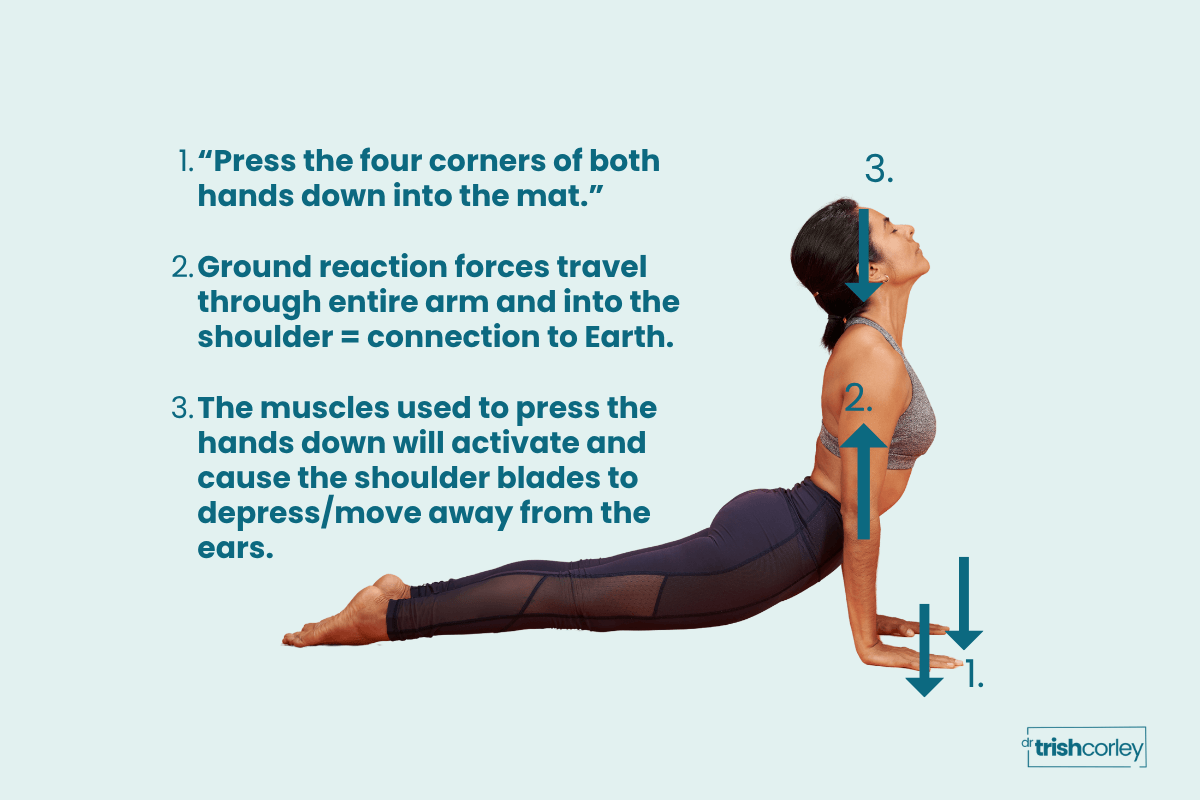
Pressing the four corners of your hands into the mat in upward facing dog activates a chain of muscular engagement through the arms and into the shoulders, creating shoulder blade depression and moving the shoulders away from the ears. One cue to the foundation. Big impact up the chain.
You don't have to abandon shoulder-specific cues entirely. And when you want one instruction that does the most work, start with the hands.
"Press the four corners of your hands down into the mat."
Try it in your own upward facing dog a few times. Notice what you feel. Then bring it into your next class and observe what happens.
Get Curious! Q&A
What are the four corners of the hand in yoga?
The four corners of the hand refer to the base of the index finger, the base of the pinky finger, the inner heel of the hand (below the thumb), and the outer heel of the hand (below the pinky). Pressing evenly through all four creates a stable, grounded foundation and distributes weight across the entire hand rather than collapsing into one area.
Why do shoulders rise up in upward facing dog?
When the hands aren't actively pressing into the mat, the shoulder girdle tends to lose stability and the shoulder blades elevate, drawing the shoulders up toward the ears. This can happen with any level of practitioner and often has nothing to do with flexibility. It's usually a matter of activation, not range of motion.
Can this cue help with wrist pain in upward facing dog?
It may. Pressing evenly through the four corners of the hand distributes weight more broadly across the palm, which can reduce the concentration of load at the wrist. If wrist pain is significant or persistent, it's worth exploring with a healthcare provider, and there may be other modifications worth considering as well.
Is it wrong to cue the shoulders directly in upward facing dog?
Not at all. Shoulder-specific cues can be useful. The case for cueing the hands first is that when the hands are weight-bearing, the shoulder muscles respond to what happens at the foundation. A well-placed foundation cue often produces the shoulder change you're looking for without requiring the student to think about two things at once.
Does this cue work for other yoga postures?
Yes. Foundation-first cueing is a principle that transfers across many weight-bearing postures. Downward facing dog, chaturanga, and arm balances all involve the hands as a foundation. Pressing through the four corners is a cue worth building into your teaching vocabulary well beyond upward facing dog.
Go Deeper with your understanding of anatomy-informed cueing
One cue can change what a student feels in a posture. Imagine having a framework of anatomy-informed cues that work across every posture you teach. The free Cue with Confidence guide is where that starts: three foot cues rooted in anatomy, with the science behind each one and a preview of the Balanced Posture Alignment framework.
Download the free Cue with Confidence guide →
About the Author
Dr. Trish Corley is a Doctor of Physical Therapy (Physiotherapy) and yoga teacher trainer with over two decades of clinical experience. She helps yoga teachers learn anatomy, give clear cues, and create classes their students love. Based in Lisbon, Portugal, she leads the Enlightened Anatomy Course, the Elevate Your Impact Mentorship, and the Power to Lead 200-Hour YTT.