
Locust Pose Cues: What the Neck Is Actually Doing
You're teaching Locust Pose and you scan the room. Some students are looking up. Some are looking forward. A few are looking down at the mat. And you're not sure which one to reinforce, or why.
Here's the thing: most gaze cues for Shalabhasana get passed down without any anatomy behind them. Teacher to teacher, no one questions it.
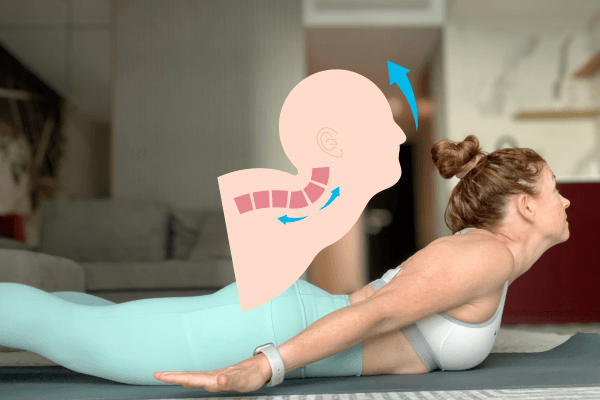
The locust pose cues you give for the gaze matter more than you might think, because where your students look directly affects the alignment of the cervical spine.
In This Article:
Why the natural curve of the cervical spine matters in Locust Pose
What the suboccipital muscles are doing when students look up
The case for a downward gaze
When looking forward can work
How to observe before you cue
The Cervical Spine Has a Natural Curve
Your cervical spine, the seven vertebrae of your neck, has a natural inward curve called a lordosis. Think of a subtle "C" shape. When that curve is present, the weight of your head is well supported, the muscles of the neck can work efficiently, and your neck can actually move the way it's meant to.
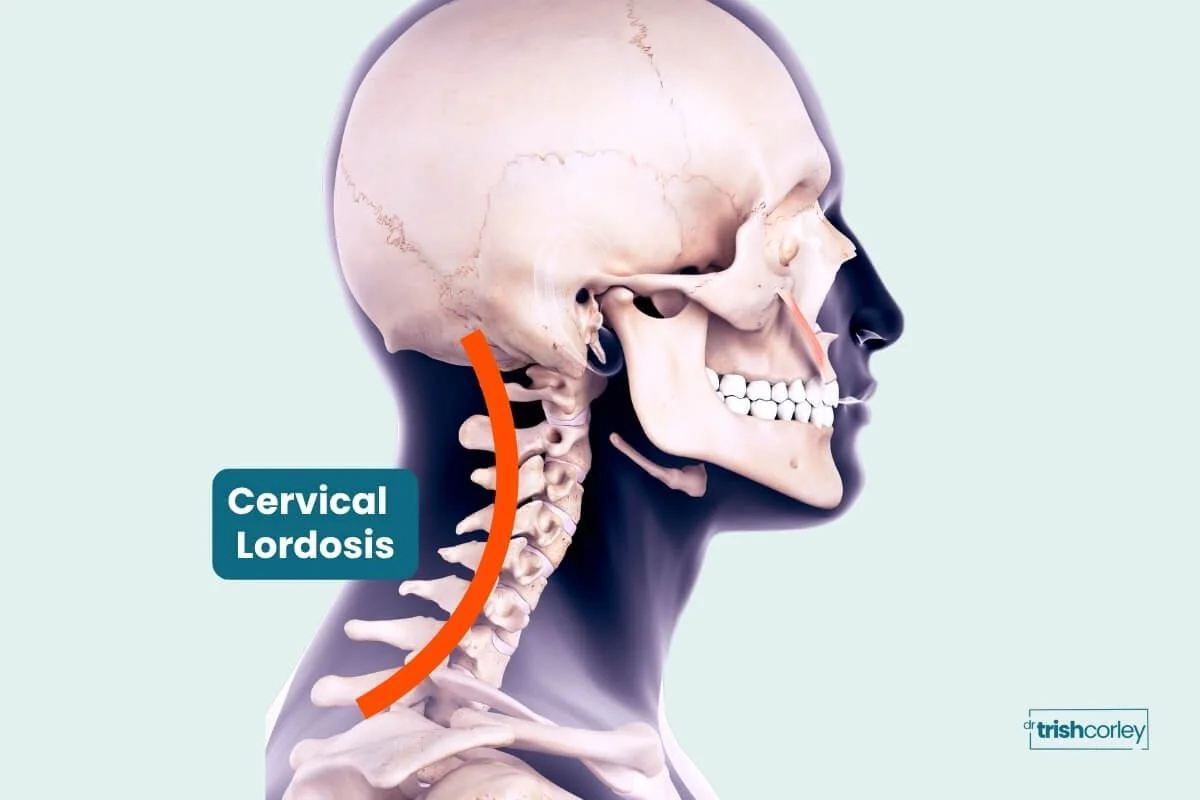
This matters a lot in Locust Pose, where the head and neck are lifted away from the floor and the whole spine is working to extend.
What Forward Head Posture Has to Do With Your Locust Pose Cues
Before we talk about the gaze, we need to talk about what your students are walking in with.
Many people spend long hours sitting, looking at screens, leaning forward. Over time, this contributes to forward head posture, where the head sits in front of the shoulders rather than balanced on top of them. When that happens, the cervical spine tends to flex through most of the neck. And then, because people still need to see where they're going, the very top segments extend upward to compensate.
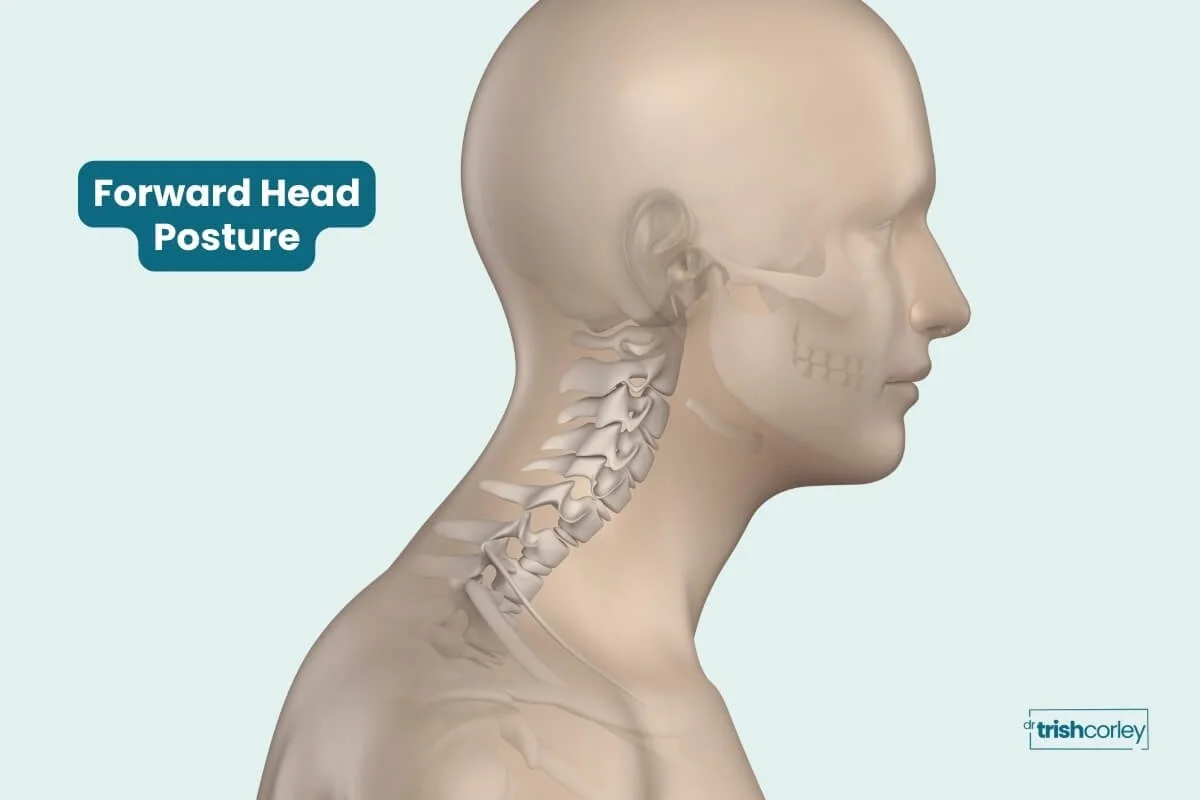
Your students are real humans with real bodies. The gaze cue you give lands differently depending on what's already happening in their neck.
The Suboccipital Muscles: Small But Significant
At the base of your skull sits a small group of muscles called the suboccipitals. They're designed for stabilization and small corrective movements of the head. These small muscles are not for lifting the weight of the head repeatedly.¹
Here's where it gets relevant. When someone has forward head posture, they're already relying on those suboccipital muscles to hike the top of the neck upward just to see straight ahead. Those little muscles are working overtime before they even step on the mat.
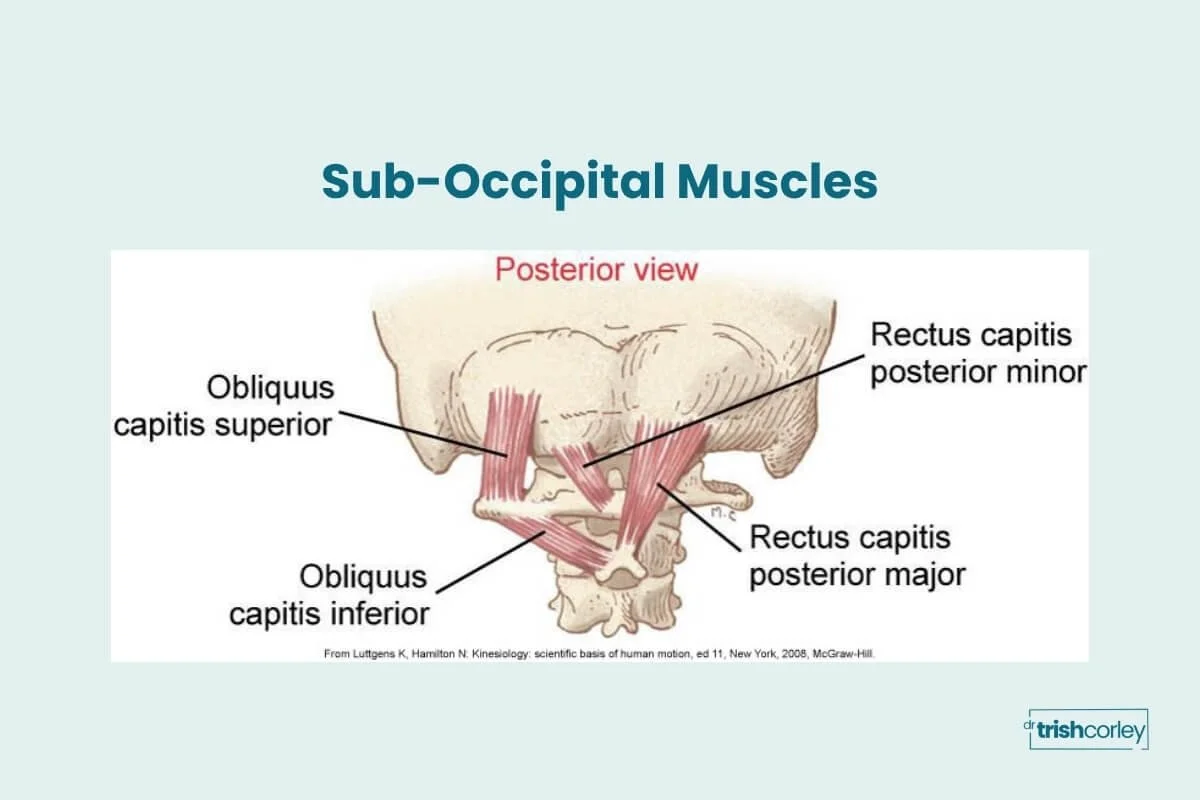
When you cue a student to look up in Locust Pose, those same muscles fire again. And for students who already present with forward head postur, it may actually feel natural, because it's the pattern they're used to. That doesn't mean it's serving them.
What Happens When Students Look Up
When a student turns their gaze upward in Locust Pose, the movement tends to happen primarily at the upper cervical spine. The chin lifts, the base of the skull compresses, and the suboccipitals do the heavy lifting.
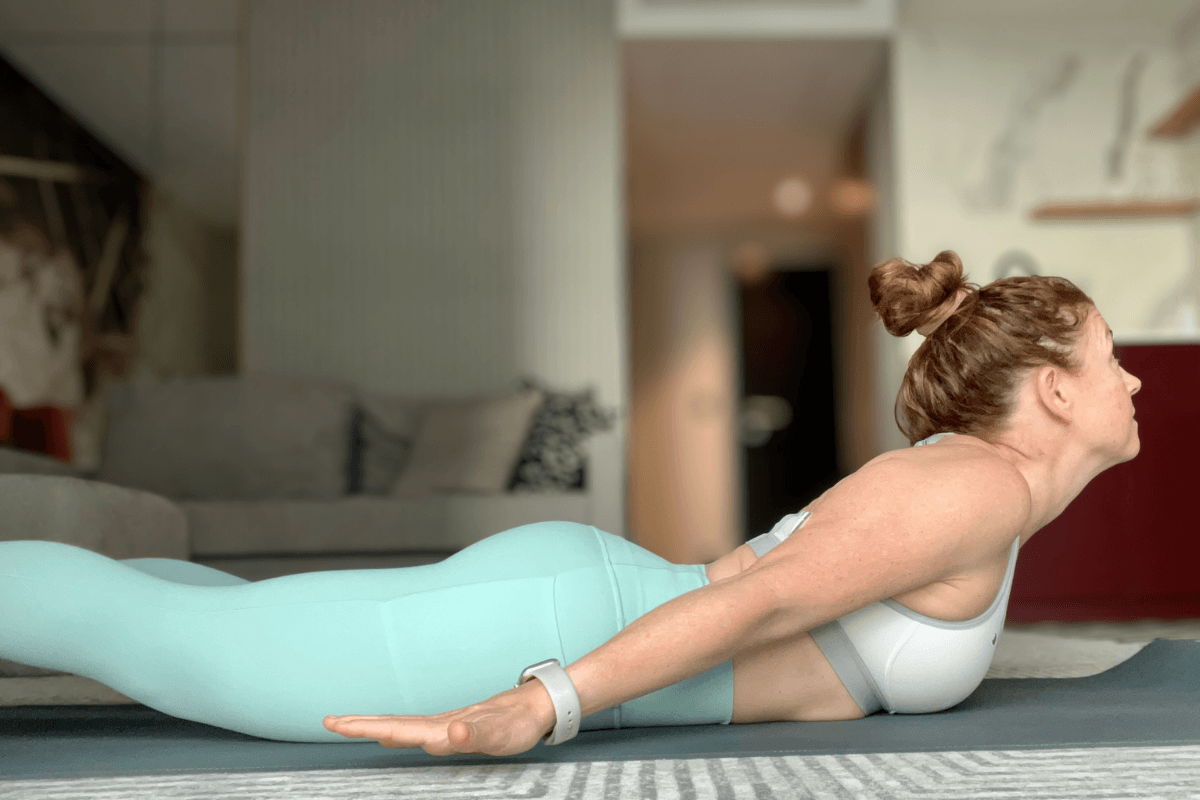
It may look like more range of motion or a "bigger expression" of the posture. It may even feel like better alignment to the student. But if the movement is coming mostly from those top two or three cervical segments rather than the whole spine, the suboccipitals are working harder than they need to, and the natural curve of the neck is likely compromised.
The Case for Looking Down
A downward gaze supports the presence of the natural cervical lordosis. Rather than recruiting the suboccipitals to crane upward, the neck can lengthen and the muscles can work more efficiently across the whole cervical spine.
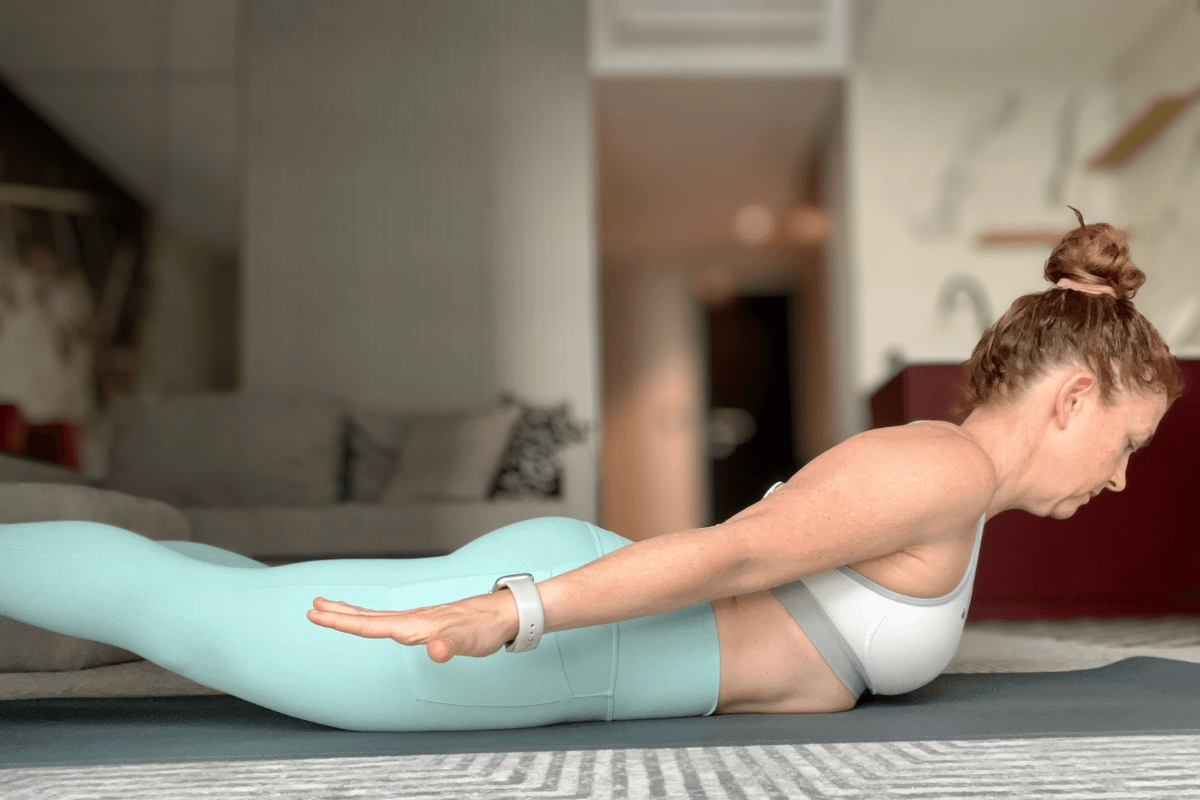
A downward gaze also gives the lower cervical extensors an opportunity to work. These muscles are often underused, particularly in people with forward head posture, and Locust Pose can be a genuinely useful place to start waking them up.
For many students, looking down also creates better internal focus. Less visual distraction, more awareness of what's actually happening in the body, a stronger connection to the breath. It's a small shift that can change the whole quality of the posture.
When Looking Forward Can Work
Gaze direction isn't one-size-fits-all, and this is where your observation skills matter.
For a student who lifts high in Locust Pose, the increased extension through the lumbar and thoracic spine naturally carries the head and neck upward. In that context, a forward gaze may still maintain the cervical lordosis, because the whole spine is contributing to the movement rather than the upper neck compensating for a spine that isn't moving.
The principle to hold onto: when the entire spine is actively extending, the larger muscles of the neck and back support the cervical spine. The suboccipitals don't have to do it alone. In that case, the gaze can move forward without the same strain.
If a student is looking forward primarily by moving at the upper cervical spine while the rest of the neck stays passive, that's the pattern worth addressing.
If you want to understand how the whole spine contributes to movement in yoga, my article How Does the Spine Move in Yoga is a good place to start.
What to Observe Before You Cue
This is where teaching gets interesting. Before you give a gaze cue, look at what's actually happening in the room.
Is the neck long, or does it appear shortened and compressed at the upper cervical region, close to the head?
Does the chin jut upward while the rest of the neck stays relatively low?
Where is the student's head relative to their shoulders when they walk in?
This kind of observation is at the heart of Balanced Posture Alignment, the framework I teach inside the Enlightened Anatomy Course. The idea is simple: you look first, then you cue what you actually see, rather than delivering the same cue to every body in the room.
What you observe tells you which cue is most useful for that person, in that moment. The most useful locust pose cues are the ones that respond to what's actually in front of you.
The Bottom Line
Most locust pose cues for the gaze get passed down without any anatomy behind them. Understanding what the cervical spine is actually doing in this posture changes how you teach it.
For most students, a downward gaze supports the natural curve of the neck, reduces strain on the suboccipital muscles, and gives the lower cervical extensors a chance to work. A forward gaze can be appropriate when the whole spine is actively extending and the upper cervical spine isn't compensating for lack of movement elsewhere.
Observe first. Cue what you see.
Get Curious! Q&A
Is it wrong to cue students to look forward in Locust Pose?
Not at all. A forward gaze can work well for students who have good spinal mobility and are lifting through the whole spine, not just cranking at the upper neck. The question is always what's actually happening in the body in front of you.
Why do some students feel like looking up gives them a bigger lift?
Because our eyes give us a lot of sensory feedback. When your head is up and your gaze is up, you might catch a glimpse of the top of the wall or the ceiling, and that visual information makes it feel like a bigger backbend, a bigger range of motion. However, that movement is coming from one small part of the neck, not from the whole spine extending.
What if a student has neck pain in Locust Pose?
A downward gaze is a good place to start. It reduces load on the suboccipital muscles and supports the natural cervical curve. If neck pain persists regardless of gaze direction, that student may need a modification that reduces the height of the lift, or a conversation about what else might be contributing. The same principle applies in Chaturanga, where head position is just as commonly overlooked. For more insight on this, you can read this article: Where Is Your Head in Chaturanga?
Can Locust Pose actually help with forward head posture?
It can. When cued well, Locust Pose gives the lower cervical extensors an opportunity to strengthen, muscles that are often underused in people with forward head posture. That's one of the reasons gaze direction matters so much in this posture specifically.
Go Deeper with your understanding of yoga anatomy and cueing
The neck is just one piece of a much larger picture. If you want to start teaching from anatomy rather than inherited cues, the Cue with Confidence guide is a good place to begin. It walks you through three anatomy-informed foot cues using the same principle at work in this post: understanding what the body is actually doing before you open your mouth to cue it.
Download the Free Cue with Confidence Guide →
References
Sung, Y.-H. (2022). Suboccipital muscles, forward head posture, and cervicogenic dizziness. Medicina, 58(12), 1791. https://www.mdpi.com/1648-9144/58/12/1791
About the Author
Dr. Trish Corley is a Doctor of Physical Therapy (Physiotherapy) and yoga teacher trainer with over two decades of clinical experience. She helps yoga teachers learn anatomy, give clear cues, and create classes their students love. Based in Lisbon, Portugal, she leads the Enlightened Anatomy Course, the Elevate Your Impact Mentorship, and the Power to Lead 200-Hour YTT.