
Yoga Modifications: How to Adapt Any Posture
A student finds you before class starts. Her hip has been bothering her, she says. Another mentions she's six weeks out from shoulder surgery. A third has had low back pain for months and isn't sure what she can do. You haven't even unrolled your mat yet.
Most yoga teachers were trained to think about modifications posture by posture. A different option for every injury, every body, every situation. You don't need to memorize all of that.
There is one principle that tells you how to adapt any yoga posture for any student: start with the base of support.
In This Article:
What the base of support is and why it matters
How expanding or narrowing it changes a posture immediately
Four practical examples: lunge, Warrior I, chair, tree
How to use this principle with students dealing with injuries or limitations
What is the base of support in yoga?
Every yoga posture has two components worth understanding: the foundation and the base of support.
The foundation is whatever part of your body is touching the ground. In a standing posture, that's your feet. In a seated posture, it's your sit bones. In a kneeling posture, it's your shins, knees, and the tops of your feet. The foundation principle is one of the core principles inside the Balanced Posture Alignment framework, a system for assessing and cueing alignment across any posture.
The base of support is the area covered by that foundation. Think of it like the footprint of a building. A narrow footprint means less stability. A wider footprint means more.
Stack a single block on its end and it wobbles. Lay several blocks flat on the ground and you have something solid to build on. Your body works the same way.
Why this matters for yoga teachers
When a student looks unstable, effortful, or uncomfortable in a posture, the answer is almost always in the foundation. Before you adjust their arms, cue their hips, or suggest a prop, observe what's happening before you cue.
This is where modifications become simple. You are not memorizing a separate set of adaptations for every posture and every injury. You can ask one simple question: Does this student need more stability or more challenge right now?
If they need more stability, expand the base of support. If they're ready for more challenge, narrow it.
That's the whole principle.
How a wider base of support helps students with injuries
When a student is recovering from an injury or managing a physical limitation, their body is often working harder than it needed to prior to the injury in order to maintain balance and control. A smaller base of support adds to that demand. A larger one reduces it, creating space to build strength without strain.
A wider base of support means more ease. That ease is what allows healing to happen.
This is not about making postures "easier." A student with a hip injury who can practice lunge with stability will build strength. A student forced into a posture their body isn't ready for will compensate, guard, and likely make things worse.
Four postures, one principle
Lunge
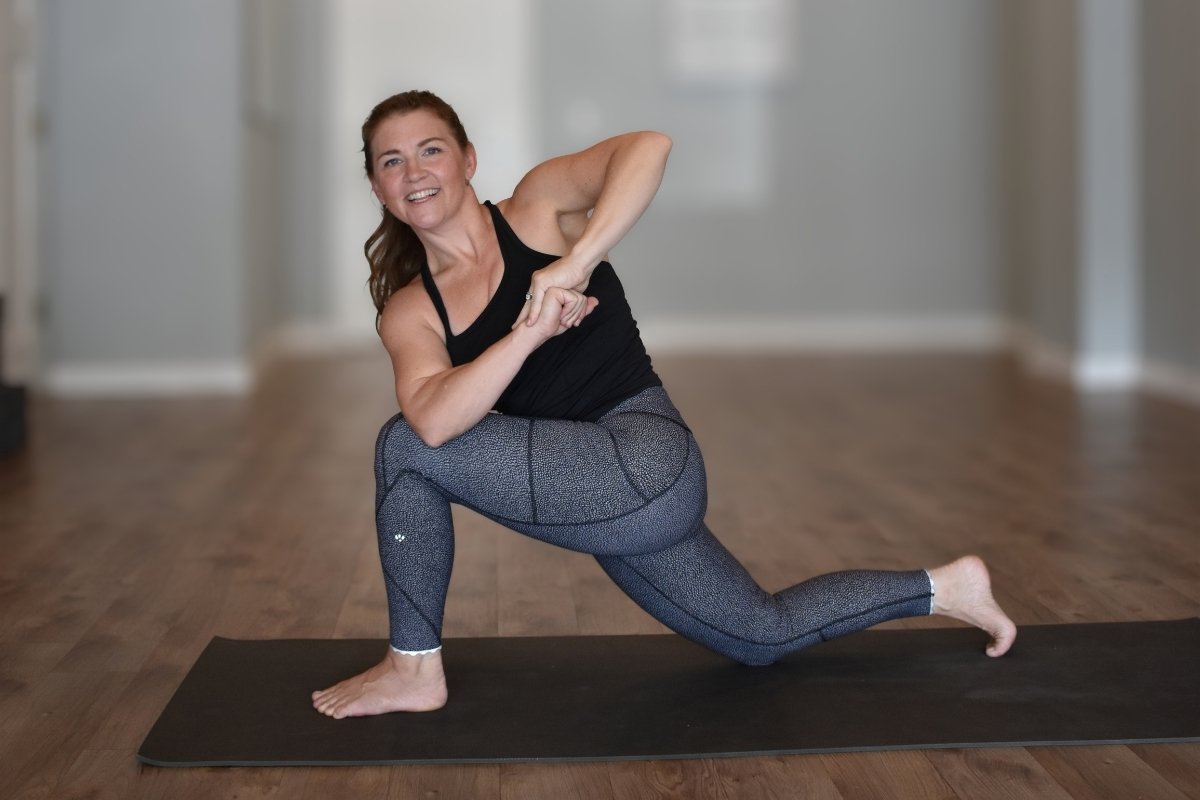
In a standard lunge, two points contact the ground: one foot forward, one foot back. Bring the back knee down and suddenly there are three contact points in a line. The base of support expands immediately, and stability increases significantly.
For students with limited hip mobility, or anyone newer to practice, this one adjustment changes the experience of the posture. Less muscular effort is required to stay upright, which means more attention available for breath and alignment.
Warrior I
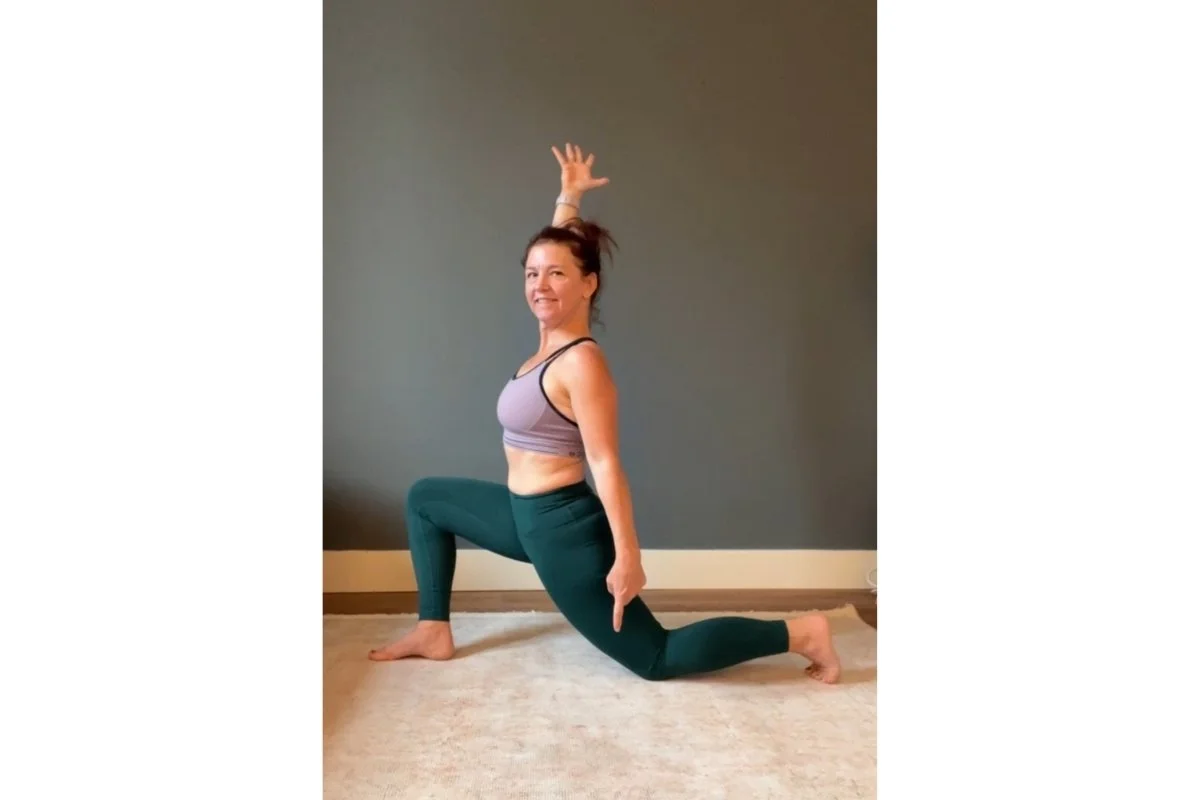
Warrior I is often taught with the front heel aligned to the arch of the back foot, which places both feet on a single line. That narrow lateral stance significantly reduces the base of support from side to side, making it harder for the pelvis to move freely.
Widening the stance so the feet are on two parallel lines, about hip-width apart laterally, expands the base of support and creates more room for the pelvis. The front knee can also align more comfortably over the ankle. For students with limited hip mobility, this adjustment can transform the posture.
Chair
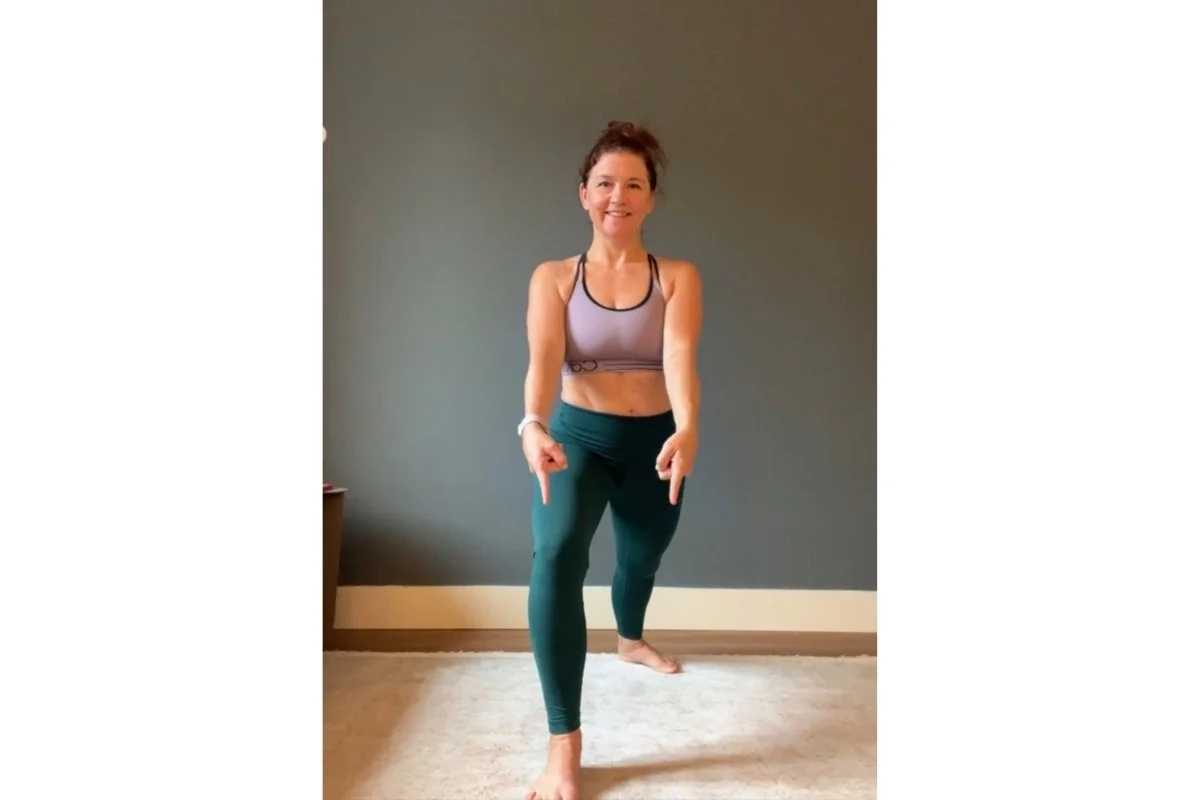
Separating the feet wider than hip-width in chair posture expands the base of support and immediately increases stability. For students with balance concerns or anyone who finds the posture inaccessible with feet together, a wider stance creates more ease without changing the fundamental experience of the posture.
Tree
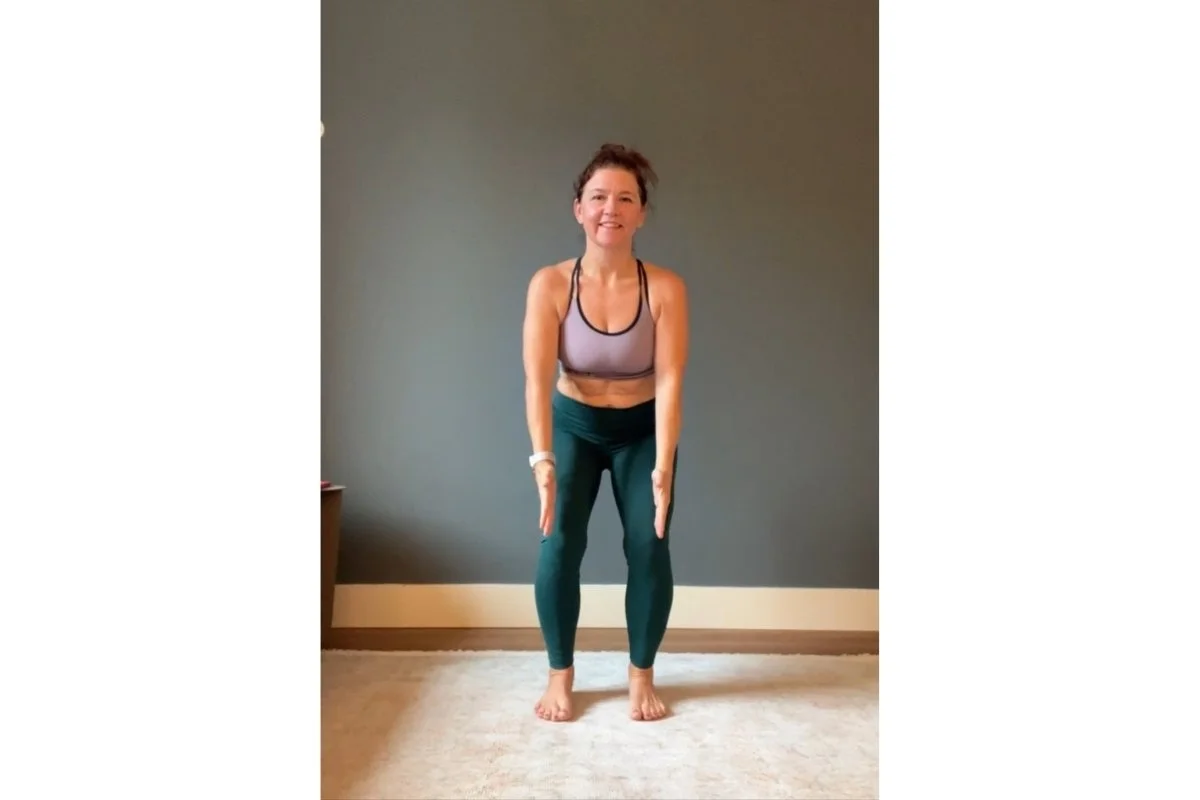
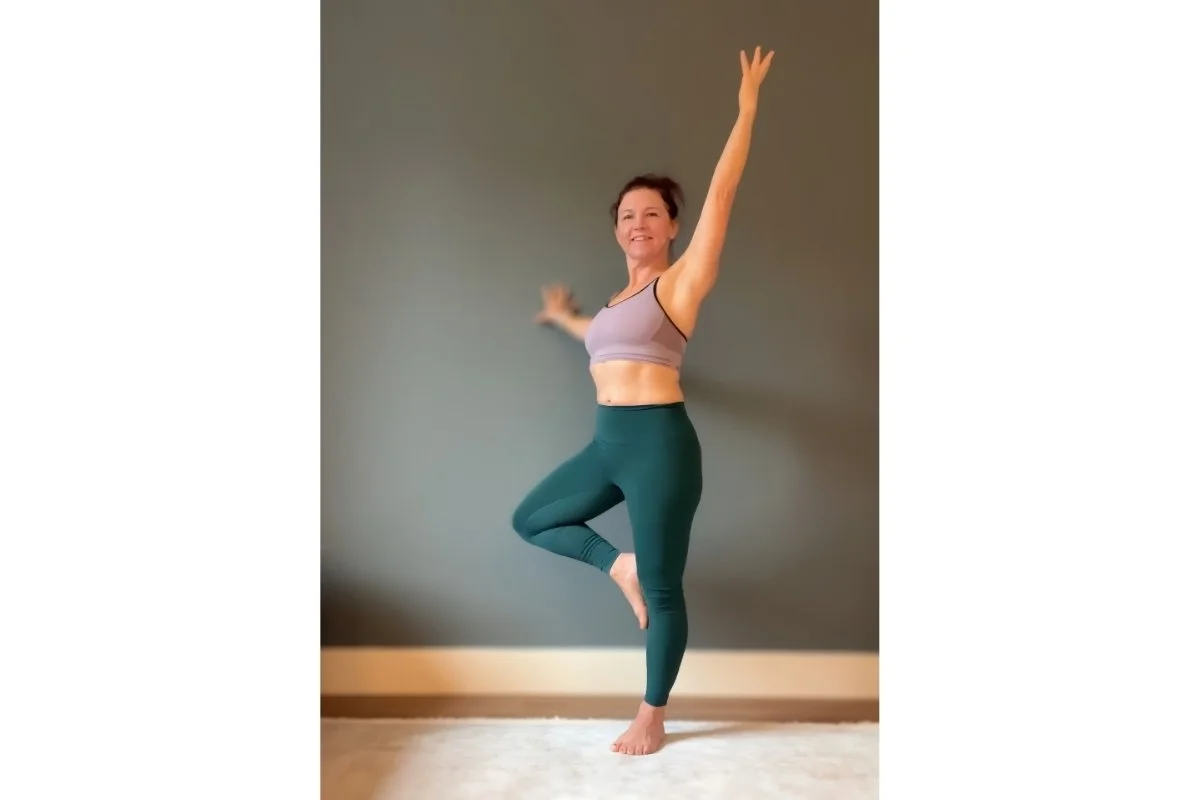
Tree posture has one of the smallest bases of support in a standing practice: a single foot. For students with ankle concerns or anyone working on balance, placing a hand on a wall adds another contact point and significantly expands the base of support. This is not a lesser version of the posture.
Narrowing the base of support to increase challenge
When a student appears stable, strong, and ready for more, you can increase the challenge by narrowing the base of support. Bring the feet closer together in chair. Take the back knee off the ground in lunge. Remove the hand from the wall in tree.
Widening the base of support creates ease. Narrowing it creates demand. One principle, applied in both directions.
The Bottom Line
Yoga modifications become simple when you have a framework. The base of support tells you, in any posture, whether a student needs more stability or more challenge and exactly how to create it. Start with what's touching the ground. Adjust from there.
Get Curious! Q&A
What is the base of support in yoga?
The base of support is the area covered by whatever part of your body is in contact with the ground. A wider base of support creates more stability. A narrower base of support creates more challenge. Understanding this one concept gives you a practical tool for adapting any posture for any student.
How do I know when a student needs a modification?
Observe before you cue. If a student looks like they're working very hard to stay upright, compensating in the joints above or below the foundation, or guarding anywhere in the body, that's a signal the posture may be asking for more than they have available right now. Widening the base of support is often the first and most effective response.
Can I use this principle with students who have injuries?
Yes. Students recovering from injuries or managing physical limitations often benefit most from a broader base of support because it reduces the demand on the muscles and joints, creating more stability with less effort. That stability is what allows them to build strength safely over time.
Does this principle work for all yoga postures?
It works across standing, seated, kneeling, and balancing postures. The foundation changes (feet, sit bones, shins, hands) but the underlying logic is the same: more contact with the ground means more stability.
Go Deeper with your understanding of anatomy-informed cueing
Understanding why modifications work is what separates confident teachers from ones who are guessing. The free Cue with Confidence guide gives you three anatomy-informed cues for the feet, with the science behind each one and a preview of the Balanced Posture Alignment framework.
Download the Free Cue with Confidence Guide →
About the Author
Dr. Trish Corley is a Doctor of Physical Therapy (Physiotherapy) and yoga teacher trainer with over two decades of clinical experience. She helps yoga teachers learn anatomy, give clear cues, and create classes their students love. Based in Lisbon, Portugal, she leads the Enlightened Anatomy Course, the Elevate Your Impact Mentorship, and the Power to Lead 200-Hour YTT.