
How the Spine Moves in Yoga? A Physical Therapist’s Guide
A few years ago, a yoga teacher pulled me aside after a workshop. She'd been teaching for two years, loved her students, and showed up prepared every single class. But she had a confession.
"I'm terrified I'm going to hurt someone's back."
She wasn't alone.
As a Doctor of Physical Therapy with over 23 years of clinical experience and over 15 years of teaching yoga and training yoga teachers, I hear some version of this fear all the time. And I get it.
Back pain is the most common musculoskeletal complaint worldwide, affecting an estimated 619 million people globally (World Health Organization, 2023). Of course yoga teachers worry about it.
But here's what I've learned from over two decades of working with patients and students and training yoga teachers: understanding how the spine moves is what transforms a nervous teacher into a confident one.
Not more caution. Not more rules. More clarity. When you understand the basics of spinal movement, you spend less time worrying about what might go wrong and more time actually seeing what's happening in front of you. That's what this article is about.
In This Article:
The four regions of your spine (and why they matter)
The six directions your spine can move
How to tell the difference between flexion, extension, and neutral
A simple memory trick you'll never forget
Why caution can sometimes do more harm than good
Why the same yoga posture looks completely different in different bodies
How to use spinal movement to build smarter, more confident sequences
What Are the Regions of the Spine?
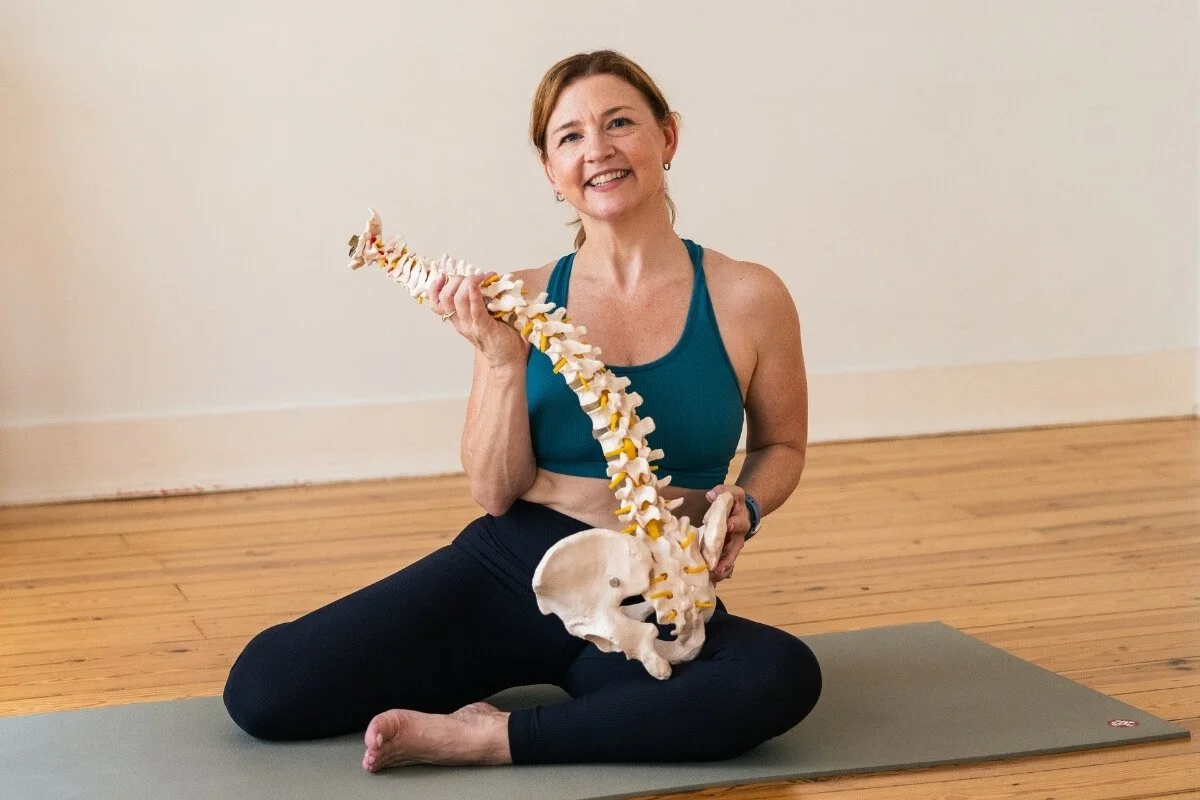
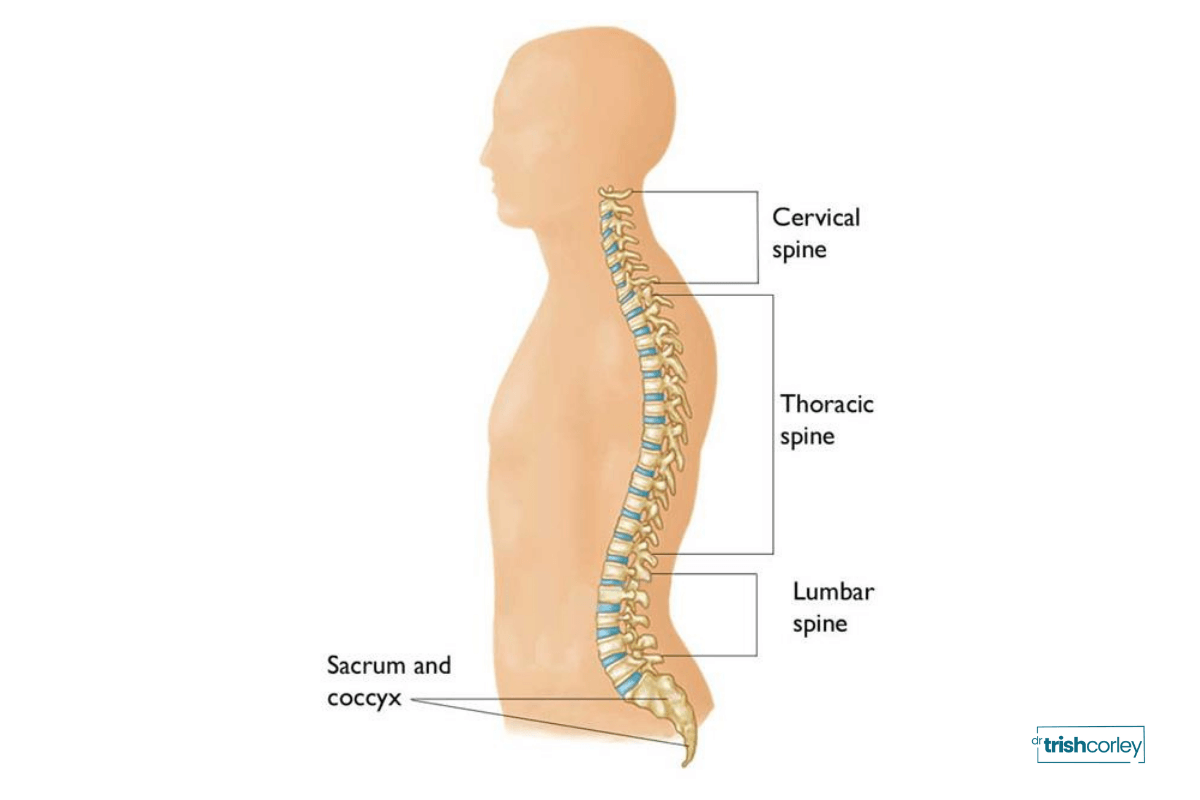
Before you can understand how the spine moves, it helps to know what you're working with. Your spine is divided into four main regions, each with a different number of vertebrae:
Cervical spine (your neck): 7 vertebrae
Thoracic spine (where your ribs attach): 12 vertebrae
Lumbar spine (your low back): 5 vertebrae
Sacrum (the triangular bone at the base): 5 vertebrae, fused together
These vertebrae stack on top of each other with a cushioning disc between each one. The natural curves of your spine and those discs work together to create a balance of movement and stability. That balance is exactly what we should be teaching in yoga. And when you understand how these regions work, you've already taken the first step toward teaching with less fear and more intention.
How Does the Spine Move? The 6 Directions
Your spine can move in three planes, and in each plane it moves in two directions. That gives you six total directions of spinal movement:
Flexion (forward bending)
Extension (backward bending)
Side bending to the left
Side bending to the right
Rotation (twisting) to the left
Rotation (twisting) to the right
Not all regions of the spine move equally. Anatomically, your thoracic spine allows for more extension than your lumbar spine. This is a simple, straightforward reason to focus more on the thoracic spine when teaching backbends. It's common for people to experience discomfort in their low back during backbends, and for many of them, a simple shift in focus toward the thoracic spine can make a real difference. But all four regions share the same general movements.
What Is Spine Flexion in Yoga?
Flexion and extension happen in what's called the sagittal plane. Picture a pane of glass that splits your body into left and right halves. Any movement that happens along that plane (forward or backward) is flexion or extension.
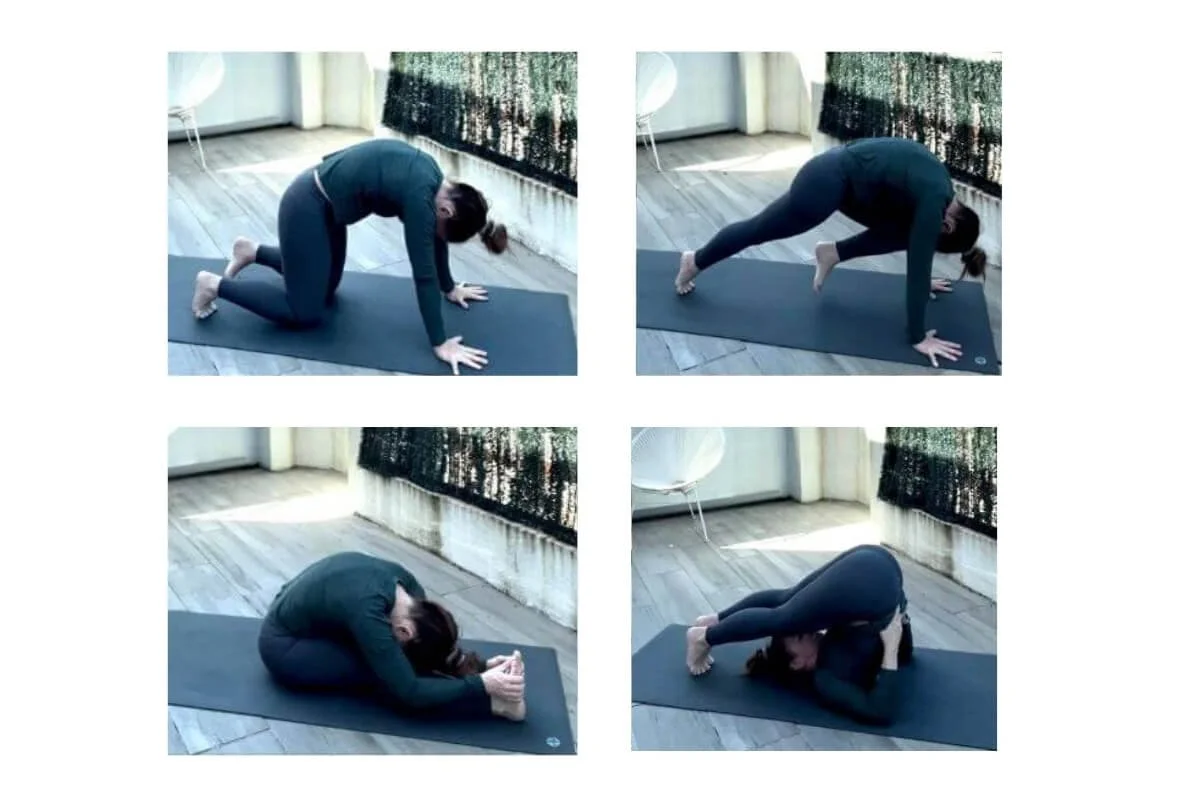
Flexion is forward bending. When you round your spine forward, that's flexion. When you nod your head "yes" and bring your chin toward your chest, your cervical spine is moving into flexion.
Here's a memory trick I teach in my anatomy course that makes this stick: Think about the fetal position. In that curled-up shape, your spine is rounded forward and your joints are closed. Fetal = Flexion. Once you remember that, the opposite makes sense: opening up and bending backward is extension.
Some yoga postures that typically include spinal flexion: cat posture, knee to nose in plank, seated forward fold, and plow posture.
What Is Spine Extension in Yoga?
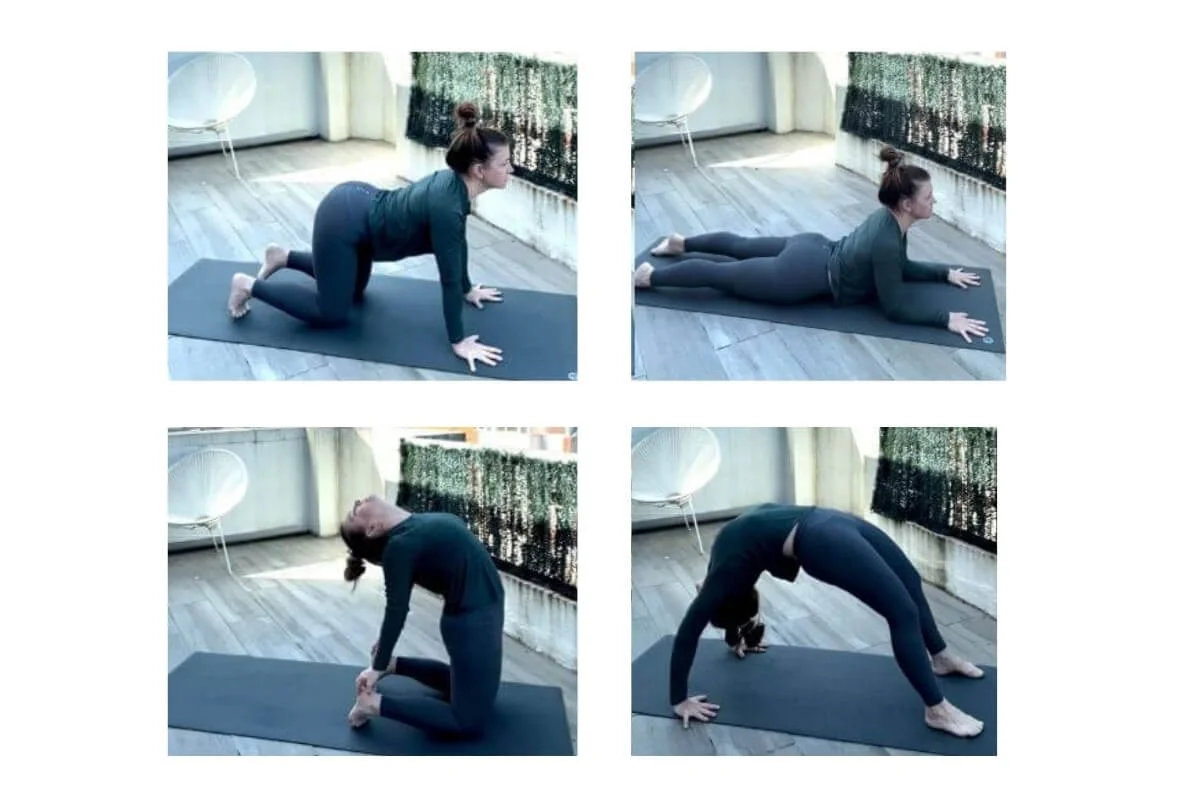
Extension is backward bending. As I mentioned, if fetal position is flexion, the opposite of that curled-up shape is extension. Think of “opening” the front of your body, lengthening the front of your spine, and bending backward.
Some yoga postures that typically include spinal extension: cow posture, sphinx and cobra, camel posture, and full wheel.
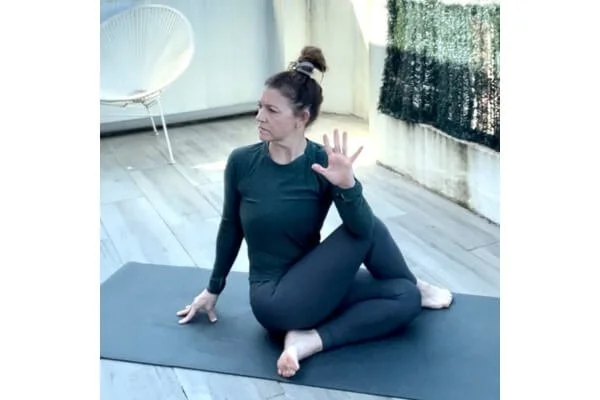
What Is Spinal Rotation in Yoga?
Rotation happens in the horizontal plane, which divides your body into top and bottom. When one part of your spine moves in relation to another on that plane, the result is rotation. It's the same movement your neck makes when you shake your head "no."
You'll see spinal rotation in postures like supine twist, twisted lunge, and revolved triangle.
Not all regions of the spine rotate equally. Your thoracic spine (the rib area) has significantly more rotation available than your lumbar spine (your low back). Yet it's common for people to aim their twist at the low back, because that's where they feel it most. Working with the rotation available at the rib cage tends to yield more range of motion, and it works with the spine's anatomy rather than against it.
What Is Sidebending in Yoga?
Sidebending happens in the frontal plane, which divides your body into front and back. When you drop one ear toward your shoulder, your cervical spine is sidebending. When you reach one arm overhead in a seated or standing posture, your thoracic and lumbar spine may sidebend too.
Sidebending tends to show up less often in yoga sequences than flexion or extension. Seated sidebend, gate posture, and crescent lunge with a lateral reach are a few places where it appears most clearly.
As with everything else, what the spine actually does in a given posture depends on the individual body. Triangle is a good example — some people sidebend, some stay closer to neutral, some rotate. The posture name doesn't tell you. Looking does.
What Is Neutral Spine?
When your spine is not in flexion and not in extension, it's in neutral. Neutral is the position where your spine's natural curves are present and balanced. A balanced amount of movement into both flexion and extension is what helps your body find and maintain neutral. This is why including both directions in your yoga classes matters. You're not trying to keep your students' spines locked in one "correct" position. You're helping them move through a healthy range so their bodies can find their own balance.
Why Balancing Flexion and Extension Matters in Your Sequence
When you're putting together a yoga sequence, think about how much time you spend in forward bends versus backbends. Are your students spending most of the class in one direction? You also want to consider how your students spend their day off the mat. If you're teaching a room full of people who sit at a desk for eight hours, their spines are likely spending most of the day in flexion. They might be better served by a class that includes more extension to balance things out. I notice this in my own body. After hours of sitting and typing, the last thing my spine needs is more rounding forward. Extension-based postures go a long way.
This is the kind of thinking that makes you a more confident teacher. Not because you've memorized a list of "safe" and "unsafe" postures, but because you understand how the spine actually moves and you can make intelligent decisions for the people in front of you. That's a much better place to teach from than fear.
Can Yoga Hurt Your Students' Spine?
I want to pause the anatomy lesson for a moment and say something that comes from years of experience as both a physical therapist and a yoga teacher.
Our bodies are so much more adaptable, resilient, and capable than we give them credit for.
I see it in the yoga world, and I see it in healthcare too. When we approach teaching with too much caution, when every cue is wrapped in a warning and every posture comes with a disclaimer, something shifts. Our students start to feel like their bodies are fragile. Like any wrong movement might break them.
They become hyper-aware of every little sensation in their spine, and suddenly a normal feeling becomes something scary. And when a student is stressed, on guard, and afraid to move, we've missed the entire point of yoga.
Here's the reality. Students walk into your class with histories you know nothing about. Someone might be dealing with back pain that has nothing to do with your sequence. Pain is multifactorial. There is rarely one thing responsible for the experience of pain. Sometimes the person experiencing it doesn't fully understand where it's coming from, and that's not unusual, because pain is complex.
None of that is a reason to teach from a place of fear. It's actually a reason to learn anatomy, observe your students, and trust the incredible capacity of the human body to move, adapt, and heal.
A more empowering approach: Learn how the spine moves. Include all six directions in your classes. Watch what's happening in your students' bodies. And then teach from clarity, not caution. Your students will feel the difference.
Why the Same Yoga Posture Looks Different in Every Body
This is the piece that changes everything for teachers, and I want you to really sit with it.
Don't assume that a particular posture always puts the spine in the same position for every person.
Here's an example I use in my anatomy course: What position is the spine in child's posture? Most teachers would say flexion. And yes, that's what I see most often. But it's not always the case. Some students are actually in neutral or even extension in child's posture, depending on their body proportions, hip mobility, and how they set up the shape.
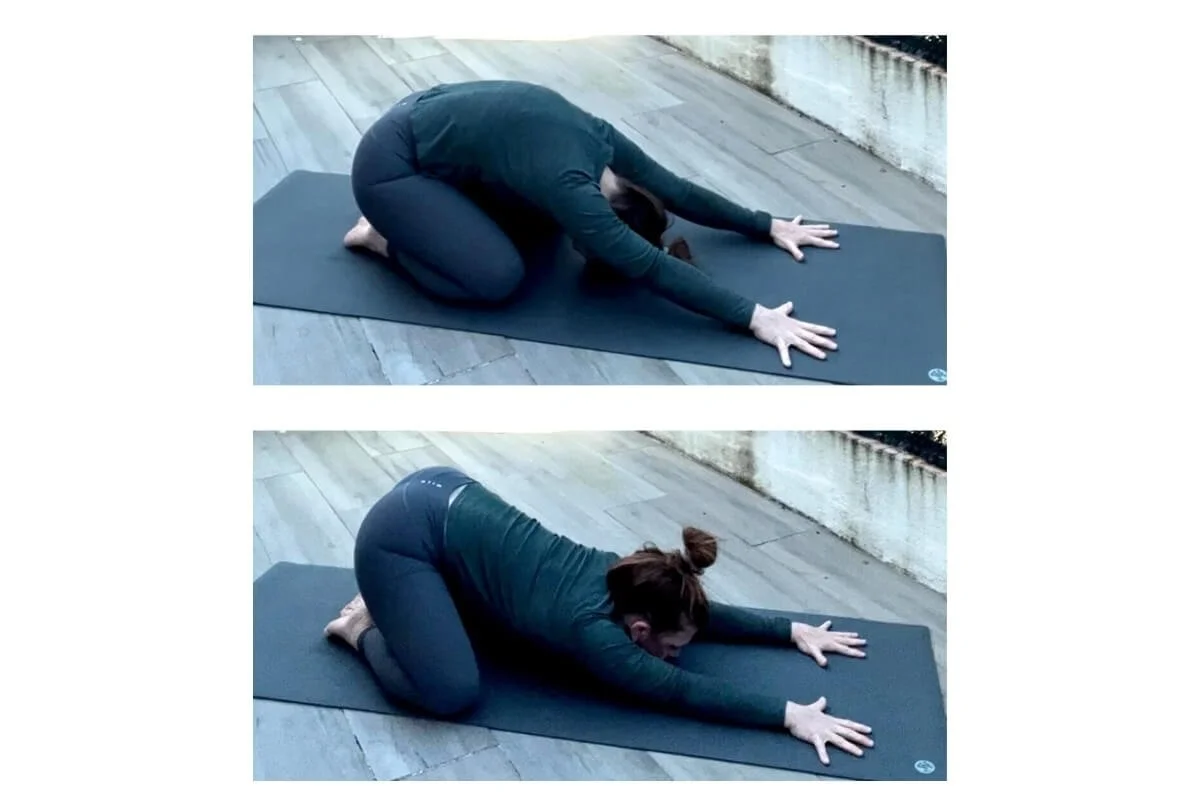
The only way to know? Look at your students.
Don't assume you know what their spine is doing based on the name of the posture. Practice observing. Get curious about what you actually see.
This skill, the ability to observe what's actually happening rather than what you expect to see, is one of the most important things a yoga teacher can develop. It replaces fear with confidence. Instead of worrying about whether a posture is "safe" or "dangerous," you learn to read what's happening in each individual body and respond to that. That's a completely different way to teach. It's also exactly what we work on inside the Elevate Your Impact Mentorship, where observation and cueing become your foundation for confident teaching.
The Bottom Line
I'm passionate about helping yoga teachers understand anatomy so they can teach with confidence, not fear. When you start to understand spinal movement, when you can balance flexion and extension in your sequences, and when you learn to observe the real, individual bodies in front of you; you can stop teaching from fear and start teaching from clarity. Your students' bodies are resilient. Your job isn't to protect them from every sensation. It's to learn enough anatomy to make smart decisions, watch what's happening, and trust the process. That's confident teaching.
Get Curious! Q&A
What are the six movements of the spine in yoga?
The spine moves in six directions: flexion (forward bending), extension (backward bending), side bending to the left, side bending to the right, rotation (twisting) to the left, and rotation (twisting) to the right. Rotation happens in the horizontal plane; sidebending happens in the frontal plane. A balanced yoga practice includes movement in all six directions.
What is the difference between spinal flexion and extension?
Flexion is forward bending, where the spine rounds forward. Extension is backward bending, where the spine arches back. An easy way to remember: the fetal position is flexion (fetal = flexion), and the opposite of that curled-up shape is extension.
What is neutral spine in yoga?
Neutral is when your spine is not in flexion and not in extension. It's the position where your spine's natural curves are present and balanced. A balanced yoga practice that includes both forward bends and backbends helps your body find and maintain neutral.
How do I know if my students' spines are in flexion or extension?
Practice looking. The same yoga posture can put different bodies in different spinal positions. Child's posture, for example, is usually flexion, but some students will actually be in neutral or extension. The answer is always in observing what's in front of you, not assuming based on the posture name.
Can yoga hurt your back?
Our bodies are far more resilient than we often give them credit for. While any movement practice carries some risk, teaching from a place of fear can actually do more harm than good. When students feel like their bodies are fragile, they become guarded and stressed, which works against the entire purpose of yoga. Learning basic spinal anatomy and observing your students is a more empowering approach than loading every cue with warnings.
How much anatomy do yoga teachers need to know?
You don't need to memorize every muscle and bone. Start with understanding how the spine moves and how to recognize those movements in your students. That foundation alone will make you a more confident, effective teacher.
Ready to Teach with More Confidence?
Understanding spinal movement is a great foundation. Inside the Elevate Your Impact Mentorship, we go deeper into observation, cueing, and building the kind of teaching confidence that doesn't come from a script. Enrollment is opening soon for the next cohort starting April 17.
Then if you still want the free guide mentioned, add one line after:
Not ready for a mentorship yet? Start with my free guide, Cue with Confidence, for three anatomy-informed foot cues you can use right away.
References
World Health Organization. (2023). Low back pain. https://www.who.int/news-room/fact-sheets/detail/low-back-pain
About the Author
Dr. Trish Corley is a Doctor of Physical Therapy (Physiotherapy) and yoga teacher trainer with over two decades of clinical experience. She helps yoga teachers learn anatomy, give clear cues, and create classes their students love. Based in Lisbon, Portugal, she leads the Enlightened Anatomy Course, the Elevate Your Impact Mentorship, and the Power to Lead 200-Hour YTT.