
How to Help Yoga Students with Back Pain
The number one way to help yoga students with back pain may not be what you think. The answer will likely surprise you.
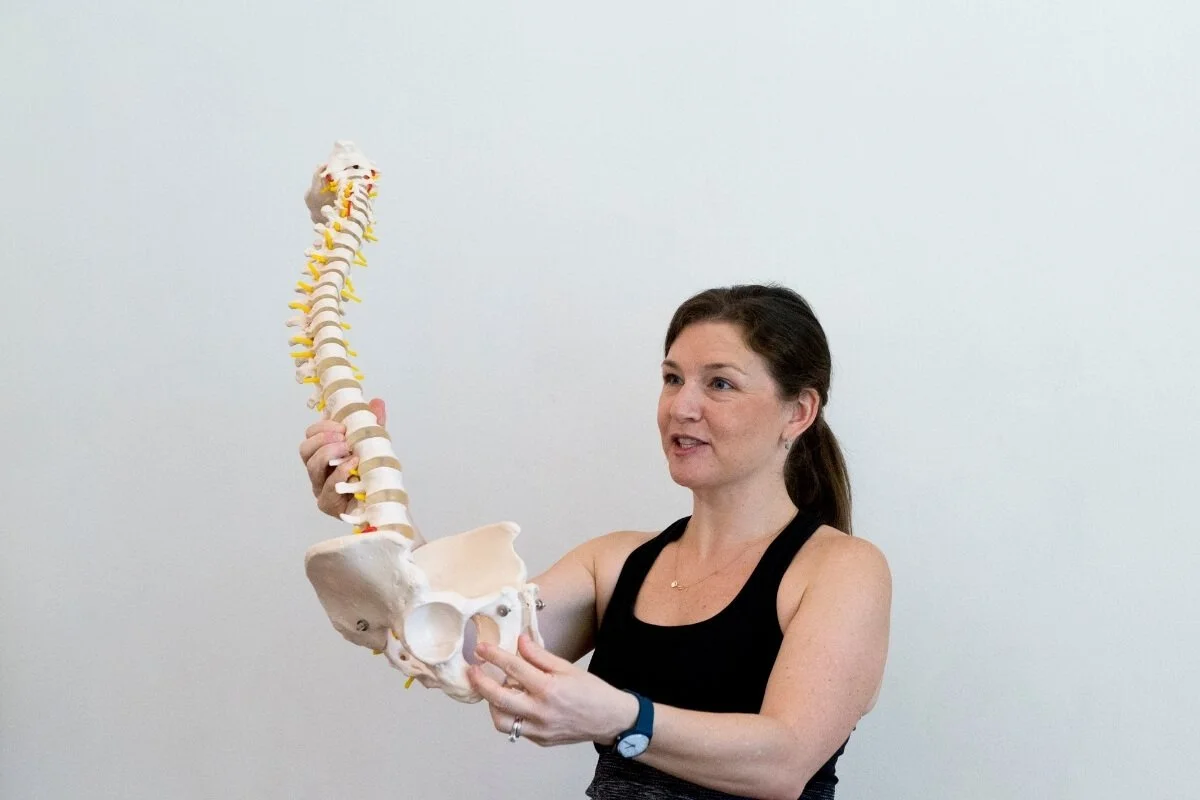
When I teach anatomy of the spine at yoga teacher trainings and workshops, I ask people to raise their hands if they've ever experienced back pain at any point. Just about everyone raises their hand.
If you teach yoga, you can guarantee someone has shown up to your class with back pain, and there's a good chance they ask you about it. Your response will directly impact their experience of that pain.
In This Article:
The single most important thing to do when a student shares their pain with you
Why more anatomy knowledge can sometimes get in the way
What listening actually looks like in practice
The #1 Way to Help Yoga Students with Back Pain
Right now I'm conjuring up memories of being a young physical therapist, armed with knowledge about disc disease, joint dysfunction, special tests, differential diagnosis, exercise protocols, manual therapy skills, contraindications, and everything else I learned in school. All of that had real potential to help people heal and manage back pain. It still can, as long as I use the number one way to help people with pain first.
The most important thing to do when someone tells you they're in pain is to listen.
That's it. Listen.
Listen to what they have to say. Not for the thing you think they'll say, or the thing you learned about in an article or a workshop. Just listen.
Back pain is uniquely tricky for this. It's one of the most common complaints you'll hear as a teacher, which means most of us already think we know what's coming before a student finishes their sentence. Someone mentions a "tight lower back" and our brain jumps straight to hip flexors, or sitting all day, or a dozen other familiar culprits. Sometimes we're right. Often, the actual story is something we'd have missed entirely if we hadn't let them finish.
Why Listening Is Harder Than It Sounds
This is one of those simple, but not easy, tasks. The more you know about anatomy, the body, yoga, and exercise, the harder it can be to just listen. Our ego of knowledge can get in the way, especially when we genuinely want to help.
Here's how that happens: your ego wants the part of you that helps to actually be able to help. Not being able to help might feel like failure. So your ego listens for the person's experience to match what you already know about back pain, instead of listening to what they're actually telling you. That won’t really help.
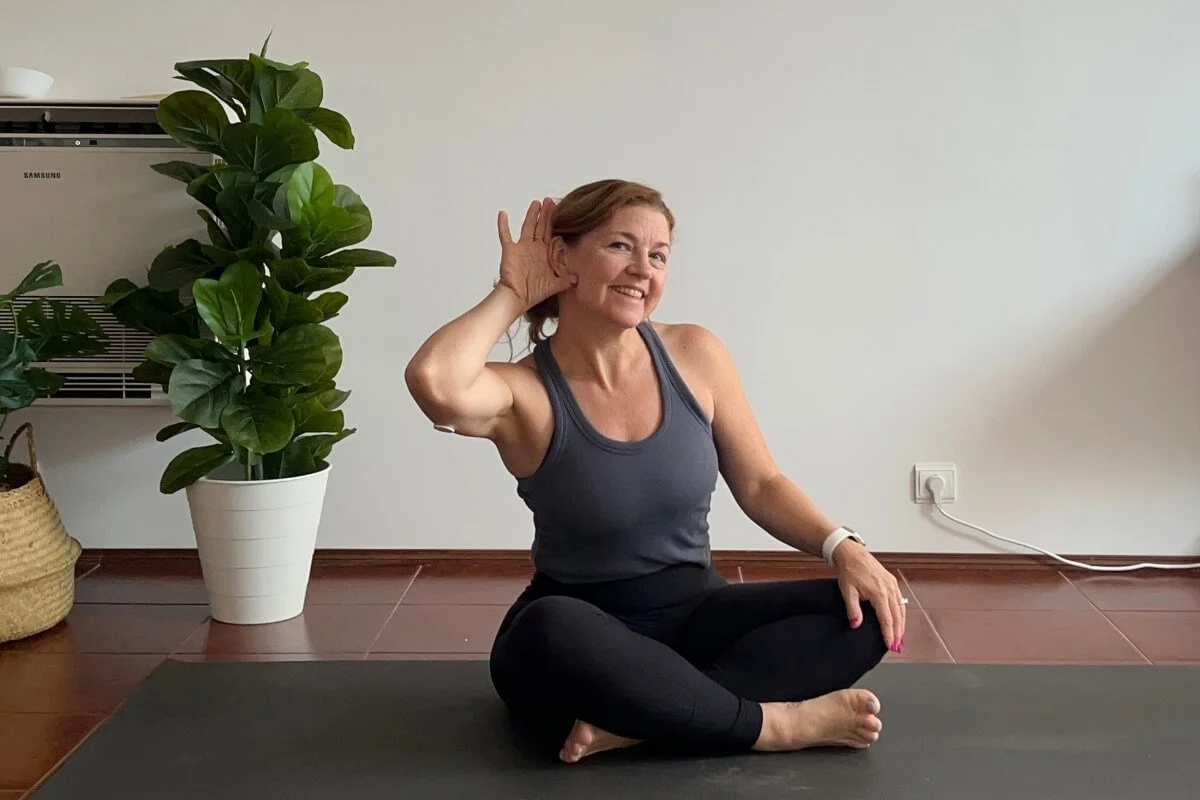
So just listen. Hear what they have to say.
What to Do After You Listen
Listen some more.
I’m serious. If a student isn't saying much, try: "Tell me more about your experience with back pain."
If you truly listen, they'll probably tell you exactly what they need and don't need. Yes, they may be looking for you to help them find those things. But if you haven't listened first, you won't know what they actually need, and you won't be able to help.
I can't tell you how many patients and yoga students have come to me for help and actually told me what they needed themselves. When I ask them to tell me more about their experience, they often share what positions bother them, what feels good, what they want to do, what worries them, and what their goals are. My job, at that point, is simply to help direct them.
As a yoga teacher, you're an expert in yoga postures. Start there. If you want the exact process I use once I've listened, from choosing a posture to observing alignment to offering a cue, How to Support Yoga Students With Pain: A Teacher’s Guide walks through it step by step.
The Bottom Line
Your ability to support yoga students with back pain and other injuries has far more to do with your mindset than your technical knowledge. Yoga has the power to heal, and by nature, you as a yoga teacher have that power too.
Get Curious! Q&A
What if I don't know enough about anatomy to help someone with back pain?
Start with listening, not with what you know. Understanding will build over time, and your ability to genuinely hear a student is more valuable on its own than a list of anatomical facts.
How do I know what to say after listening?
Often, a student will tell you exactly what they need if you truly listen first. Your job is then to draw on your expertise as a yoga teacher to help direct them, starting with what you already know about postures. My best advice - don’t worry about knowing what to say. Listen and then respond honestly. Even if that means you respond with “I don’t know.”
Isn't it my job to know the answers?
Not entirely. Your role as a yoga teacher isn't to diagnose or have every answer. It's to listen, observe, and guide within the scope of your training, referring to a healthcare provider when something is beyond that scope.
Can too much knowledge actually get in the way?
Yes, in a specific sense. The more you know, the easier it is to listen for what you expect to hear rather than what a student is actually telling you. Staying curious matters as much as staying knowledgeable.
Go Deeper with the full mindset and system for supporting students with pain and injuries
Listening is the foundation, but there's more to feeling fully confident in this work. In Teach Yoga to Students with Injuries, the first module is entirely dedicated to mindset and your role, followed by the science of healing and pain, modifications and systems, and a real case study putting it all into practice.
Explore Teach Yoga to Students with Injuries →
About the Author
Dr. Trish Corley is a Doctor of Physical Therapy (Physiotherapy) and yoga teacher trainer with over two decades of clinical experience. She helps yoga teachers learn anatomy, give clear cues, and create classes their students love. Based in Lisbon, Portugal, she leads the Enlightened Anatomy Course, the Elevate Your Impact Mentorship, and the Power to Lead 200-Hour YTT.