
A Yoga Teacher's Guide to Healing Injuries PART 4 of 4: Managing Students
Welcome back to the Yoga Teacher's Guide to Healing series. If you read Part 1, you already know this: if you teach yoga, you at some point have or will teach people with injuries. You can be ready to support them.
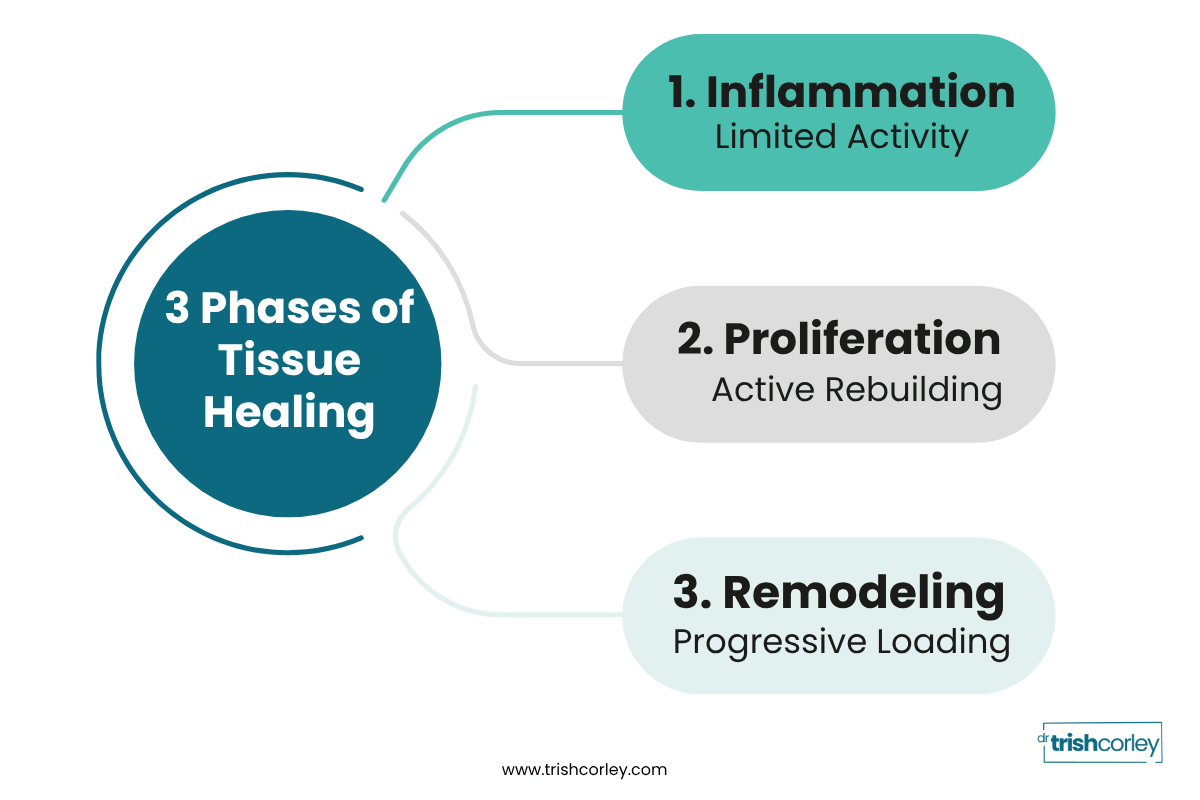
There are three significant phases of the healing process.
Proliferation Phase — the construction phase where the real building happens
Remodeling Phase — the final phase, where tissue matures and organizes
This 4 part series of articles is created to get you acquainted with the science behind healing. By doing so, you can best serve your students and be part of their healing process. There is an article on each of the phases of healing (see above) and this article - Managing Students shows you how to use the phases of healing to best support your students.
Managing students with injuries and pain can be overwhelming, even for experienced yoga teachers.
Even with over ten years of experience in physical therapy, when I first started teaching group yoga classes I was overwhelmed. I had to figure out how to manage people with various injuries and complaints, all at once.
I was also clear on this: my role as a yoga teacher was different from a physical therapist. I had to figure out how to separate those roles and speak from the authority of a yoga teacher when I was being paid to teach yoga. I needed an approach I could rely on, so I could feel confident at the start of every class.
This system for managing students with injuries is what I rely on, and it starts with knowing what to do at each phase of healing.

In This Article:
What to actually do at each phase of healing
How to tell if a student has a known injury versus pain without a clear cause
Knowing what you know, and what you don't
When it's time to bring in a healthcare professional
What to Do at Each Phase of Healing
Once you know which phase a student's injury is in, the next question is simple: what does that actually mean for their practice today? Here's a general starting point for each phase, the kind of orientation I'd want a yoga teacher to have walking into class, not a replacement for what a healthcare provider might tell that specific student about their specific injury.
Inflammation: This is where protection matters most. Encourage gentle range of motion and avoid pushing a student toward their edge in the affected area. The goal is supporting the body's natural response, not working against it.
Proliferation: This is where movement starts to help rather than hinder. A student can generally handle more than during inflammation, and appropriately dosed movement actually supports the tissue's rebuilding process. Watch closely for pain that increases during or after practice, that's your signal to pull back.
Remodeling: This is where real challenge becomes necessary, not optional. A student who's held back too long here may plateau. This is the phase where "just keep it gentle" often does a student a disservice, the tissue needs to be tested to get stronger.
A note on specifics: this is a general framework, not a substitute for individualized guidance. What "appropriate challenge" looks like varies significantly by injury, tissue type, and the individual, and a healthcare provider who's actually seen your student is always the better source for the specifics of their case.
Understanding the Benefit of Systems and Structures
What will you say when a student tells you about an injury before or after class? If you teach yoga, it's inevitable that someone will tell you about what their body is experiencing, and they'll be in search of some answers from you.
(If you haven't yet decided how you want to approach the topic of injuries at the start of your own classes, I walk through that decision in [Should Yoga Teachers Ask Students About Injuries].)
Use Structure in Making Decisions When Working with Students with Injuries
You first need to determine if the student has a known injury or is simply experiencing pain during particular activities.
If there is a known injury, understanding the phase of healing they're in is what guides your decisions, as outlined above. If someone is experiencing pain rather than a known injury, that calls for a different process entirely, one built around observing alignment and offering targeted cues. I walk through that step by step in How to Support Yoga Students With Pain: A Teacher’s Guide.
Knowing What You Know, and What You Don't
Another major aspect of the systematic approach is knowing what you know and what you don't know, and most importantly, knowing when it's more appropriate to refer your student to a healthcare practitioner or another wellness professional.
There are a lot of decisions to be made as a yoga teacher working with students who share their experiences of injuries. In truth, there's never just one answer, and that usually makes it even more confusing. This is exactly where a systematic approach helps most
The Bottom Line
Navigating students with injuries comes down to knowing which phase of healing they're in, and letting that guide how much you encourage or hold back. That structure doesn't just simplify your teaching. It builds real confidence in your ability to guide people toward a safe, complete recovery.
Get Curious! Q&A
How do I know if a student has a known injury versus just pain?
If a student can point to a specific diagnosis or event, a sprained ankle, a herniated disc, that's a known injury, and the healing phases apply. Pain without a clear cause is less straightforward. It's not always directly correlated to a specific injury. Sometimes a student knows they have an injury and can tell you about it. Sometimes they have one and don't know it yet. In short, you may not always be able to tell for certain, and that's normal.
What if a student's healing doesn't seem to be progressing?
If you notice that a teacher’s healing process does not seem to be progressing, good job. Your job as a teacher is to guide student and you can encourage them at this point to follow up with their healthcare provider. In this way, your observation (and understanding of the healing process) is of great value.
Do I need to ask every student if they have an injury?
There's no single right answer here. I cover the pros and cons of different approaches in Should Yoga Teachers Ask Students About Injuries so you can make a deliberate choice for your own classes.
Is it my job to diagnose what's going on with a student?
No. Your job is to observe, adapt, and know when to refer out. Diagnosis belongs with a healthcare provider, not a yoga teacher.
Go Deeper with the complete system for supporting students through injuries/
The framework in this post is one piece of a much bigger picture. In Teach Yoga to Students with Injuries, you'll get the full system: mindset and your role, the complete science of healing and pain, modifications and systems for every posture, and a real case study putting it all into practice.
Explore Teach Yoga to Students with Injuries →
About the Author
Dr. Trish Corley is a Doctor of Physical Therapy (Physiotherapy) and yoga teacher trainer with over two decades of clinical experience. She helps yoga teachers learn anatomy, give clear cues, and create classes their students love. Based in Lisbon, Portugal, she leads the Enlightened Anatomy Course, the Elevate Your Impact Mentorship, and the Power to Lead 200-Hour YTT.