
Warrior 3 Balance Cue: Why You're Wobbling and How to Fix It
There's this moment as a yoga teacher when class ends and a student takes a second to say thank you. To tell you something worked. To acknowledge that what you offered made a difference.
It happened in my class today. A visiting yoga teacher from out of town (Lisbon gets a lot of them, the studio where I teach is small and central, and yoga teachers tend to seek out a class while traveling). At the end of class, she caught my eye.
"That cue you gave in Warrior 3," she said. "The one about lifting the back of the shoulders? I actually felt something shift. Like, my whole posture changed."
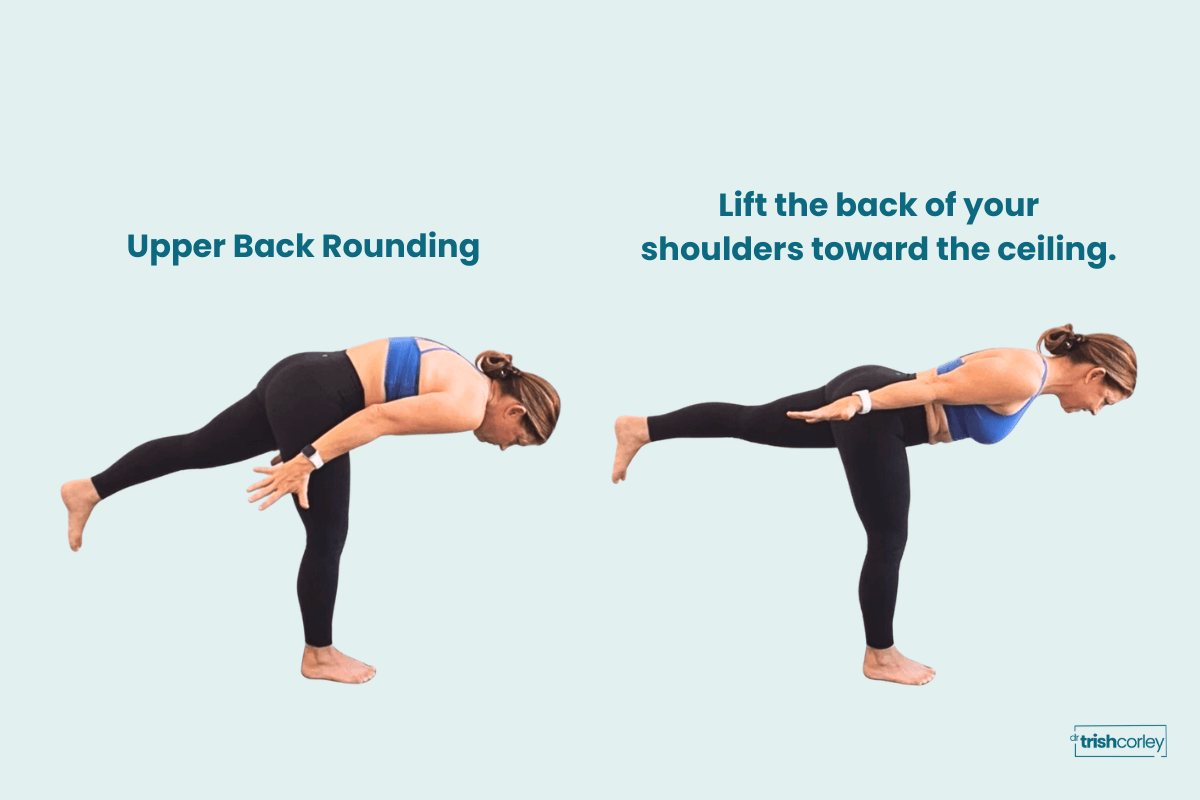
She was talking about a Warrior 3 balance cue I use often when I see a specific pattern: shoulders collapsing, upper back rounding, the whole upper body disengaging.
"Lift the back of your shoulders up toward the ceiling."
And something shifted.
If you've ever wobbled through Warrior 3 wondering what you're doing wrong, the issue might not be "bad balance." It might be that your whole body isn't working together yet. We get so focused on the standing leg that we forget the rest of ourselves.
I'm Trish Corley, a doctor of physical therapy with over 25 years of clinical experience and a yoga teacher trainer. I've spent decades watching bodies move, and here's what I've learned: balance isn't about one body part. It's integration. And the right cue at the right moment can help the whole body connect.
In This Article:
Why you keep wobbling in Warrior 3 (it's not your standing leg)
The Warrior 3 alignment cue most people miss
How to improve balance in Warrior 3 by looking at the whole body
Common questions about Warrior 3 balance
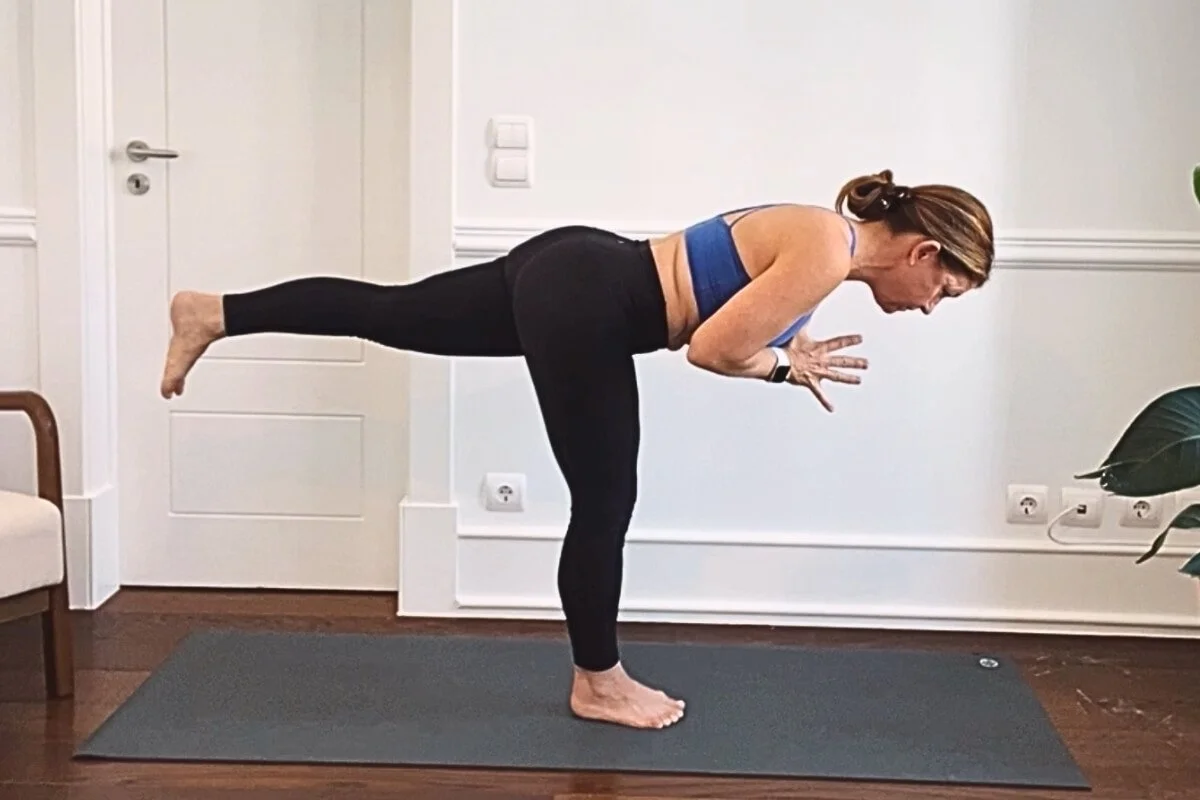
Why You Keep Wobbling in Warrior 3
Here's something that's true of every yoga posture, not just Warrior 3: the whole body has to participate.
But Warrior 3 has a way of exposing what happens when we forget this.
Because the balance challenge is so obvious, we tend to zero in on the standing leg. We think about the foot pressing into the mat. We think about the lifted leg reaching back. Maybe we remember to "engage the core", whatever that means… And then we wonder why we're still wobbling.
The problem isn't a lack of effort. It's incomplete effort.
When the upper back rounds and the shoulders collapse forward, the chest drops and the body folds in on itself. You can have a strong standing leg and still lose your balance if the upper body isn't doing its part.
Warrior 3 doesn't require more effort. It requires more integration.
And that starts with noticing what's actually happening in the whole body, and just as importantly, what's not happening. Where is the body disengaged? What's not participating? Once you can see that, the next step is delivering a cue that's clear enough for the person to actually follow.
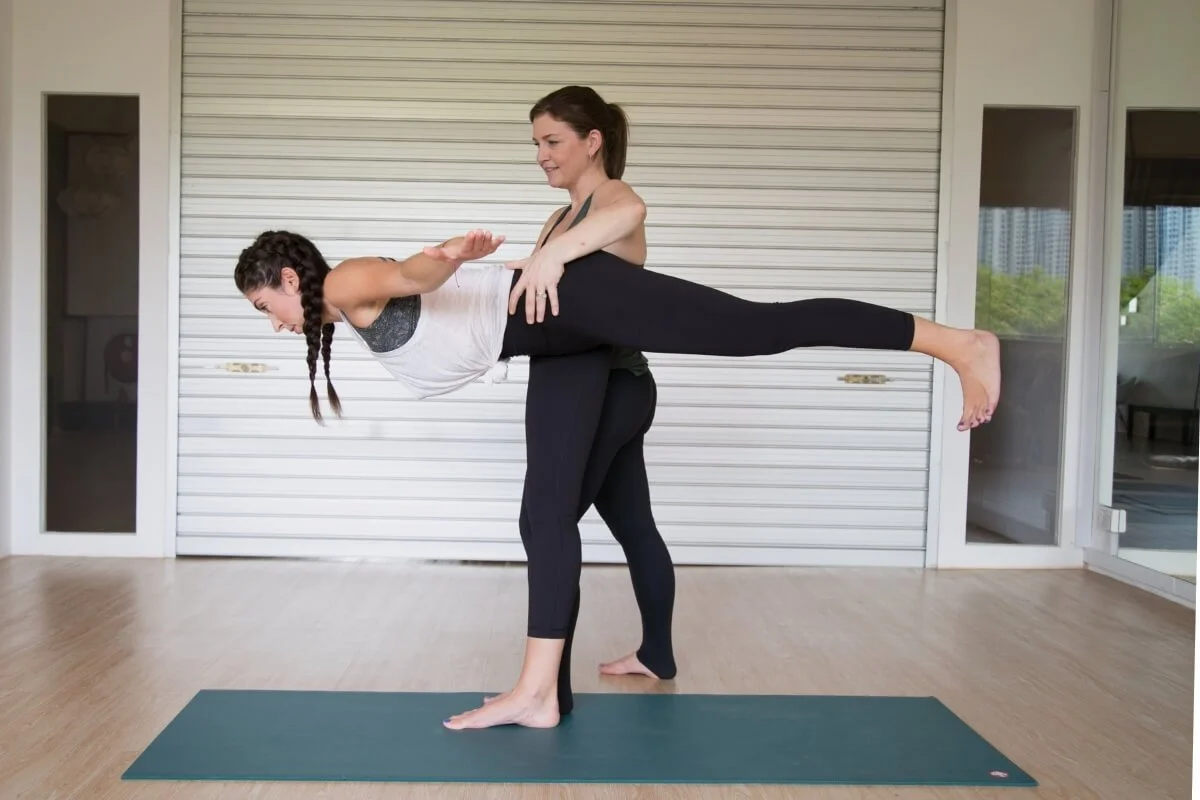
The Warrior 3 Alignment Cue Most Yoga Teachers Miss
Before you give any cue in Warrior 3, look first.
This sounds obvious, but it's easy to skip. We get into a rhythm of teaching, calling out the same cues in the same order, and sometimes we forget to actually see what's happening in front of us.
Balance can break down in Warrior 3 for a lot of reasons. The foot isn't grounded. The knee is locked. The hips aren't level. The eyes are wandering.
While these are commonly discussed, there's one aspect of the posture that often gets overlooked: the upper back.
When the upper back rounds and the shoulders collapse forward, the chest drops and the body folds in on itself. You can have a grounded foot, a soft knee, level hips, and a steady gaze, and still struggle with balance if the upper back isn't participating.
The Warrior 3 balance cue that helps is the one that addresses what's actually happening. Not what usually happens. Not what happened last class. What's happening right now, in this body, in this moment.
When I looked around the room today and saw shoulders collapsing, I gave the cue that matched: "Lift the back of your shoulders up toward the ceiling."
It's not a complicated cue. But it addressed what was actually missing. And that made all the difference.
The Bottom Line
If you're struggling with balance in Warrior 3, stop wobbling by looking beyond the standing leg. The upper back plays a bigger role than most people realize. When the shoulders collapse forward, the whole posture loses its structure.
One simple Warrior 3 balance cue can shift everything: "Lift the back of your shoulders up toward the ceiling."
But here's the deeper skill: learning to see what's actually happening (and what's not) before you cue. The right cue for one person may not be the right cue for another. Improving balance in Warrior 3 isn't about finding the perfect trick. It's about looking at the whole body and responding to what you see.
Get Curious! Q&A
Why do I keep wobbling in Warrior 3?
Wobbling usually means part of the body isn't participating. We tend to focus on the standing leg, but if the upper back disengages, the shoulders round forward, and the chest drops, balance becomes a struggle. Warrior 3 requires full-body integration, not just leg strength.
Why does my upper back collapse in Warrior 3?
When we focus heavily on the standing leg and lifted leg, we sometimes abandon the upper body. The shoulders round forward, the chest drops, and the upper back disengages. This is common and often goes unnoticed until someone cues you to address it.
What's the best cue for balance in Warrior 3?
The best cue depends on what you're actually seeing. If the upper back is rounding and shoulders are collapsing, try: "Lift the back of your shoulders up toward the ceiling." If the issue is elsewhere (the foot, the knee, the hips, the eyes), a different cue will help.
How do I cue Warrior 3 for students who struggle with balance?
Look at them first. Balance issues can come from the eyes, the standing foot, the knee, or the upper back. The cue that helps depends on what you're actually seeing. This is why getting off your mat to observe your students matters.
Is it okay to bend my standing knee in Warrior 3?
Yes. A slight bend in the standing knee allows the leg muscles to stay active and supportive. Locking the knee can lead to hyperextension and actually makes balance harder.
Want to Learn More About Cueing?
The difference between a cue that lands and one that doesn't often comes down to one thing: Are you telling your students what you want to happen, or are you telling them how to make it happen? Are you ready to teach any class without doubt because you trust your ability to cue, observe, and adjust. Cue with Clarity is a 4 week training for yoga teachers that will guide you to do just that!
Learn More and about Cue with Clarity →
Want to start learn some anatomy informed cues you can use right away? My free guide, Cue with Confidence, shows you how anatomy-informed cueing builds trust with your students.
About the Author
Dr. Trish Corley is a Doctor of Physical Therapy (Physiotherapy) and yoga teacher trainer with over two decades of clinical experience. She helps yoga teachers learn anatomy, give clear cues, and create classes their students love. Based in Lisbon, Portugal, she leads the Enlightened Anatomy Course, the Elevate Your Impact Mentorship, and the Power to Lead 200-Hour YTT.