
Downward Dog Alignment: How to Keep the Lumbar Curve And Why
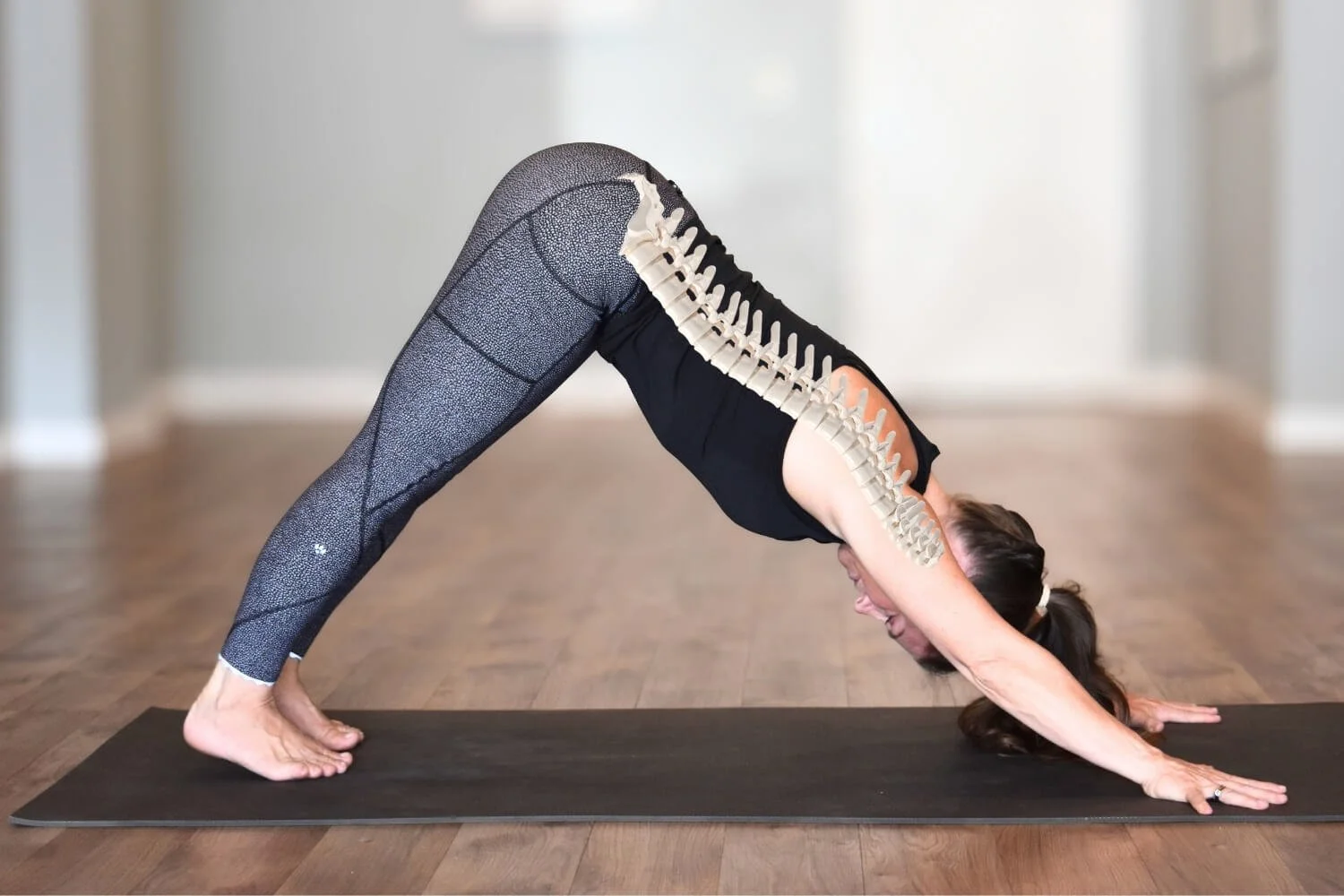
You're walking around the room during down dog. The class is settled, breath is moving, and then you see it — a student's lower back rounding toward the ceiling, the natural curve of the lumbar spine completely flattened. You've seen it a hundred times. You might have even cued them into it.
Downward facing dog is one of the most practiced postures in yoga and one of the most misunderstood from an alignment standpoint. The good news: a few simple anatomy-informed cues can make a significant difference in how anyone experiences it.
Maintaining the lumbar curve in downward facing dog supports spinal health, distributes load more efficiently through the spine, and helps build genuine strength in the posture.
In This Article:
Understanding the Spinal Curves
Is Downward Dog a Backbend or Forward Fold?
Why the Lumbar Curve Gets Lost in Downward Dog
Two Alignment Cues That Help
The Bottom Line
Get Curious! Q&A
Understanding the Spinal Curves
The spine has three natural curves: the cervical curve in the neck, the thoracic curve in the mid-back, and the lumbar curve in the lower back. These curves alternate direction, creating the S-shape you likely encountered in your anatomy training.
That S-shape is a highly functional structure. It allows the spine to absorb shock, distribute load, and support movement across a wide range of activities. In infancy, the spine begins as a C-shape. As babies push against the floor to lift their heads, roll, and eventually crawl, the core muscles strengthen and the curves gradually develop. The S-shape is what prepares the body for upright walking and more complex movement.
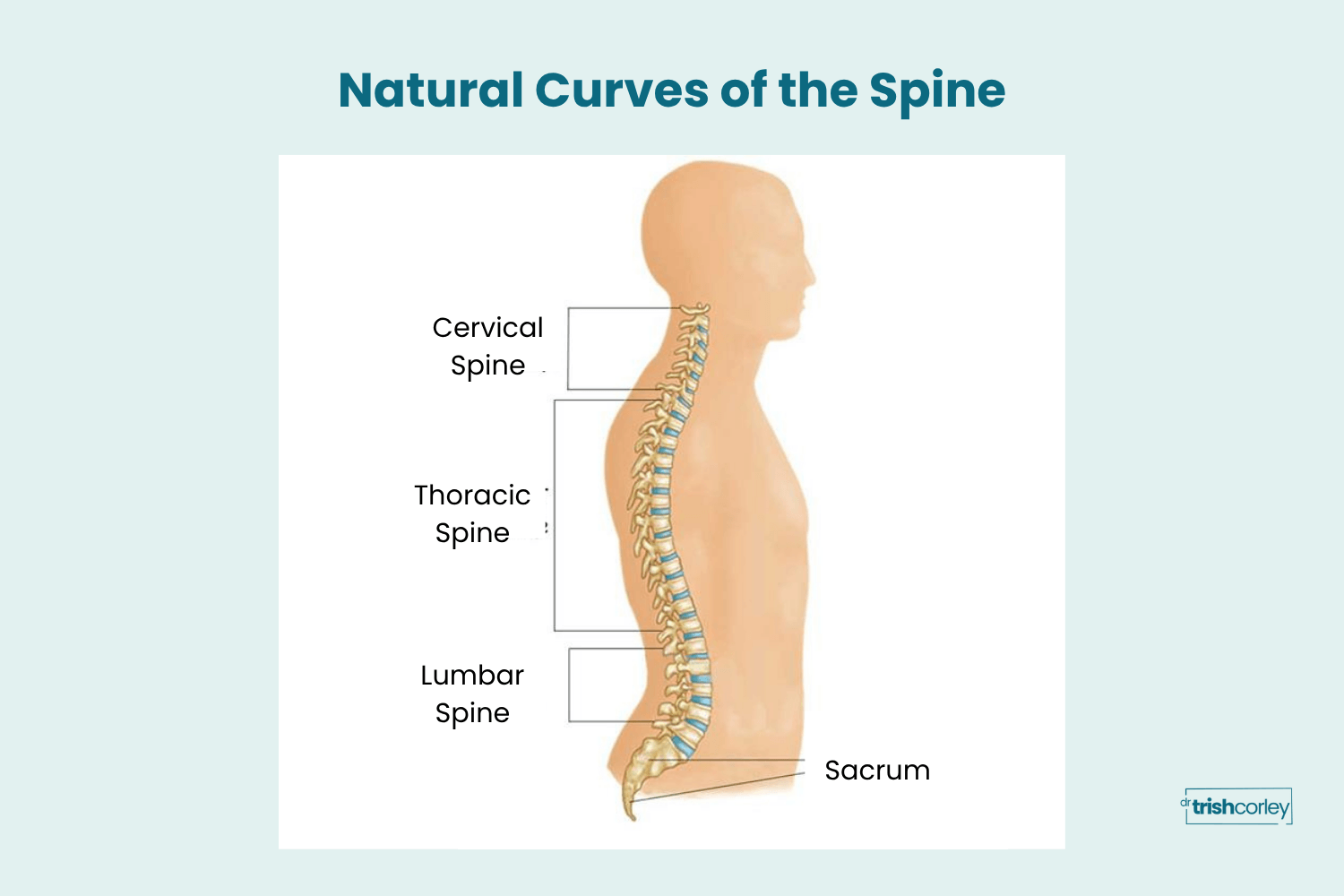
Maintaining these curves during yoga supports strength and flexibility, helps distribute weight and pressure evenly through the joints, and reduces unnecessary stress on the surrounding muscles throughout every posture in the practice.
The lumbar curve, made up of five large vertebrae in the lower back, supports the weight of the upper body and anchors the mechanics of the pelvis. When the lumbar curve is compromised, the mechanics of the entire spine can be affected.
Is Downward Dog a Backbend or Forward Fold?
Neither. This is where a lot of teachers and practitioners get confused.
While the hips are in flexion in downward facing dog, the posture offers a genuine opportunity to access a neutral spine. It isn't a forward fold, which means you shouldn't expect to see the lumbar curve flatten or reverse the way it does in a standing forward fold. It isn't a backbend either, so you aren't looking for an increase in the lumbar curve.
Downward dog is a chance to find length through a spine that's in its natural alignment. That's actually what makes it such a foundational posture — and why what happens in the lower back here is worth paying attention to.
Why the Lumbar Curve Gets Lost in Downward Dog
If downward dog is an opportunity for neutral spine, why do so many people practice it with a reversed lumbar curve? There are two common reasons.
Reason 1: Limitation of the Hamstrings
The hamstrings run from the sit bones (ischial tuberosities) down the back of the legs to the lower leg bones. Because they cross both the hip joint and the knee joint, limited hamstring flexibility creates a pull on the pelvis that can flatten or reverse the lumbar curve.
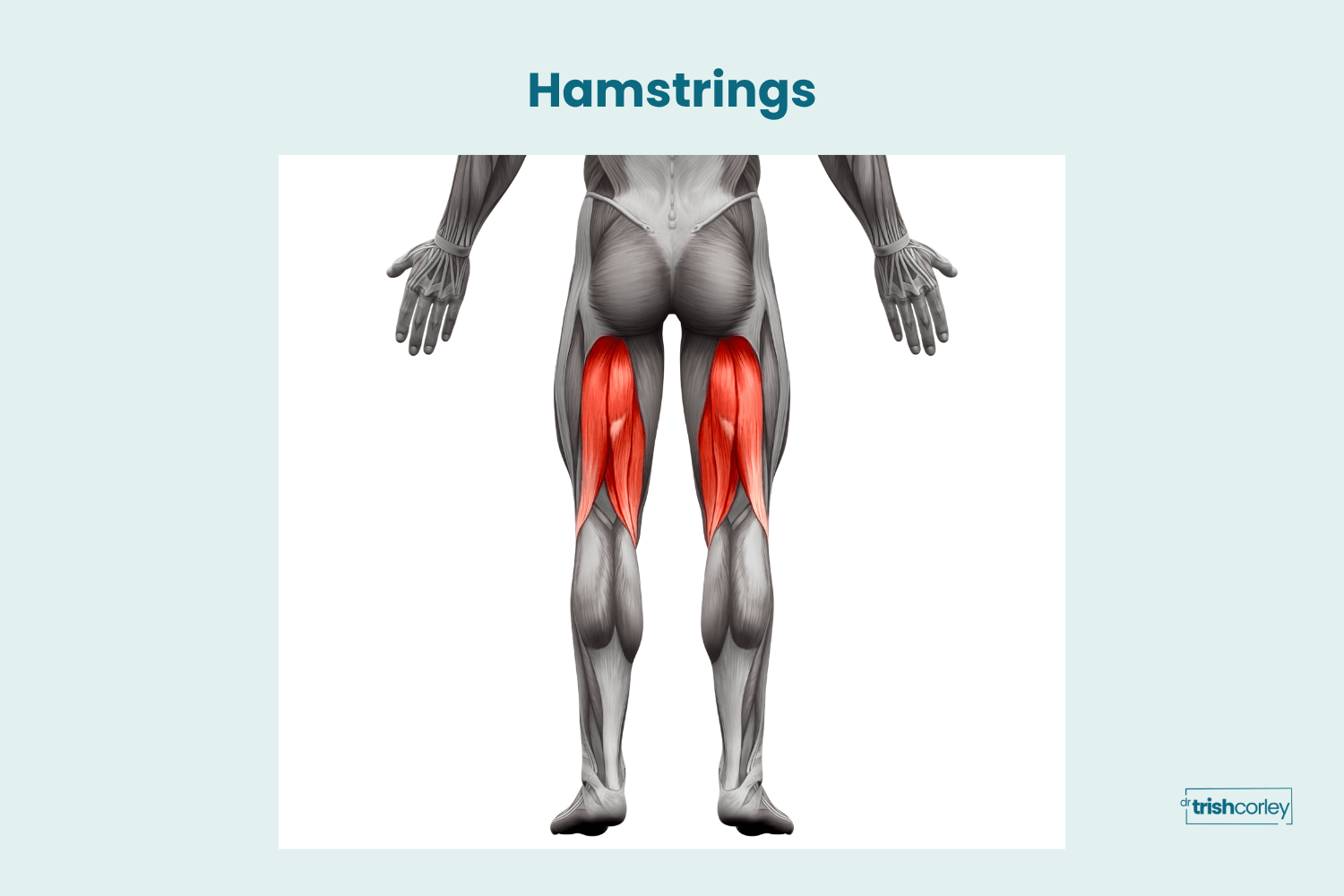
The simple cue: Bend your knees. Bending your takes the “stretch” out of the hamstrings at the knee joint. Thich decreases the overall tension of the hamstrings and decreased the amount of pull on the pelvis. With that reduced pulling on the pelvis, it is easier to access a neutral pelvis. And the result moves right up the chain to make it easier to find a neutral lumbar curve. Straight legs are not the goal in downward facing dog. Neutral spine is. So try bent knees!
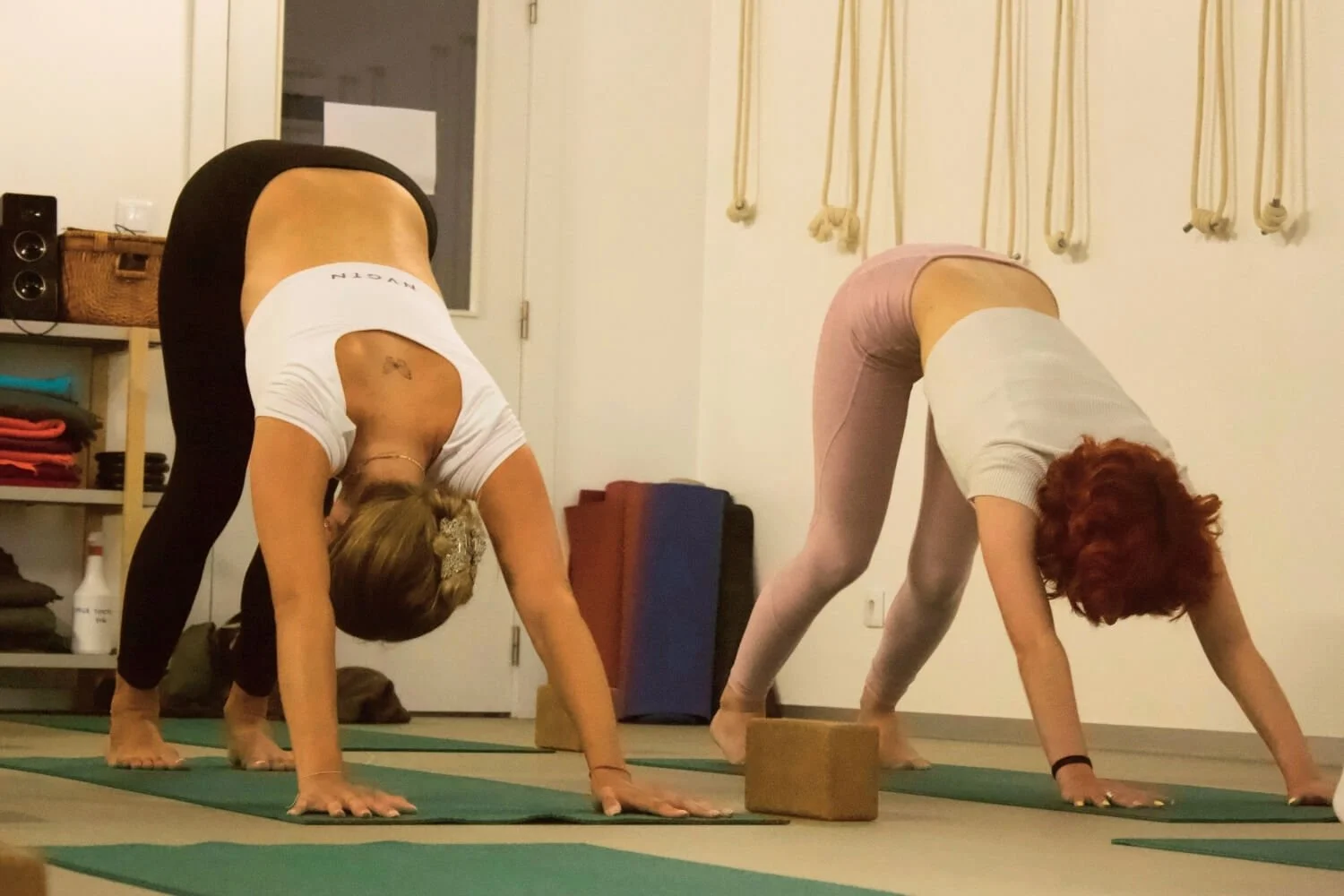
Reason 2: Hypermobility
On the other end of the spectrum, students with a high degree of mobility can also lose their lumbar curve in downward dog — often in direct response to common cues.
The instruction to press the chest toward the thighs may be appropriate for some students. For hypermobile students, this cue often results in a loss of both the lumbar lordosis and the thoracic kyphosis. Rather than creating length, it creates an over-flattening of the entire spine.
The simple cue: Draw your front ribs in toward each other. This activates the abdominals and helps restore the thoracic kyphosis, which in turn supports restoration of the lumbar lordosis. One cue, two curves.
The Bottom Line
Downward facing dog is an opportunity for neutral spine, not a forward fold. The two most common reasons the lumbar curve gets lost are hamstring tightness and hypermobility, and both respond well to simple, anatomy-informed cues. Bend the knees for tight hamstrings. Draw the front ribs in for hypermobile students. Observe first, then cue.
Get Curious! Q&A
Should the lower back be flat or curved in downward dog?
The lower back should maintain its natural curve (lumbar lordosis) in downward facing dog. A flat or reversed lower back is common and often indicates either hamstring tightness or hypermobility — both of which respond well to targeted cues.
Why do so many teachers cue students to straighten their legs in downward dog?
Straight legs are not the goal in downward facing dog — neutral spine is. For students with tight hamstrings, bent knees are not a modification. They're the alignment cue that allows the posture to work as intended.
Why does my lower back round in downward dog?
The most common reason is hamstring tightness. When the hamstrings don't have enough flexibility to accommodate both hip and knee extension simultaneously, they can pull the pelvis into a posterior tilt and flatten the lumbar curve. Bending the knees is the most effective way to address this.
What does neutral spine mean in yoga?
Neutral spine refers to maintaining the natural S-shaped curves of the spine: the cervical curve in the neck, the thoracic curve in the mid-back, and the lumbar curve in the lower back. In most standing and weight-bearing postures, neutral spine is the alignment goal.
Is it harmful to lose the lumbar curve in yoga?
Dynamic changes in spinal curves are a normal and healthy part of practice — forward folds and backbends intentionally change the position of the curves. The concern arises when the lumbar curve is consistently compressed or reversed in postures where neutral spine is the intended alignment, like downward facing dog.
Does the breath cue matter when transitioning out of Downward Dog?
It does. The breath you use when floating or jumping forward directly influences how much core support your students have for the transition. The anatomical case for exhaling is strong. Here's the full breakdown of breath cues in yoga and why exhale to float forward makes sense.
Go Deeper with your understanding of anatomy and cueing.
Want to take your anatomy knowledge directly into your teaching? The Cue with Confidence guide is a free resource that walks you through anatomy-informed cueing, starting with the foundation — the feet. Download it and see how understanding the why behind alignment changes the way you teach.
Download the Cue with Confidence Guide →
About the Author
Dr. Trish Corley is a Doctor of Physical Therapy (Physiotherapy) and yoga teacher trainer with over two decades of clinical experience. She helps yoga teachers learn anatomy, give clear cues, and create classes their students love. Based in Lisbon, Portugal, she leads the Enlightened Anatomy Course, the Elevate Your Impact Mentorship, and the Power to Lead 200-Hour YTT.