
Rocket Yoga Teacher Training: My 5 Days with Lita Sattva
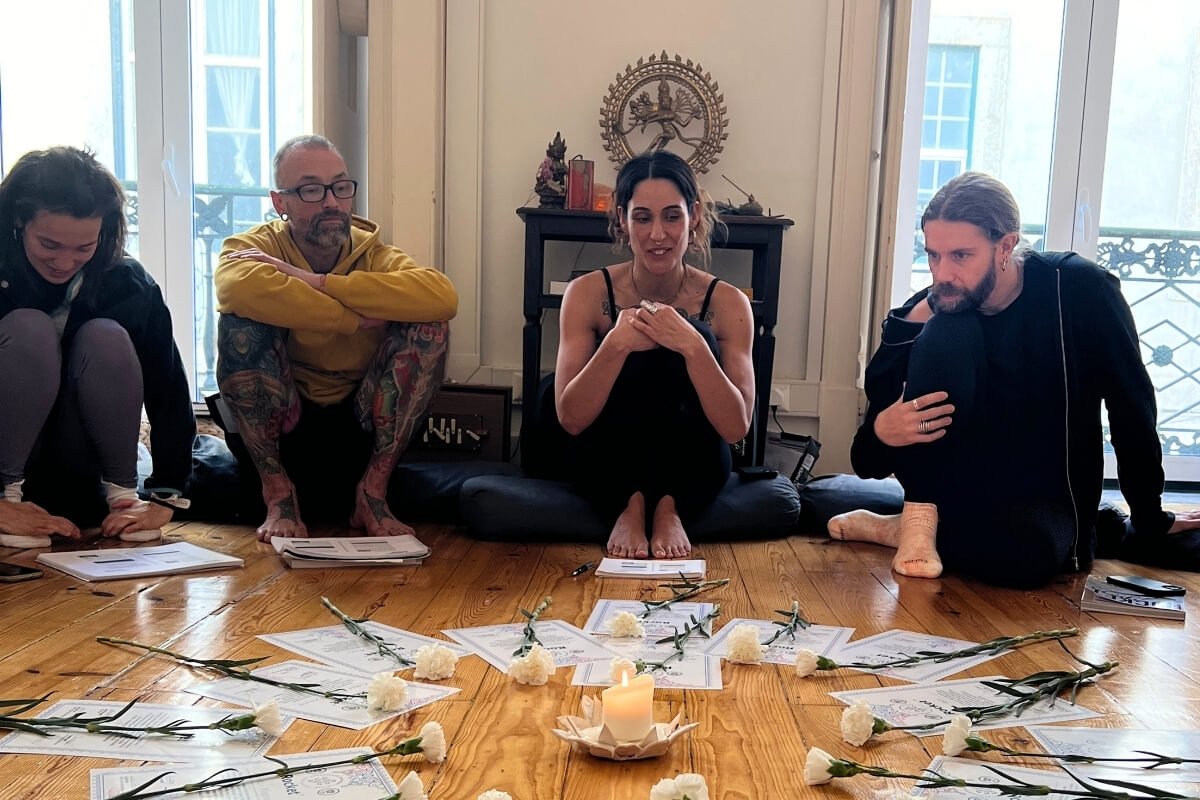
Five days. Fifty hours. A circle of practitioners I'd never met, gathered in Lisbon to practice and study Rocket Yoga together.
I arrived curious and left with something I didn't expect. I gained a deeper understanding of Rocket Yoga as I expected I would. I was also surprised to learn a lot more about the history of yoga and the Ashtanga yoga philosophy. And I got a clearer picture of what I actually value in a teacher training.
In This Article:
Why I chose a Rocket Yoga teacher training in Lisbon
The yoga lineage behind Rocket and why every teacher should know it
What Rocket Yoga and Baptiste Power Vinyasa Yoga share
What I noticed was missing and what it clarified about teaching trainings
What this experience brings to Power to Lead Vinyasa training
Why I Chose a Rocket Yoga Teacher Training
On the first morning, Lita gathered us in a circle and asked a simple question: Why Rocket Yoga?
Some participants were already teaching it. Others had never taught yoga but loved the practice so much they wanted to go deeper. For me, the honest answer started with curiosity and something harder to name.
Over the past ten years I'd practiced Rocket Yoga sporadically in Houston, Oklahoma City, London, and Lisbon. I appreciated the dynamic challenge, the consistent breath, the rhythm of it. As someone who has practiced and taught Baptiste Power Vinyasa Yoga for years, I naturally compared the two. The similarities are obvious. Both are physically demanding. Both use set sequences that allow for adaptability. Both make space for arm balances and inversions.
But when Lita asked Why Rocket Yoga? I realized that even though I love handstands and intentional practice, it wasn't the inversions that kept bringing me back. It was how I felt around the people in the room.
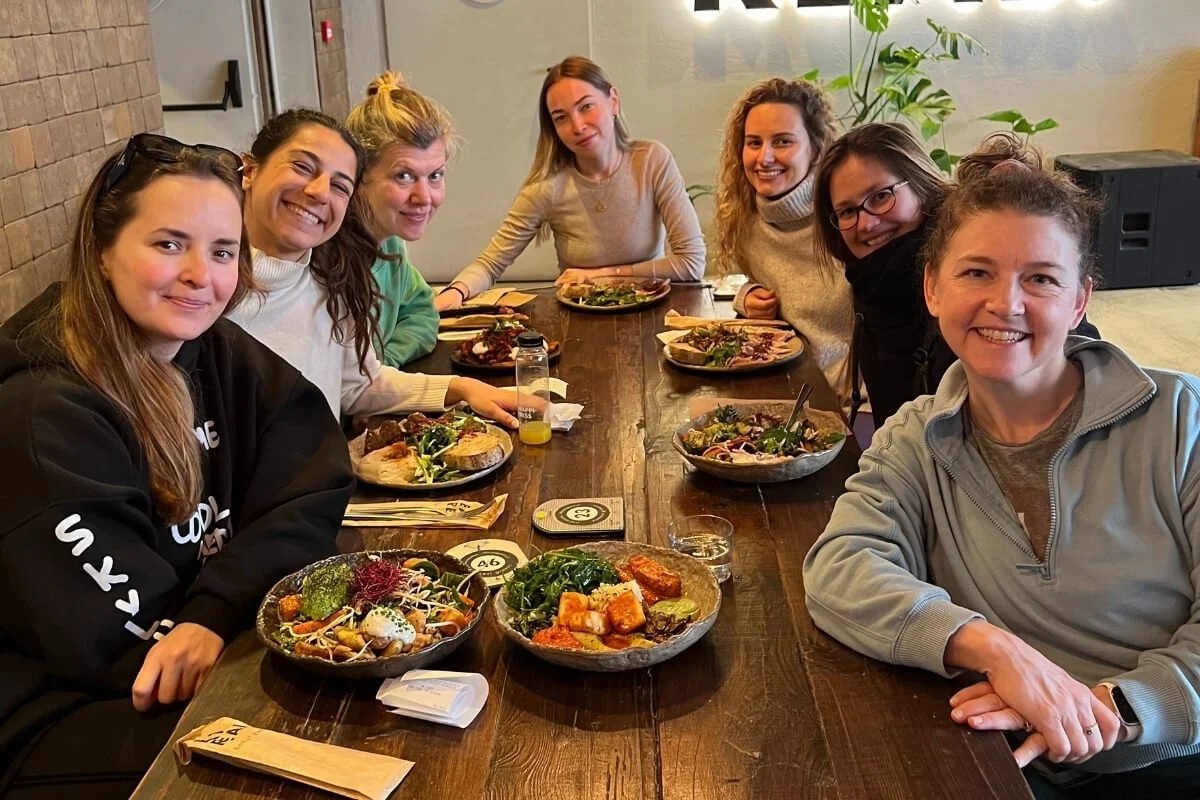
Community is something I take seriously in my own teaching. Baptiste trainings taught me that. By the end of the first day of the Rocket Yoga training in Lisbon, it was already happening. I could feel the people connecting, lifting each other up, in ways that usually take weeks to build.
The Yoga Lineage Behind Rocket
One of the most genuinely valuable parts of the training for me was the time we spent on where Rocket Yoga actually comes from.
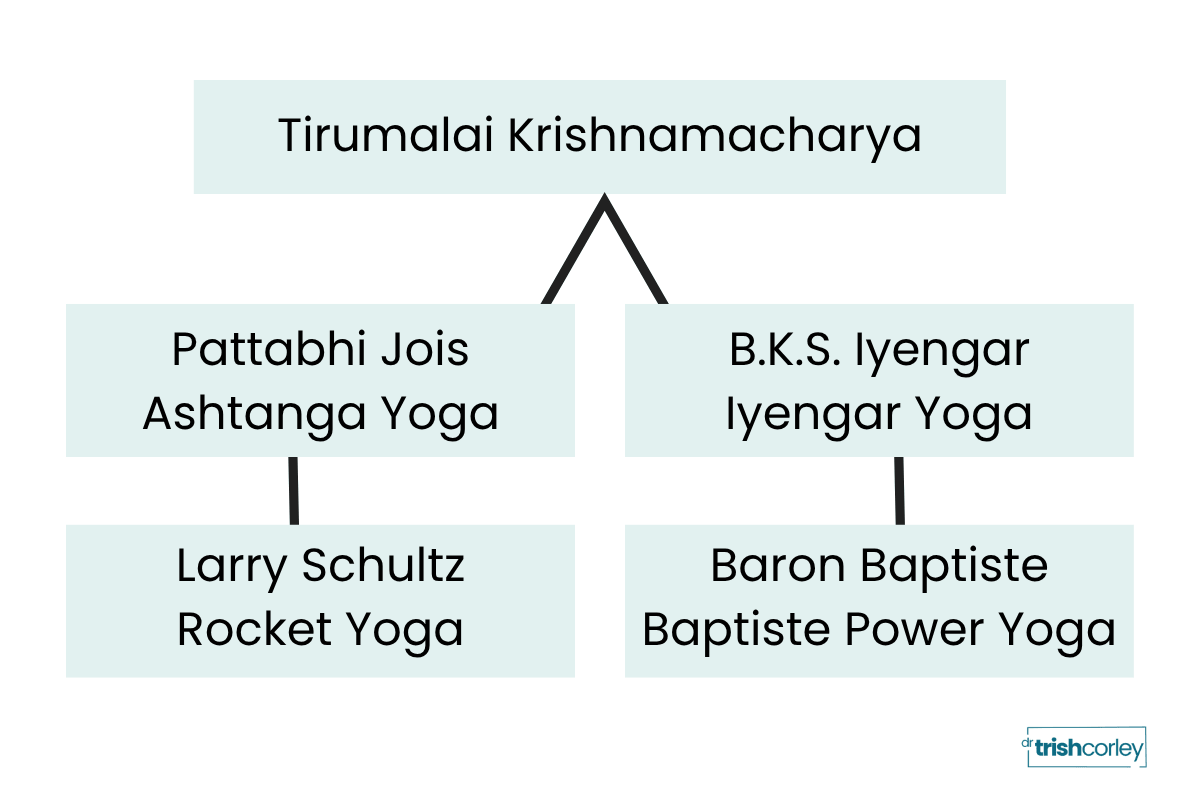
Rocket Yoga was developed by Larry Schultz, a long-time student of K. Pattabhi Jois. Pattabhi Jois was a student of Tirumalai Krishnamacharya — the same teacher who trained B.K.S. Iyengar, who was one of Baron Baptiste's primary teachers. So Rocket Yoga and Baptiste Power Vinyasa Yoga share a common root, even though they landed in very different places.
Pattabhi Jois created the Ashtanga method: challenging, breath-linked sequences meant to be followed strictly as they are laid out. Iyengar Yoga eventually went the other direction with slower pace, deep anatomical detail, and significant use of props. While Baron Baptiste often refers to Iyengar as one of his primary teachers, he worked with many teachers and the influence of vinyasa that we experience in Ashtanga and Rocket it clearly present in his teachings.
Larry Schultz is known as the "rebel Ashtangi". He wanted something different. He kept the physical demand of Ashtanga and loosened the rules around it. Students can modify, skip a posture, find their own way into a shape rather than stopping at every wall. The discipline is still there, but there is a requirement to be yourself. And I love this!
As a yoga teacher and Doctor of Physical Therapy (aka physiotherapy), I find this kind of lineage work genuinely meaningful. I find it importanty and fun to understand where a practice comes.
What Rocket and Baptiste Power Vinyasa Yoga Share
There's a reason both practices attract similar kinds of people.
Larry Schultz and Baron Baptiste both came up through traditional lineages and both decided to do something a little different with what they learned. Not to reject the roots, but rather to build on them in a way that left more room for the practitioner.
Baron Baptiste often talks about Sthira Sukha which is the balance between steadiness and ease. That quality runs through Rocket too. There's structure, and there's freedom within it. There is a discipline that creates focus and intention, matched by freedom and self expression.
This is what I keep coming back to in my own teaching. Alignment isn't about achieving a particular shape. It's about having the discipline to practice the postures in a way that creates efficiency, so movement can happen with more ease. When that happens, there's a real sense of freedom — and that freedom is what empowers people to keep practicing.
A Physical Therapist's Take on Dynamic Practice
I do occasionally hear concern about physically demanding yoga. People are often surprised I practice and teach it as a Doctor of Physical Therapy.
The body needs appropriate challenge to build strength and mobility. Restorative practice has real value, especially for nervous system regulation. For me I have always felt more regulated when I challenge my body. Dynamic practice builds the physical capacity that supports long-term health and mobility. And the point of dynamic yoga is to challenge the body while also regulating the breath and focusing the mind. It is training for the body for stressful situations. In other words, it is training for real life. No need to escape life and go to restorative class if you are able to regulate your nervous system in more stressful situations!
What I Noticed Was Missing — and What It Taught Me
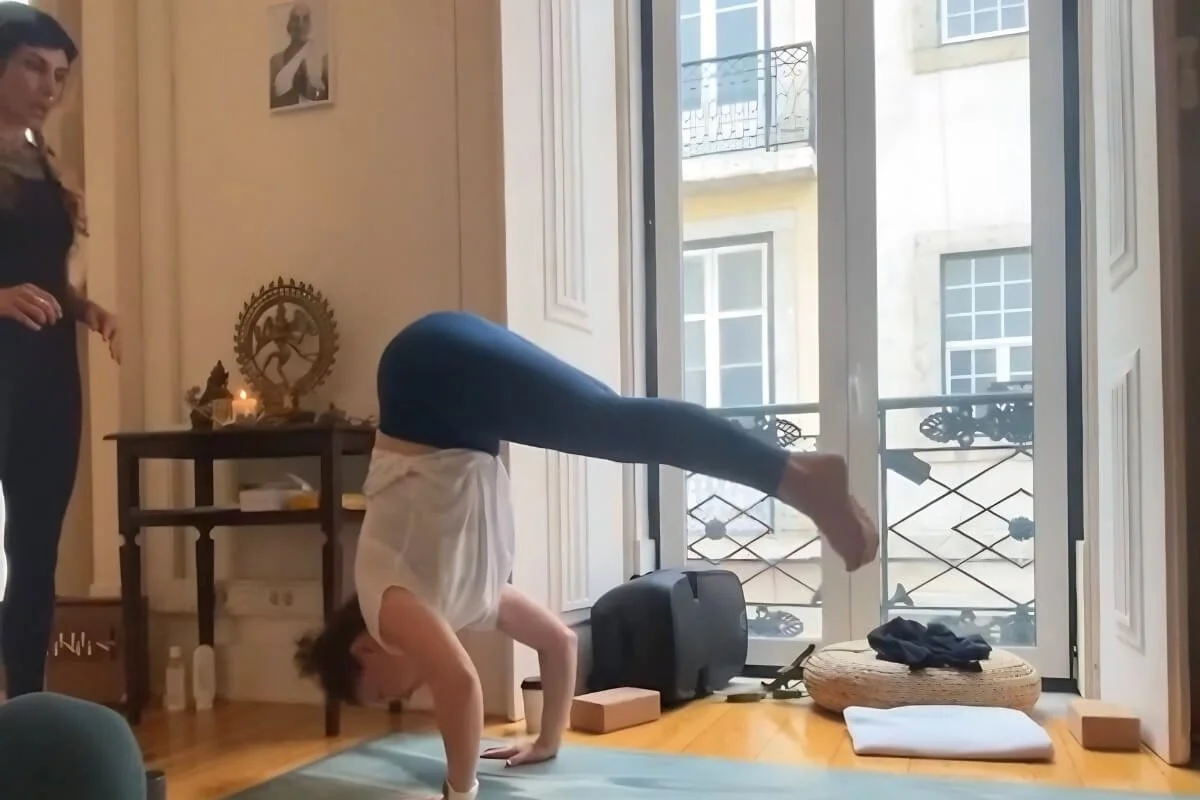
On the final day of the 50 hour Rocket Yoga Teacher Training, each of us taught a 60-minute Rocket practice to a partner. It was a humbling experience for me. I had to let go of familiar patterns, work within a sequence I was still internalizing, and figure out pacing and cueing in real time. It was new to me. And after teaching the Journey Into Power sequence from Baptiste Power Vinyasa Yoga for over ten years, I felt lost.
What I noticed, and couldn't quite name until after the training, was that there was no framework for the teaching itself. The training gave deep immersion in the practice, the sequence, the lineage. What it didn't give was any structured guidance on how to actually teach it. No approach to giving feedback. No methodology for observation. No structure for developing as a teacher.
That absence clarified something for me. Knowing a practice deeply and knowing how to teach it are two different things. A training that treats them as the same leaves a real gap.
Lita's closing words stayed with me regardless: Take what resonates, and leave what you don't need. Your background, your clinical knowledge, your years on the mat — all of that belongs in the room with you. Teaching Rocket doesn't mean teaching like every other Rocket teacher. The point is to find your own voice within it. Her words empowered me and reminded me that my teaching works and I want to keep sharing my techniques for both practicing and teaching yoga.
What This Brings to Power to Lead
In addition to a lot of self practice (like I experienced in the Rocket training), teaching methodology is the thread that runs through everything I do in Power to Lead. Not just what to teach, but how to observe, how to cue, how to give feedback that actually helps someone grow. One of my gifts is the ability to train the teachers; to help them develop their skills and unique voice. I give feedback from a space of love and nurturing that just works to empower people to access their own power to share the practices of yoga with authenticity. They embody the balance of structure and freedom.
The Rocket training deepened my appreciation for lineage, community, and the value of practicing outside your comfort zone. It also sharpened my conviction that teaching is its own discipline — and that's exactly what Power to Lead is built around.
The Bottom Line
Immersion in a practice is valuable. Learning to teach it is a separate skill. The best trainings address both. The Rocket Yoga teacher training with Lita Sattva gave me a richer understanding of yoga lineage, a renewed appreciation for community, and a clearer sense of what I want to offer in my teacher trainings. It made me truly appreciated how I designed and lead Power to Lead 200 Hour Yoga Teacher Training.
Get Curious! Q&A
What is Rocket Yoga and how is it different from Ashtanga?
Rocket Yoga was developed by Larry Schultz, a student of Ashtanga founder K. Pattabhi Jois. It keeps the dynamic sequencing and breath-linked movement of Ashtanga but loosens the strictrules, allowing more room for modification, exploration, and individual expression. It tends to feel more playful and accessible than traditional Ashtanga, while still being physically demanding.
Is Rocket Yoga appropriate for beginners?
Rocket Yoga is generally recommended for practitioners with an established practice rather than complete beginners. But I don’t always agree. If it s group setting and experienced students, it would probably be difficult for a brand new student with limited mobility to enjoy the practice. However, a skilled teacher can offer modifications that make the practice accessible across levels. What matters most is having a teacher who observes what's actually happening on the mat and responds to what they see, rather than applying one-size-fits-all instruction.
What should I look for in a yoga teacher training?
It depends. If you do want to learn to teach yoga, look beyond the practice content. Look for a training that addresses teaching methodology directly — how to observe students, how to give meaningful feedback, how to develop your own teaching voice. Content knowledge is important, but how you'll actually use it is even more important. If you're still deciding whether you're ready for a training at all, this post on the signs you're ready for yoga teacher training might help.
How does Rocket Yoga relate to Baptiste Power Vinyasa Yoga?
Both share a lineage rooted in Krishnamacharya's teachings, and both reflect a philosophy of empowering practitioners rather than rigidly prescribing form. They diverged through different teachers and traditions, but the underlying values — breath, presence, physical challenge, and community — are recognizable across both practices.
Ready to Train in Lisbon?
Imagine a yoga teacher training that puts you in community, meets you right where you are and also challenges you physically so that you can discover your greatest potential, and gives you plenty of practice teaching so you graduate with confidence to lead your life and teach yoga the way you want…. That’s what you will find in Power to Lead 200 Hour Yoga Teacher Training in Lisbon with me!
Learn More About Power to Lead →
About the Author
Dr. Trish Corley is a Doctor of Physical Therapy (Physiotherapy) and yoga teacher trainer with over two decades of clinical experience. She helps yoga teachers learn anatomy, give clear cues, and create classes their students love. Based in Lisbon, Portugal, she leads the Enlightened Anatomy Course, the Elevate Your Impact Mentorship, and the Power to Lead 200-Hour YTT.