
Does Yoga Alignment Keep Students Safe? A Physical Therapist’s Take
Yoga alignment was my thing. Years ago, my mentor took my class.
After class she gave me supportive feedback. She said, "You really know your alignment."
I felt the praise land. Alignment was my jam, the thing I knew I could use to make my classes stand out. I cared about getting it right.
Then her next words were: "Drop it."
She wasn't telling me alignment didn't matter. She was telling me I was teaching so much of it that the practice had nowhere to breathe. The class felt tight. Driven. Less like yoga and more like assembly.
That moment changed how I teach.
So when asked, “does alignment keep students safe in yoga?" My answer is no. Alignment alone does not keep students safe in yoga. What keeps students safe is a teacher who balances alignment with observation and breath, and gives each student the freedom to find their own expression of the posture.
In This Article:
Why yoga got so alignment-obsessed
What alignment actually does well
The hidden cost of over-cueing alignment
How to balance alignment, observation, and breath
The shift that changes everything
Why Yoga Alignment Got Overcomplicated
Modern yoga inherited a strong alignment lineage. Iyengar built a practice on precision. Many vinyasa schools layered alignment on top of flow to keep practitioners safer in faster-moving classes. The intention was care.
The result, in many studios, is a kind of cueing arms race. More cues equals better teaching. More precision equals more safety. More attention to detail equals more authority.
That equation has cracks in it.
What Alignment Actually Does Well
Postural alignment is genuinely useful. Decades of clinical practice as a Doctor of Physical Therapy have taught me that thoughtful alignment helps students:
Distribute load evenly across joints and tissues so no single area takes a disproportionate beating
Build foundational strength through repeated, organized movement patterns
Reconnect with their bodies after years of habits the world has imprinted on them
Recover from injury by moving through restorative ranges of motion in a controlled way
A skilled Iyengar teacher giving twelve precise cues in trikonasana can crack a posture wide open for a student. I have heard people leave those classes saying they had no idea so much could be happening in a single shape. That kind of alignment teaching can be a revelation.
Individual anatomy plays a real role in what alignment looks like for any given student. I have written about this in the context of why heels don't touch in downward dog.
The trouble starts when alignment becomes the only language being spoken.
The Hidden Cost of Over-Cueing
I once took a vinyasa class in Oklahoma City where the teacher gave roughly ten alignment cues to move us from downward facing dog into warrior one.
By cue six, I had stopped breathing. By cue ten, I had no idea what I was doing in my own body.
The cues were technically correct. The teacher was not looking at us. — That is the problem in one sentence.
When alignment becomes a script the teacher recites without looking up, students can feel it. The class loses flow. The practice loses freedom. Students stop being practitioners and start being mannequins being moved into shapes.
There are other costs of over-cueing:
Students start comparing themselves to whoever looks "most aligned"
Internal cues like sensation and breath get drowned out by external instruction
Self-talk may start to dominate: am I doing this right? Why can't I get my heel down? What's wrong with my hips?
The nervous system tightens. The practice tightens with it.
I unpacked one example of how this plays out in my post on whether to lock your knees in yoga.
A practice meant to liberate becomes a set of rules to obey.
The Yoga Alignment Shift That Changes Everything
The most important alignment skill is not knowing more cues.
It is looking up.
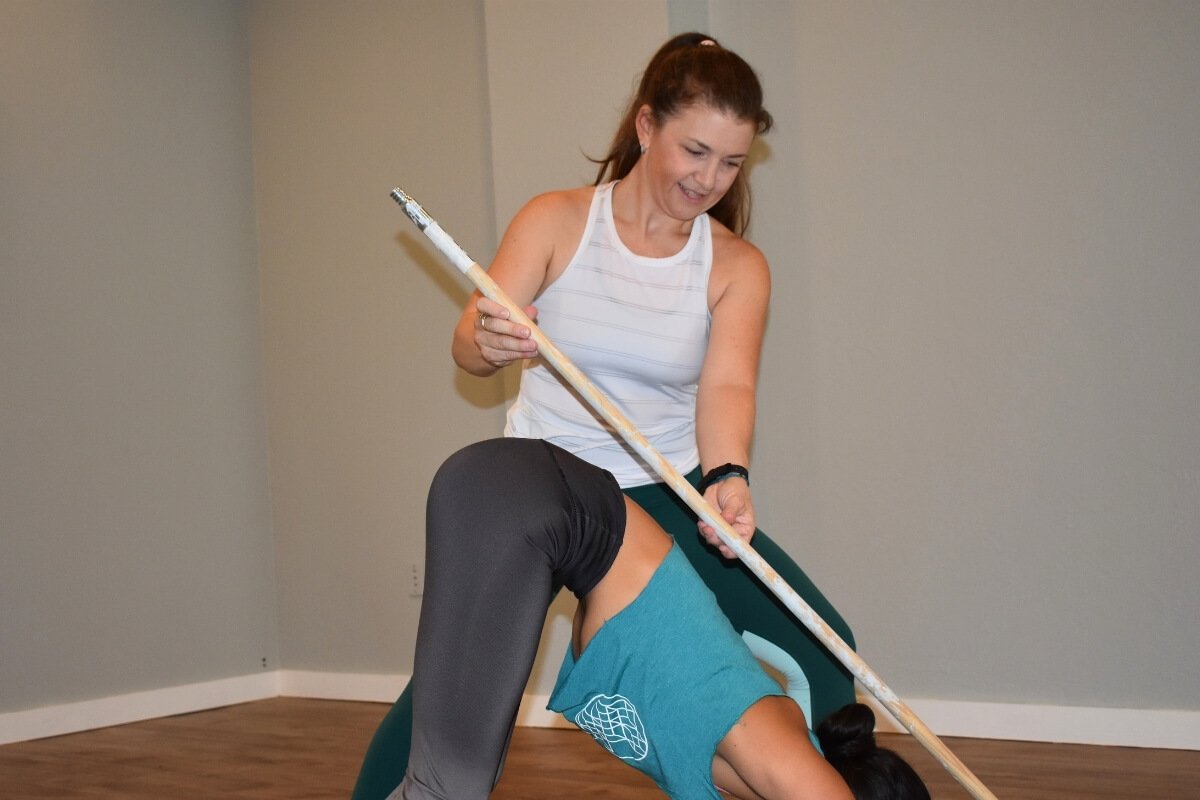
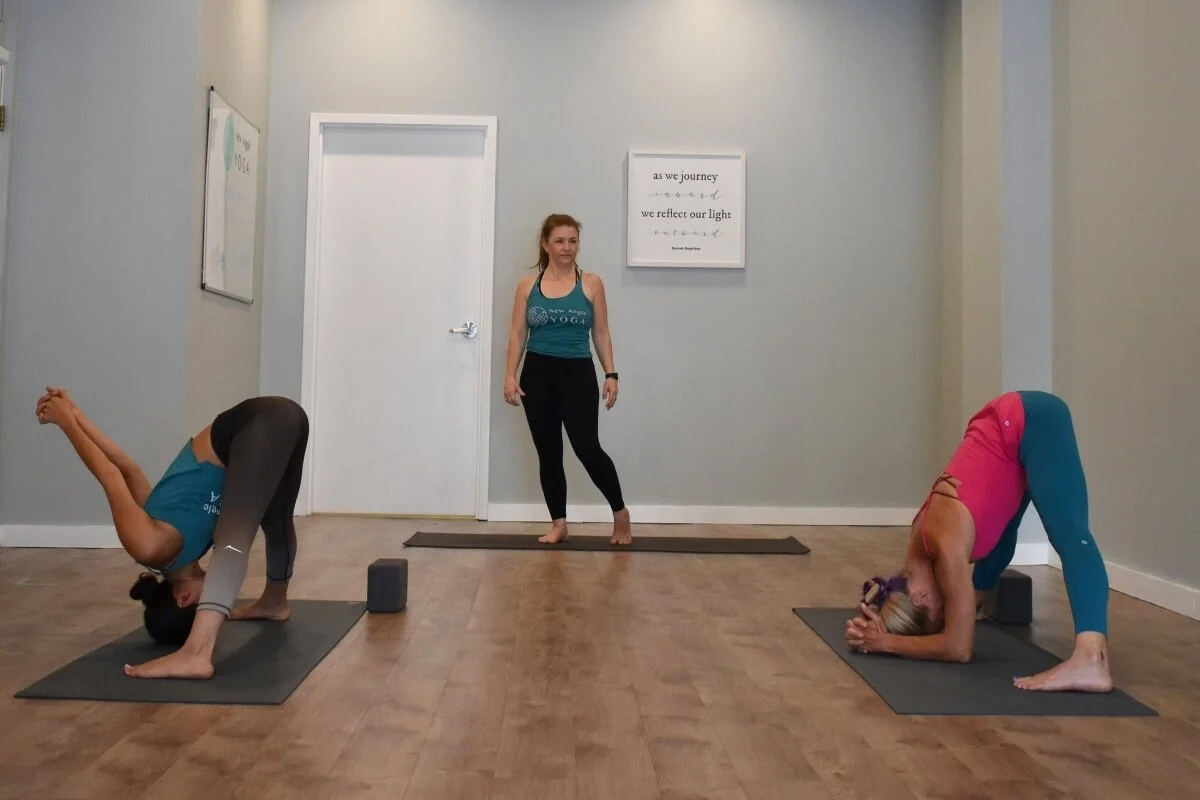
The teachers I trust most spend more time observing than instructing. They watch what is actually happening before deciding what to say. They notice the student whose shoulder is collapsing, the student whose breath has stopped, the student who is white-knuckling the mat. They cue that student in a way that serves that body in that moment.
I once taught yoga to a group of children in Kenya. Their downward facing dog form was, by alignment standards, a disaster. Their faces, however were lit with smiles that seemed as vast as the Maasai Mara. Whatever they were doing was working for them on a level no cue would have improved.

Sometimes the most aligned thing in the room is the experience.
Three Principles for Balancing Alignment and Freedom
1. Learn alignment as principles, not scripts
You don't need to memorize a separate set of cues for every yoga posture. Learning a small set of anatomy-informed principles that work across many postures is freedom. (This is the foundation of the Balanced Posture Alignment framework I teach.)
2. Look at students before you cue them
Most over-cueing happens because the teacher already decided what they would say before class started. Try this instead: walk in with the sequence, then watch the room before you open your mouth. Ask the question, what is actually happening here? Cue from the answer.
3. Cue breath sparingly, and only when it’s needed.
Breath is the one thing every student can come back to, which is exactly why it should not be reduced to a metronome. Inhale arms up, exhale arms down. Inhale this, exhale that. When breath cues become a constant soundtrack, students stop hearing them. The cue stops landing. And often, it is a sign that the teacher is not actually listening for the breath in the room, just hoping the students are following along.
A well-placed breath cue can ground a tight room or settle a student who looks lost in a posture. That is when breath belongs in the cueing. Not as a script. Not as a fill. As something offered when the moment calls for it, the same way a good alignment cue is.
The Bottom Line
Alignment is a tool, not a guarantee. What keeps students safe is a teacher willing to observe, a practice that allows freedom, and a body trusted to find its own expression. The most powerful classes hold precision and permission at the same time.
When you teach less alignment with more presence, students stop performing and start practicing. That is when yoga actually becomes yoga.
Get Curious! Q&A
Does yoga alignment really prevent injury in yoga?
No, alignment alone does not prevent injury. Alignment can reduce injury risk by distributing load and supporting good movement patterns, but it does not guarantee safety on its own. Observation, breath awareness, and respect for individual anatomy matter just as much, sometimes more.
What is the purpose of yoga alignment?
Yoga alignment gives students a framework for organizing their bodies in a posture — distributing load evenly, building foundational strength, and reconnecting with how the body actually moves. The purpose isn't perfection. It's clarity. When alignment is taught as principles rather than rules, it becomes a tool students can use rather than a standard they're trying to meet.
Is it okay to teach yoga without giving lots of alignment cues?
Yes. Some of the most effective teachers cue minimally and observe constantly. The number of cues is not the measure of skill. The relevance of the cue to what is actually happening in the room is.
What is the difference between alignment and freedom in a yoga practice?
Alignment is the structural foundation. Freedom is the room each body has inside that foundation to find its own expression. A balanced practice holds both.
How do I know if I am over-cueing alignment in my classes?
A few signs to watch for: students stop breathing audibly, the room feels tight, you find yourself talking through transitions instead of letting students move. If you cannot remember the last time you watched students move without speaking, you are likely over-cueing.
Does Iyengar yoga over-cue alignment?
Skilled Iyengar teaching is precise and observational at the same time. The tradition's depth of alignment knowledge is a gift to the broader yoga world. Over-cueing happens in any tradition when alignment is recited rather than responsive.
Go Deeper with Yoga Alignment
Confident teaching starts with understanding what alignment cues actually do in the body. My free guide, Cue with Confidence, walks you through how anatomy-informed cueing works as a learnable skill. It is the same approach I teach in every program.
Download my free guide: Cue with Confidence →
Get anatomy-informed cues you can take into your next class. This guide is also preview of how I teach inside the Enlightened Anatomy Course.
About the Author
Dr. Trish Corley is a Doctor of Physical Therapy (Physiotherapist) and yoga teacher trainer with over two decades of clinical experience. She helps yoga teachers learn anatomy, give clear cues, and create classes their students love. Based in Lisbon, Portugal, she leads the Enlightened Anatomy Course, the Elevate Your Impact Mentorship, and the Power to Lead 200-Hour YTT.