
What Makes a Vinyasa Yoga Class Truly Great
You've taken that class. The one where you walked out feeling like something shifted. Like you had touched something deep in yourself, maybe even a state of meditation you couldn't have forced if you tried. You couldn't fully explain it to the friend who asked how class was. "It was just... really good," you said.
Maybe you've been chasing that feeling ever since. Maybe you're a teacher trying to create it.
Here's what most people don't realize: that experience wasn't an accident. Behind every vinyasa yoga class that leaves students feeling that way is a teacher who understands exactly what they're doing and why. The magic has anatomy. It can be studied, learned, and built.
A masterful vinyasa yoga class is the result of several specific, teachable elements working together, and the good news is, none of them require talent you weren't born with.
In This Article:
Why great vinyasa yoga classes feel different from the inside
The role of intention and sequencing in creating flow
Why presence and confidence matter more than a perfect sequence
How breath cues either create or break the state of flow
What separates a good class from one students keep coming back to
The Elements That Separates a Good Class from a Great One
Most yoga teachers, when they walk away from a class that didn't land, assume the sequence was the problem. Maybe the transitions felt awkward. Maybe the peak posture came too soon. So they rebuild the sequence, try again, and wonder why the class still feels flat.
The sequence matters. But it isn't the whole story.
What creates that feeling students can't quite name, the deep sense of presence, the almost meditative quality of movement, is something that goes beyond sequencing. And creating it is both a science and an art.
The elements of a masterful vinyasa yoga class work together the way the parts of the body do. You can study each one separately, but they only produce something remarkable when they're integrated. Here's what those elements are, and how they work.
Start with One Clear Intention
The teachers whose classes feel remarkable almost always do one thing most teachers don't: they choose one intention and stay with it.
Not five themes. Not a quote, a Sanskrit concept, AND an anatomical focus. One thing. One lens the entire class moves through.
This is harder than it sounds, especially when you have years of knowledge and genuine enthusiasm for what you teach. The temptation is to share everything you know in 60 minutes. The result is a class that feels scattered, even if every individual element was good.
When students are guided toward one clear intention, their energy focuses. That focus is what allows them to go deeper into the practice rather than skimming across the surface of many ideas.
Your intention can come from anywhere: a life experience, a word, something from a yoga text, a single anatomical principle. What matters is that it stays present throughout the class without overwhelming the physical practice. Students come to move. The intention is the container, not the content.
Sequencing Is a Skill, Not a Creative Exercise
There's a common belief among yoga teachers that the more creative the sequence, the better the class. A surprising transition, an unexpected peak posture, something students haven't seen before.
Here's what actually keeps students coming back: how they feel when they leave.
When a sequence is informed by functional anatomy, the body moves through it with a sense of logic. One posture prepares for the next. The transitions make sense. Students don't have to think about what's coming because their body is already ready for it. That ease is what allows them to go inward rather than stay on the surface of the physical experience.
A basic, intelligently crafted sequence will outperform a creative one almost every time. Not because creativity has no place in vinyasa, but because students trust a teacher whose sequencing feels good in their bodies. That trust is what brings them back.
The skill of sequencing can be learned. It requires a working understanding of functional anatomy, not memorizing muscle names, but understanding how the body moves, what it needs to feel prepared, and what happens when you ask it to do too much too soon.
The Teacher Who Gets Off the Mat
There's a moment in many yoga classes where you can feel the teacher disappear. Not physically. They're still at the front of the room, still cueing. But they've gone inward. They're in their own practice, running through their own sequence, managing their own experience on the mat.
When that happens, the students feel it. The energy in the room shifts. The class becomes a group of individuals moving in parallel rather than a collective experience.
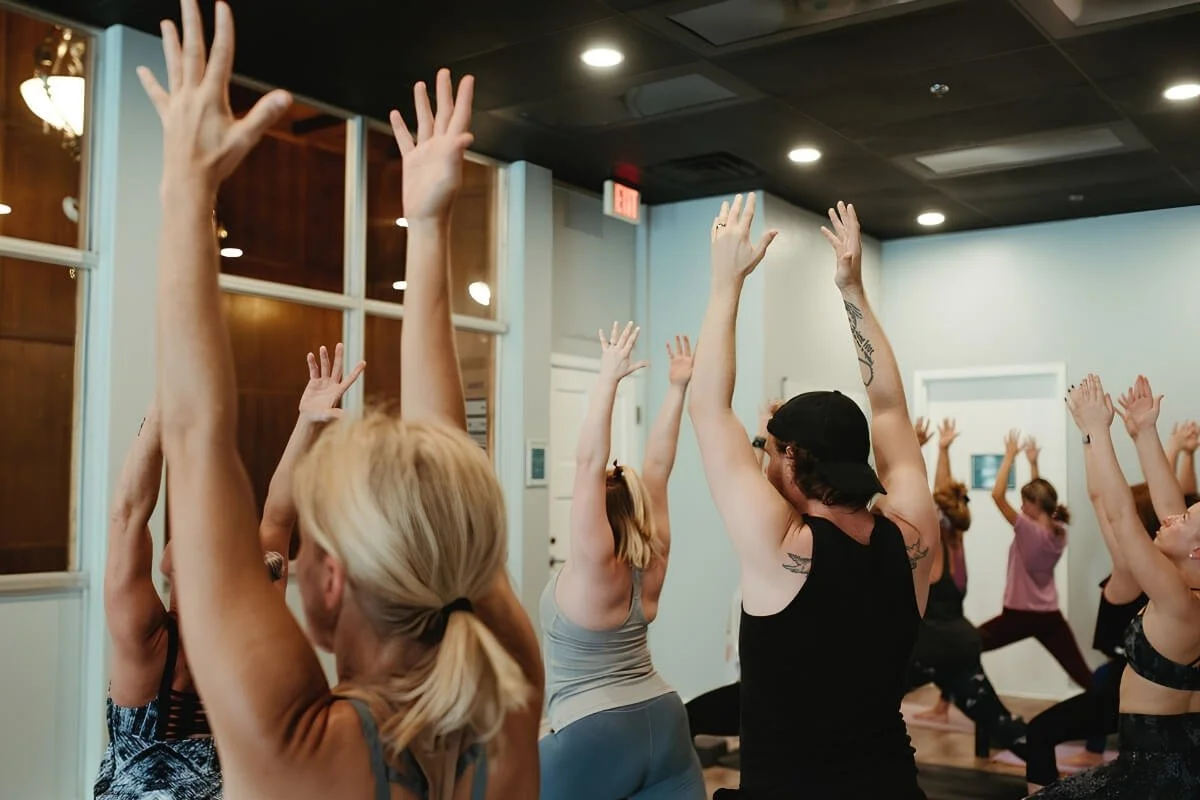
The single most important thing a teacher can do to elevate a vinyasa yoga class is get off the mat and look at the students in front of them.
Observation is not a passive act. It's the foundation of every good cue, every well-timed breath prompt, every adjustment to pacing or intensity. A teacher who is watching their students has access to information no sequence plan can provide. They can see who needs encouragement, who needs to slow down, who is ready to go deeper. They can choose cues based on what is actually happening in the room rather than what they planned to say.
The answer is always in looking at your students.
This requires confidence. A teacher who is worried about their sequence, second-guessing their choices, or managing self-doubt doesn't have attention left over for the room. This is why intention and sequencing matter so much as foundations. When those are solid, the teacher's mind is free to be present.
And presence is what students feel, even when they can't name it.
Cueing from What You See, Not What You Planned
Cues aren't inherently good or bad. They're effective or ineffective for these students, in this moment, in this posture. A cue that creates a shift in one body may be completely irrelevant to the person on the mat next to them.
This is why the most effective vinyasa teachers are not the ones with the longest list of memorized cues. They're the ones who can look at what's happening in front of them and choose what's actually needed.
That skill requires a solid understanding of anatomy and alignment, so you know what you're looking at, and the confidence to trust what you see over what you planned to say.
When a teacher is locked into a script, students feel that too. The cues land differently when they're chosen for the room rather than delivered to it.
Breath as a Tool, Not a Habit
Breath is what makes vinyasa vinyasa. But breath cues, like all cues, need to be intentional to be effective.
Many teachers fall into a pattern of cueing every inhale and exhale, treating breath prompts as a metronome to keep the class on track. When that happens, the word "inhale" stops meaning anything. Students tune it out the same way they tune out background noise.
Intentional breath cueing means knowing when to name the breath and when to let it breathe on its own. It means being present enough to hear what's happening in the room, noticing when the breath has gone shallow or held, and responding to that rather than following a plan.
When breath cues are well-timed and purposeful, they deepen the experience. They bring students back into their bodies at exactly the right moment. That's a completely different function than counting beats.
The Bottom Line
A masterful vinyasa yoga class isn't the result of a perfect sequence or an impressive peak posture. It's the result of a teacher who shows up with clear intention, sound sequencing, and enough presence to respond to what's actually in the room.
These are teachable skills. Every one of them. The teachers whose classes feel transformative didn't arrive that way. They learned, practiced, and kept showing up with attention to the craft.
Get Curious! Q&A
What is the difference between a good vinyasa class and a great one?
A good vinyasa class moves students through a sequence safely and competently. A great one creates an experience students can feel but struggle to describe. The difference usually comes down to the teacher's presence and intention rather than the complexity of the sequence. When a teacher is genuinely connected to the room, observing what's happening and responding to it, students feel that. That quality of attention is what elevates a class from good to memorable.
Do I need to be able to do advanced yoga postures to teach a great vinyasa class?
Not in the way most people think. You do need to have a genuine personal practice. Understanding how vinyasa feels from the inside, the breath, the transitions, the meditative quality of movement it can create, is part of what allows you to guide students there. That comes from your own time on the mat.
What you don't need is the ability to hold a handstand or demonstrate the most challenging variation of every posture. Students don't come back to a class because their teacher can do impressive things. They come back because of how they feel. Your job is to create that experience, and that requires knowledge, observation, and presence far more than it requires advanced physical skill.
How do I know if my vinyasa sequence is working?
Watch your students. If they're moving with ease and focus, if transitions feel natural and the energy in the room is settled, the sequence is working. If students look confused, if there's a lot of fidgeting or disconnection between postures, that's information. The sequence may need adjustment, or the pacing may be off. Your students' bodies will always tell you more than your sequence plan will.
How important is music in a vinyasa yoga class?
Music can support the experience but it isn't a substitute for the elements that actually create it. A well-chosen playlist can enhance pacing and mood. But a teacher who relies on music to carry the class will find that when the playlist ends or the Bluetooth cuts out, so does the energy. Build the class on intention, sequencing, and presence first. Music is a tool, not a foundation.
Can newer teachers create the state of presence experienced teachers have?
Yes, with practice and the right guidance. Presence isn't a personality trait. It's a skill that develops as confidence grows. The more secure a teacher feels in their intention and their sequence, the more attention they have available for the room. That's why investing in your teaching skills early matters. You're not waiting to feel ready. You're building the foundation that makes presence possible.
Go Deeper with Mastering Vinyasa Yoga
If this resonated and you're an existing teacher ready to go beyond the sequence, the Elevate Your Impact Mentorship is where that work happens. Anatomy-informed cueing, presence, confidence, connection — it's all there.
Elevate Your Impact Mentorship→
About the Author
Dr. Trish Corley is a Doctor of Physical Therapy (Physiotherapy) and yoga teacher trainer with over two decades of clinical experience. She helps yoga teachers learn anatomy, give clear cues, and create classes their students love. Based in Lisbon, Portugal, she leads the Enlightened Anatomy Course, the Elevate Your Impact Mentorship, and the Power to Lead 200-Hour YTT.